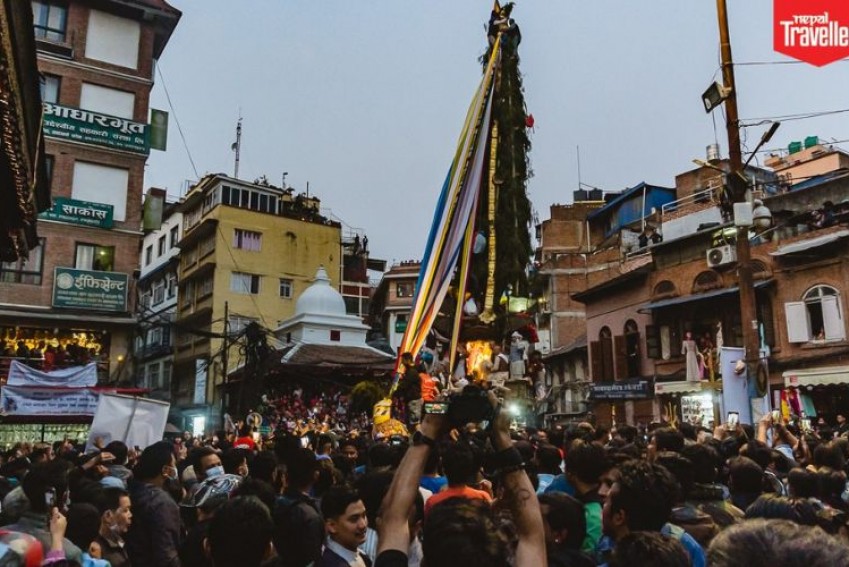
In the heart of Kathmandu, where narrow alleys hum with incense and centuries-old rituals, a quiet yet deeply revered presence emerges once more. As the chariot of Seto Machhindranath begins its annual journey today, the city prepares to welcome a deity who does not remain distant, but moves among the people.
Known locally as "Janabaha Dyah", Seto Machhindranath’s jatra unfolds over several days, often extending from three to five, tracing a sacred route from Jamal through Asan and Hanuman Dhoka to Lagan, before returning to his temple in Janabahal.
Unlike the grand spectacle of larger chariot festivals, this procession carries a quieter rhythm, yet one deeply embedded in the Valley’s spiritual life. It is here that devotion becomes immediate, and the divine, accessible.
The Deity of Compassion and Protection
Seto Machhindranath holds a distinctive place within Nepal’s religious landscape. Revered by both Hindus and Buddhists, he is widely understood as a manifestation of Avalokiteshvara: the embodiment of mercy.
Also known as Karunamaya, he represents compassion in its most approachable form. While sometimes associated with rain and well-being, his significance lies less in commanding the elements and more in offering protection, balance, and reassurance.
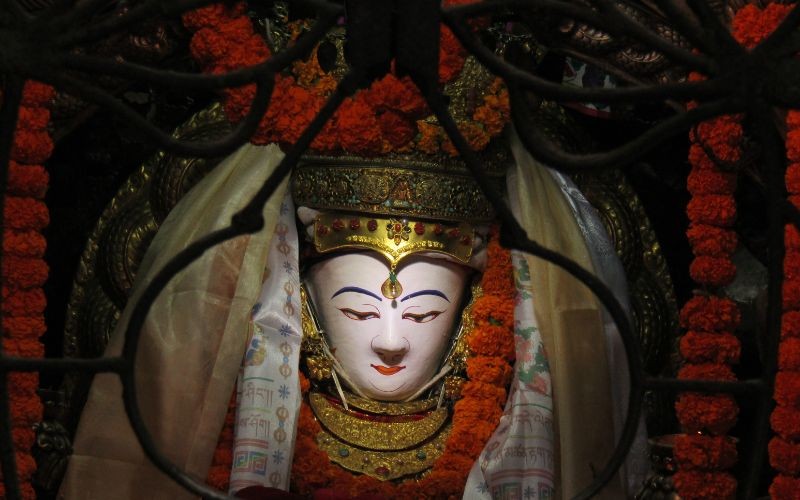
In a culture shaped by cycles of uncertainty from monsoon rhythms to urban change, his presence reflects a deeply rooted belief in a listening, responsive divinity.
A Presence Shaped by Living Tradition
Unlike deities defined by a single origin story, Seto Machhindranath’s identity is shaped by living tradition. His meanings have evolved through centuries of worship, local belief, and communal practice.
He is often understood alongside Rato Machhindranath, the Valley’s primary rain deity. While not a formal duality, the two are seen as complementary:
Where one commands spectacle, the other offers quiet reassurance.
The Chariot That Comes to the People
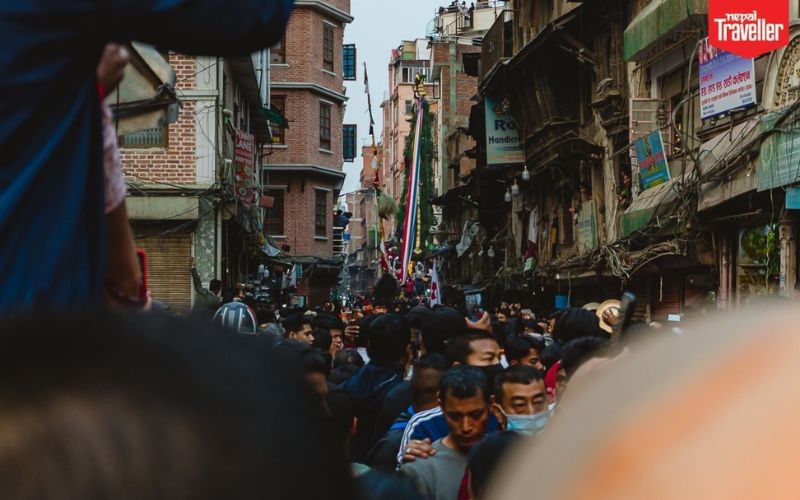
Each year, the deity leaves his temple and journeys through Kathmandu in a sacred chariot procession, one that unfolds gradually over several days.
The route itself carries meaning:
The festival often continues beyond this, concluding with the return of the deity to Janabahal.
Along the way, the atmosphere is immersive yet intimate:
A Living Tale in Motion
Though modest in scale, the Seto Machhindranath Jatra carries deep cultural weight. It reflects the resilience of Newar heritage, a form of worship centred on participation, and a deity who remains close to the people. In a rapidly modernising Kathmandu, this continuity is a quiet reminder that tradition need not be grand to endure.
The story of Seto Machhindranath resonates for its simplicity, offering compassion and stability in uncertain times. As devotees gather, their prayers reflect shared hopes for well-being, prosperity, and balance, with his presence symbolically tied to collective welfare.
As the chariot moves through Kathmandu’s historic streets, the city becomes part of the ritual. To witness it is to step into a living tradition one that is shaped not by spectacle, but by quiet devotion.
Also Read