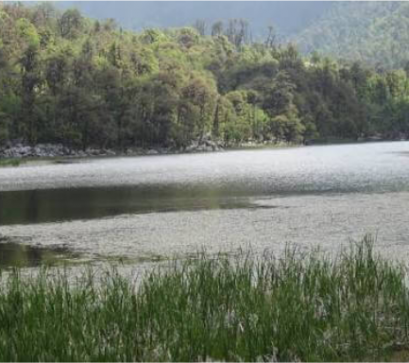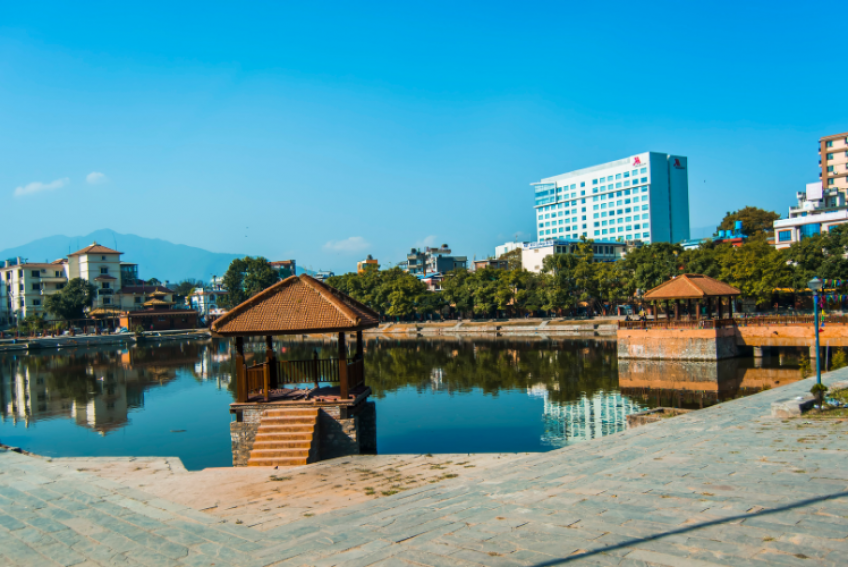
Nestled between the busy neighbourhoods of Dilli Bazaar and Putalisadak, Kamal Pokhari remains one of Kathmandu’s quietly significant historic water bodies. Though now framed by urban roads, commercial buildings and the constant movement of city life, it continues to reflect the Kathmandu Valley’s deep-rooted relationship with water, ecology and traditional urban planning.
Kamal Pokhari, literally translating to “Lotus Pond”, is part of Kathmandu’s long-standing tradition of pokharis: man-made or natural ponds that once played a vital role in sustaining settlements across the valley. Historical consensus generally places its origins within the broader timeline of the Kathmandu Valley’s early urban development, with continued use through the Malla period, although exact dating remains uncertain.
Like other traditional ponds, Kamal Pokhari was historically linked to the valley’s indigenous water management system. Before modern piped infrastructure, Kathmandu depended on interconnected ponds, stone spouts (hiti), wells and irrigation channels to manage seasonal water supply and groundwater recharge.
Beyond its practical function, Kamal Pokhari was part of a cultural landscape where water bodies were closely tied to daily life, seasonal cycles and community practices. In the Newar urban tradition, ponds were not isolated features but integral to neighbourhood identity, ritual observances and ecological balance.
The name itself, Kamal, meaning lotus reflects the symbolic association of ponds with purity, regeneration and natural beauty. While the presence of lotus flowers is part of local memory and naming tradition, the pond’s primary significance lies in its role within Kathmandu’s wider living water system.
Kamal Pokhari once formed part of the valley’s interconnected hydrological system, which worked alongside hiti stone spouts and underground aquifers. These systems collectively helped regulate water flow, store monsoon rainfall and sustain settlements across different seasons.
Although much of this traditional infrastructure has been disrupted or replaced over time, surviving ponds like Kamal Pokhari offer valuable insight into how the city once functioned in harmony with its natural water cycles.
In recent years, Kamal Pokhari underwent significant renovation under the Kathmandu Metropolitan City, with interventions introducing paved walkways, landscaped areas and recreational features. The redevelopment aimed to enhance public accessibility and create an urban green space within a dense neighbourhood.
However, these changes also generated debate among conservationists, architects and heritage observers. Concerns were raised regarding the shift from a primarily ecological waterbody to a structured recreational park, with discussions focusing on the balance between urban improvement and the preservation of historical identity.
The discussion around Kamal Pokhari has since become part of a broader conversation in Kathmandu about heritage conservation, particularly how traditional water systems can be protected while adapting to modern urban needs.
A Quiet Reminder of the Valley’s Past
Today, Kamal Pokhari stands at the intersection of memory and modernity. While its surroundings have transformed dramatically, the pond remains a subtle reminder of Kathmandu’s ancient relationship with water; one shaped not only by utility, but also by culture, ecology and communal life.
For many residents and observers, it is less about what Kamal Pokhari has become, and more about what it represents: a fragment of a once-integrated urban ecosystem that continues to inform conversations about sustainability and heritage in the valley.
Also Read