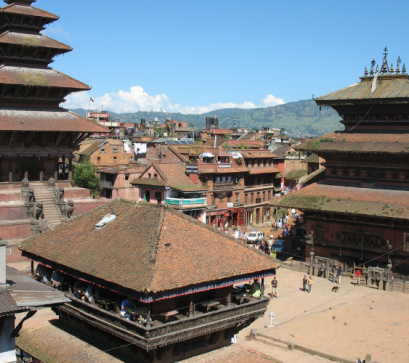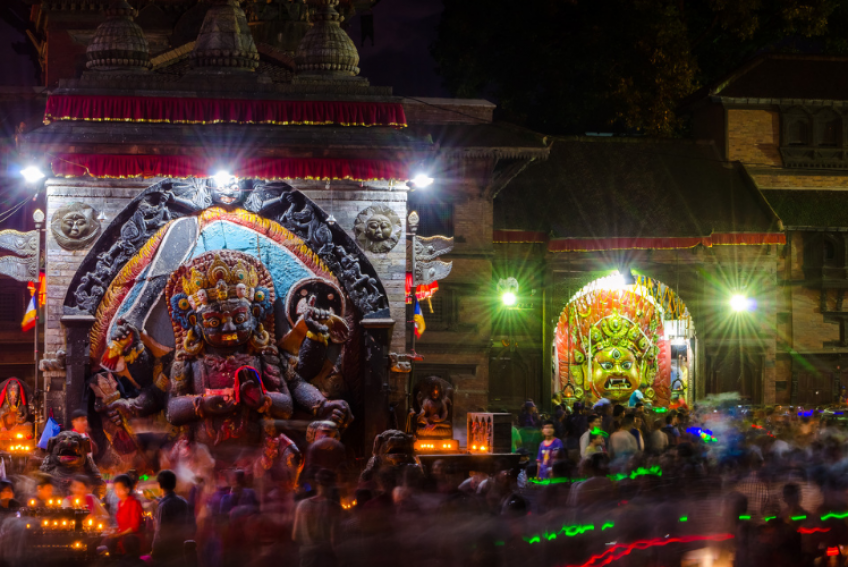
Standing prominently in the heart of Kathmandu Durbar Square, the imposing stone image of Kaal Bhairav remains one of the most fascinating cultural and spiritual landmarks in Nepal. Located within the historic Basantapur area, this fierce manifestation of Lord Shiva has watched over the ancient city for centuries, drawing worshippers, historians, photographers, and travellers alike.
For many visitors exploring Kathmandu's UNESCO-listed heritage site, Kaal Bhairav is an unmissable attraction that offers a glimpse into the city's rich religious and cultural traditions.
Towering at approximately 12 feet, the colossal sculpture is believed to have been carved from a single block of stone. Although its exact origins remain debated, historians generally associate the image with the Licchavi period, while local accounts suggest it was rediscovered in a paddy field and later installed in Kathmandu Durbar Square by King Pratap Malla during the 17th century.
Over the centuries, the statue has become one of the most recognisable symbols of Basantapur, standing as a witness to Kathmandu's evolving history, royal ceremonies, festivals, and daily life.
Kaal Bhairav represents the fierce and protective form of Lord Shiva associated with time, justice, protection, and the destruction of evil. Unlike the calm and meditative depictions of Shiva found elsewhere, Kaal Bhairav embodies authority, vigilance, and fearlessness.
For devotees, the deity serves as a powerful guardian who protects the righteous and punishes wrongdoing. This belief has contributed to Kaal Bhairav's enduring importance within both Hindu and Newar traditions in the Kathmandu Valley.
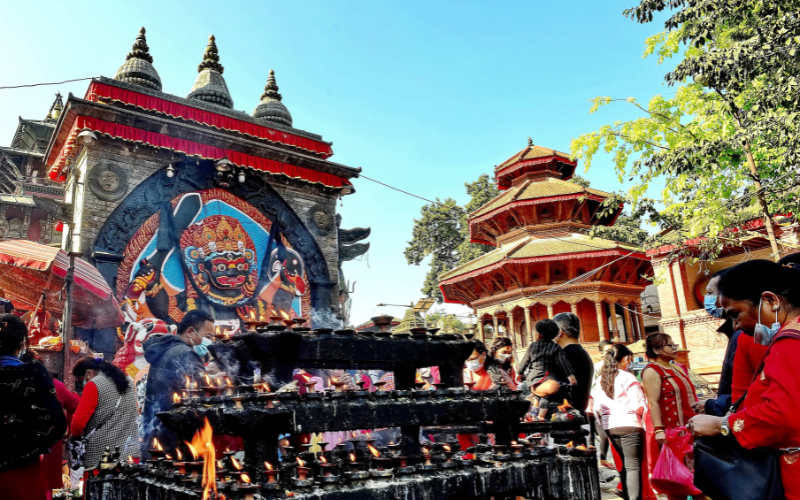
Beyond its religious significance, Kaal Bhairav is admired for its remarkable artistic craftsmanship. The sculpture showcases intricate carvings, expressive facial features, symbolic ornaments, and detailed iconography that reflect the skill of Nepal's early stone artisans.
The deity is depicted with multiple symbolic elements, including skull motifs and weapons, which represent his role as a destroyer of evil and protector of cosmic order. Despite centuries of exposure to the elements, the monument continues to command attention with its dramatic presence and intricate detailing.
Perhaps the most fascinating aspect of Kaal Bhairav is the folklore surrounding the deity's reputation as the ultimate judge of truth.
For generations, people believed that anyone who lied in front of Kaal Bhairav would face immediate divine punishment. Because of this belief, the area before the statue reportedly became a place where oaths were taken and testimonies were given, functioning as a symbolic court of justice.
One of Kathmandu's most enduring legends tells of a worker accused of wrongdoing and summoned before Kaal Bhairav to prove his innocence. Terrified by the belief that liars would instantly die, he sought help from his mother. According to the story, he secretly placed a small amount of his mother's breast milk in his mouth before taking the oath.
When he stood before the deity and declared his innocence, he survived unharmed. The tale suggests that the worker cleverly relied on the truth embodied by the milk that had nurtured him since infancy. Though regarded as folklore, the story remains one of the most frequently shared legends associated with Kaal Bhairav and reflects the deep reverence people held for the deity's power.
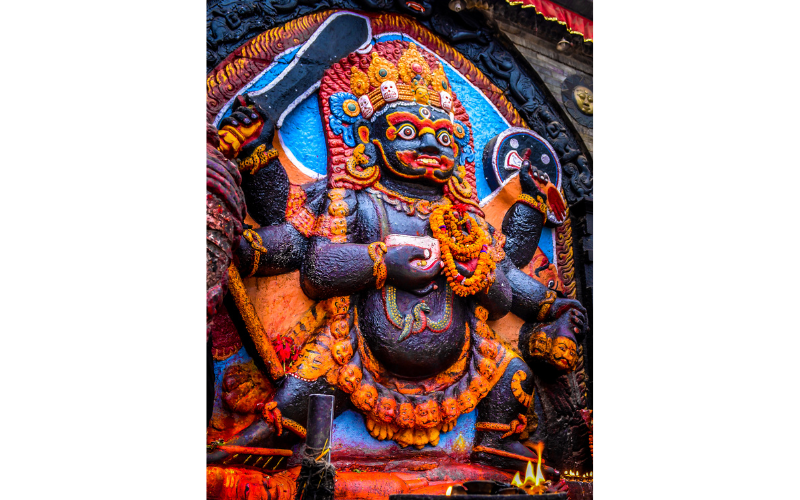
Kaal Bhairav continues to play an important role in Kathmandu's cultural life. During Indra Jatra, one of the valley's most celebrated festivals, the area surrounding the statue becomes a focal point for rituals, gatherings, and cultural performances.
The monument remains a place of worship for devotees and a point of fascination for visitors seeking to understand the traditions that continue to shape the Kathmandu Valley.
Today, Kaal Bhairav is much more than an ancient stone sculpture. It is a symbol of Kathmandu's layered identity, where history, religion, art, governance, and folklore converge.
For travellers wandering through Basantapur's historic courtyards and temples, the towering deity offers more than a striking photo opportunity. It tells a story of a city where myths endure, traditions thrive, and centuries-old beliefs continue to form an essential part of Nepal's living heritage.
Also Read