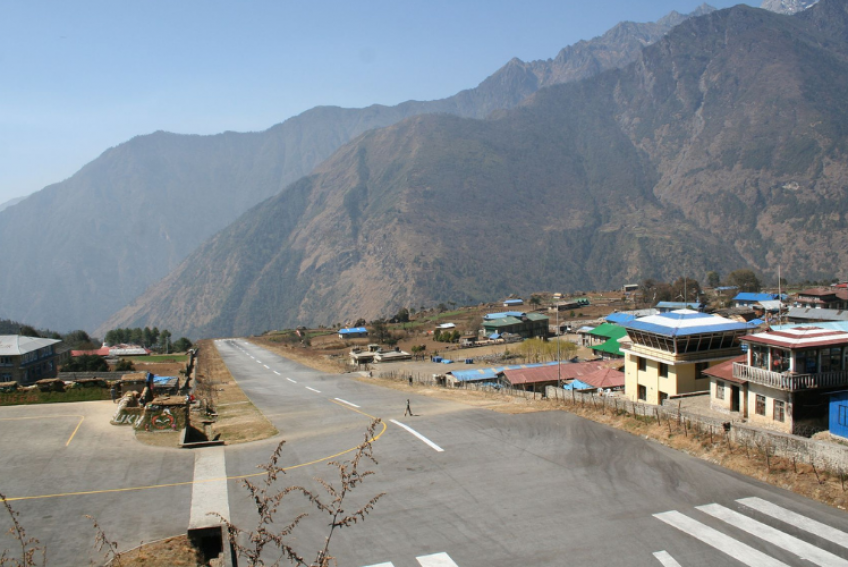
High in the Himalayas, perched dramatically on a mountainside at an elevation of 2,845 metres, lies an airport that has earned a reputation unlike any other in the world. Officially known as Tenzing-Hillary Airport, the tiny airstrip in Lukla is often described as one of the world’s most thrilling, challenging, and adrenaline-inducing airports.
For trekkers and climbers heading towards Mount Everest, Lukla serves as the dramatic gateway to the Khumbu region. Yet the journey itself has become almost as legendary as the mountains beyond it.
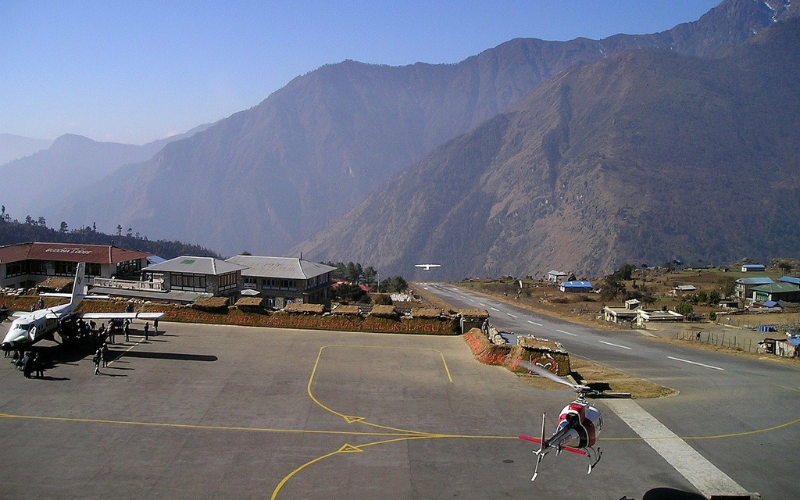
What makes Lukla Airport extraordinary begins with its runway. Measuring only about 527 metres in length, it is among the shortest commercial runways in the world. Unlike conventional airports built on flat terrain, Lukla’s runway sits on a steep incline with a mountainside at one end and a sharp drop into the valley at the other.
This unique uphill slope is intentionally designed to help aircraft slow down during landing and gain speed during take-off. However, it leaves virtually no room for error. Pilots must commit fully once they begin their approach.
Adding to the challenge, the airport has no possibility for a “go-around” manoeuvre after a certain point. If visibility changes suddenly during landing, pilots cannot simply circle back easily due to the surrounding terrain.
Another major reason Lukla is regarded as thrilling is its notoriously unpredictable weather conditions. The Himalayas generate rapid cloud formation, sudden wind shifts, and dense fog within minutes.
Morning flights are usually preferred because weather conditions are comparatively stable during early hours. Even then, delays and cancellations are extremely common. A clear sky in Kathmandu can quickly transform into heavy cloud cover around Lukla.
Strong crosswinds and changing visibility levels require pilots to possess exceptional mountain flying skills. Only specially trained and certified pilots are permitted to operate flights into Lukla.
The journey from Kathmandu to Lukla typically takes around 25 to 35 minutes, yet it delivers one of the most scenic and intense flying experiences in the world.
Passengers witness dramatic Himalayan landscapes, deep valleys, terraced hillsides, and snow-capped peaks from remarkably close range. As the aircraft approaches Lukla, travellers often notice the runway appearing suddenly between mountain ridges, adding to the suspense and excitement.
Small twin-engine aircraft such as the DHC-6 Twin Otter and Dornier 228 are commonly used because they are capable of handling short take-offs and landings in high-altitude conditions.
The airport was renamed Tenzing-Hillary Airport in honour of Tenzing Norgay and Sir Edmund Hillary, the first climbers confirmed to have summited Everest in 1953.
Interestingly, Sir Edmund Hillary himself played a significant role in developing Lukla’s airstrip during the 1960s to improve access to the Khumbu region. Initially, aircraft landed on a grassy field before the runway was later paved.
Today, the airport stands not only as a transportation hub but also as a symbol of Himalayan adventure and mountaineering history.
Despite its intimidating reputation, thousands of travellers fly to Lukla every trekking season. For many adventurers, landing at Lukla is considered a bucket-list experience and the true beginning of the Everest journey.
The airport dramatically shortens travel time to the Everest region. Without the flight, reaching the trekking trails would require several additional days of overland travel.
Moreover, Lukla embodies the spirit of Himalayan exploration: unpredictable, raw, and unforgettable.
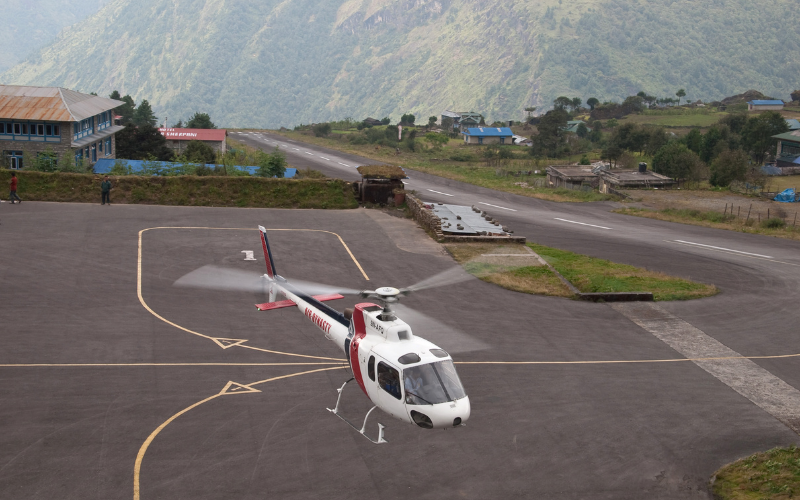
Although Lukla has long been associated with danger, aviation authorities in Nepal have implemented multiple safety upgrades over the years. Improved communication systems, stricter pilot qualification requirements, and better operational procedures have contributed to enhancing safety standards.
Flights are heavily dependent on weather assessments, and operations are routinely suspended during unsuitable conditions. This cautious approach, while inconvenient for travellers, plays a vital role in reducing risk.
International media outlets and travel publications frequently rank Lukla among the world’s most extreme airports. Aviation enthusiasts from around the globe recognise it as a remarkable example of mountain aviation.
Yet beyond the thrill lies something more meaningful. Lukla represents Nepal’s extraordinary geography, the resilience of mountain communities, and the enduring allure of Everest tourism.
For many travellers, the moment the aircraft touches down on that short Himalayan runway becomes one of the most unforgettable memories of their lives.
Also Read