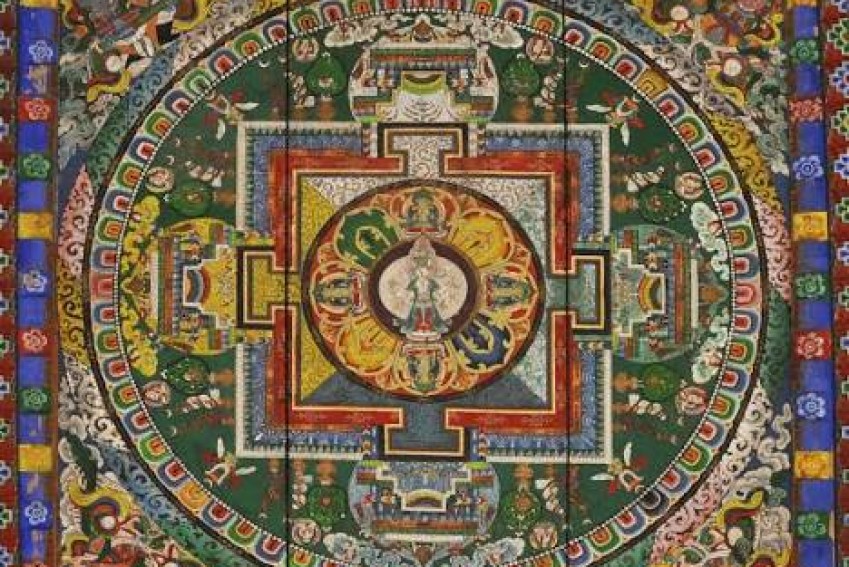
Thangka is a traditional form of Tibetan Buddhist painting, usually done on cotton canvas, depicting deities, mandalas, or scenes from Buddhist teaching. Every line and proportion follows strict rules passed down through generations of artists, since thangkas are meant for meditation and worship, not just decoration. This is part of why the full tradition takes years to learn. A beginner class will not turn you into a thangka master in an afternoon, but it will give you real insight into a craft that most visitors only see hanging in shop windows.
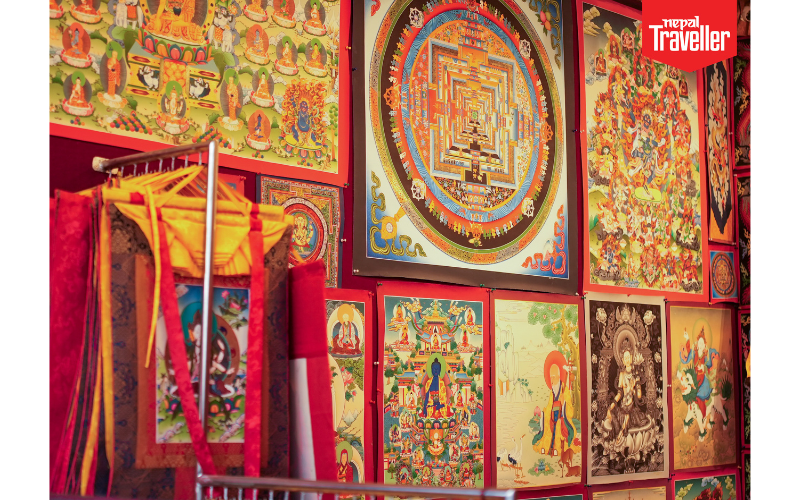
Most tourist friendly workshops in Boudha run three to four hours and are built around two core techniques: sirdang, which are small horizontal lines, and choptang, which are small dots used for shading and detail. Instead of a full deity painting, first timers usually practice on a simpler motif such as a lotus, a Buddha eye, or a small mandala. Your teacher will usually be a working local artist, often someone who started learning as a teenager, which means you are getting real technique even in a short session.
Classes typically run daily and can be booked through local studios or through platforms like Backstreet Academy and Viator, with basic introductory sessions starting around 40 to 50 US dollars. Group sizes tend to be small, so you get direct feedback rather than a lecture.
If a few hours leaves you wanting more, some studios in Boudha offer multi day or multi week study for serious learners. Boudha Stupa Thanka Centre, running since 2000, teaches foreign students and charges by the day rather than by the hour, so you can extend your stay as your interest grows. On the more traditional end, the Tsering Art School at Shechen Monastery follows a formal curriculum in the Karma Gadri lineage, though real fluency there is measured in years rather than weeks. It is worth knowing that this deeper path exists, even if most travellers only have time for an introductory session.
Book a day or two in advance during high tourist season, since popular studios can fill up. Wear something you do not mind getting a little paint on, and expect to sit on the floor or a low stool in the traditional style. Bring a bit of patience too. Thangka work is slow and repetitive by design, and that is part of the point. Many visitors say the process itself, sitting quietly near the stupa and focusing on small, careful lines, ends up being as memorable as the finished painting.
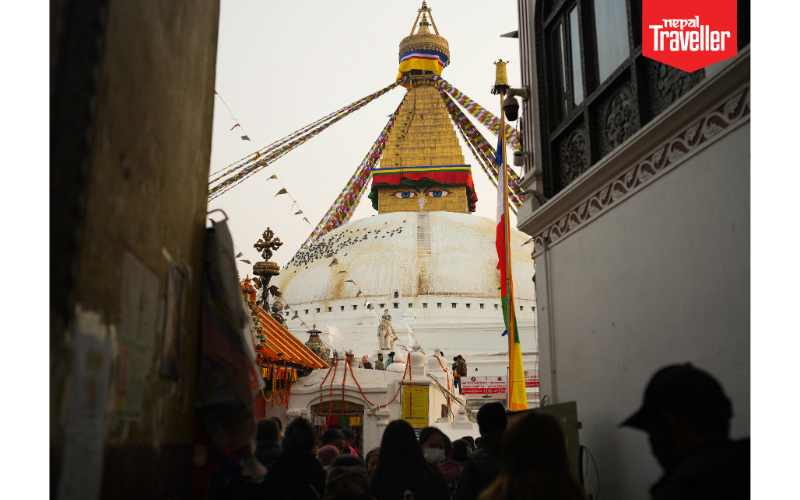
Most studios are within easy walking distance of the Boudhanath stupa, so it is simple to combine a class with a morning or afternoon spent doing a kora around the stupa itself. Between the two, you leave with more than a souvenir. You leave with a small, personal understanding of why this art form has survived here for so long.