.png)
Tihar is more than a festival of lights. It is a celebration of faith, nature, gratitude and cultural identity. On November 10, 2026 (Kartik 24, 2083), Nepal will observe Govardhan Puja, Goru Puja and Mha Puja while welcoming Nepal Sambat 1147, the Newar New Year. Although these traditions have different origins, each carries a meaningful story passed down through generations.
According to Hindu mythology, Lord Krishna encouraged the villagers of Gokul to honour Govardhan Hill, which provided grazing land and supported their cattle, instead of worshipping Indra, the god of rain.
Angered by this decision, Indra unleashed a powerful storm. Krishna is believed to have lifted Govardhan Hill on his little finger, sheltering the villagers and their animals for seven days.
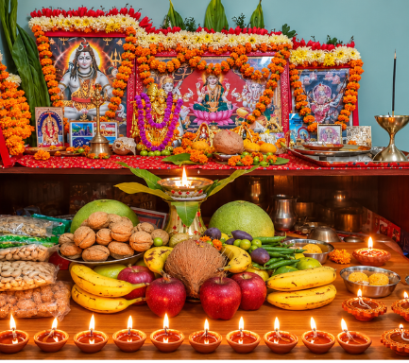
During Govardhan Puja in Nepal, devotees create symbolic hills using cow dung and offer prayers. The occasion also includes Goru Puja, when oxen are honoured for their traditional contribution to agriculture.
Beyond its religious meaning, the festival reflects gratitude towards nature, livestock and the resources that sustain human life.
While many communities celebrate Govardhan Puja, Newar families observe Mha Puja, one of Nepal’s most distinctive cultural traditions.
In Nepal Bhasa, Mha means body or self. The ritual honours the individual, expressing wishes for good health, spiritual purification, prosperity and long life.
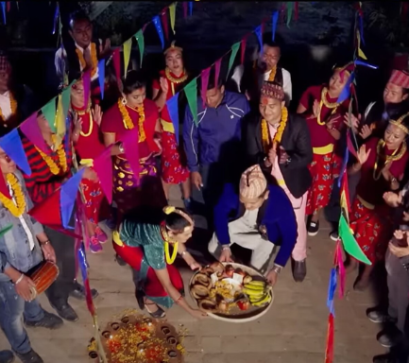
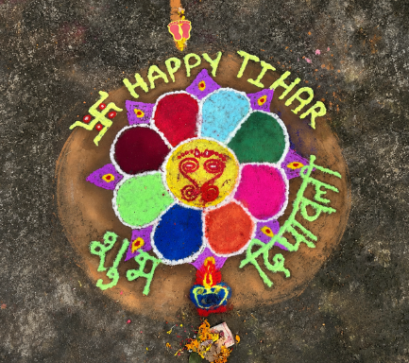
During the evening ceremony, family members sit before individual mandalas decorated with coloured powders, rice, flowers and other sacred offerings. Oil lamps are lit, blessings are exchanged, and traditional sagun is offered.
The ceremony reflects a meaningful belief: caring for and respecting oneself is also an act of devotion.
Alongside Mha Puja, the Newar community welcomes Nepal Sambat, a historic calendar era dating to 879 CE.
Its origin is traditionally associated with Shankhadhar Sakhwa, a Kathmandu merchant who, according to popular legend, used extraordinary wealth to free people in the Kathmandu Valley from debt.
Although the precise historical circumstances surrounding the calendar’s establishment remain debated, Sakhwa's story continues to represent generosity and collective freedom.
Today, cultural processions, traditional music and greetings of “Nhudanya Bhintuna” (Happy New Year) bring communities together, particularly across the Kathmandu Valley.
Govardhan Puja honours nature, Mha Puja celebrates the inner self, and Nepal Sambat represents cultural identity and renewal.
Together, they reveal a remarkable side of Tihar, where ancient stories remain alive through family rituals, public celebrations and traditions that continue to shape Nepal’s cultural heritage.
.png)