.jpg)
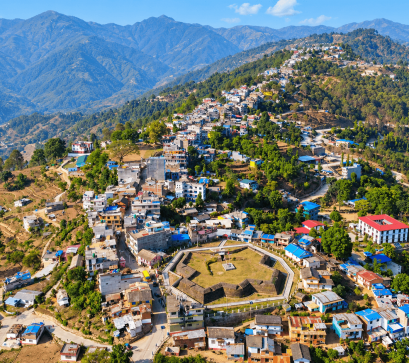
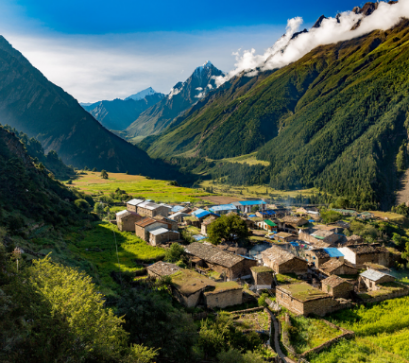
High on a ridge above the meeting point of the Trishuli and Marsyangdi rivers in Gorkha district sits a temple built around a single boulder. Pilgrims climb the same hill, wait in the same long queues during Dashain, and whisper the same kind of promise: grant this wish, and I will return with an offering. This is Manakamana, and its story begins with a king, a secret, and a stone that would not stop bleeding.
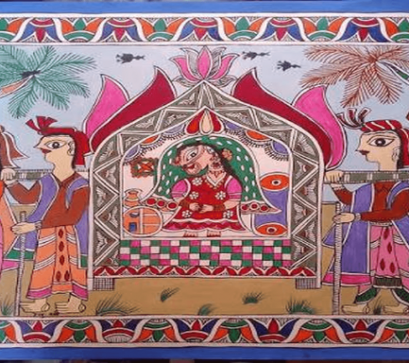
The legend traces back to the reign of King Ram Shah of Gorkha, placed by most accounts in the early 17th century, though some sources push it a little earlier. His queen, tradition says, carried a divine power that only one man knew about: Lakhan Thapa, a Magar devotee close to the royal household. One day the king caught a glimpse of what Lakhan Thapa already understood, his wife transformed into the goddess, her devotee beside her as a lion. Soon after, the king died. Following the customs of the era, the queen chose sati, ending her life on her husband's funeral pyre, but not before promising Lakhan Thapa she would return.
Six months on, a farmer breaking ground nearby struck a stone that released a stream of milk and blood. Word reached Lakhan Thapa, who recognized his queen's promise fulfilled. He performed tantric rites to still the flow, then built a shrine over the stone itself. That boulder, called a shila, still sits at the heart of the temple today, flanked by four smaller stones representing Bhairab, Ganesh, Kumari, and Betaal.
What keeps this story alive is not just the temple, but who tends it. Manakamana's priesthood has stayed inside one family for roughly seventeen generations, always passed down through Lakhan Thapa's Magar descendants, a rare arrangement in Nepal where most temple priests come from Brahmin lineages. Some accounts connect Lakhan Thapa's spiritual power to the sage Gorakhnath, and describe Manakamana Bhagwati and the goddess Gorakhkali as sisters in devotion, a detail that ties this hilltop shrine into a wider web of Himalayan Shakti worship.
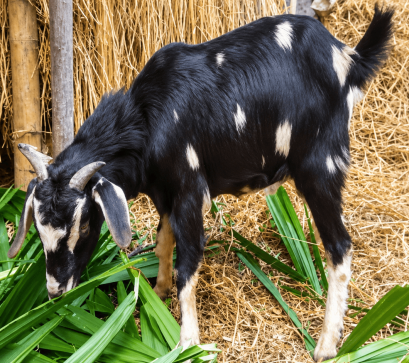
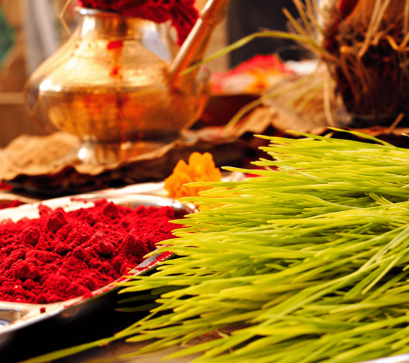
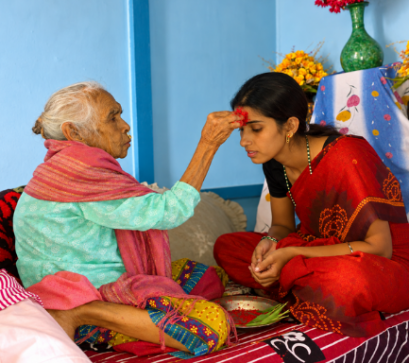
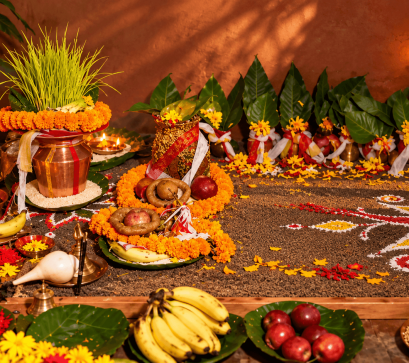
Devotees do not simply visit and pray. They make a manauti, a private vow to the goddess: heal my child, bless this marriage, let the harvest hold. If the wish comes true, they return, often with a goat or a pigeon for sacrifice, especially during Dashain's Maha Ashtami, when the temple courtyard fills with incense, chanting, and the sound of pilgrims fulfilling promises made months or years earlier.
Getting there once meant a steep climb from Abu Khaireni. Since 1998, Nepal's first cable car has cut that journey from Kurintar to under ten minutes, though many still choose to walk the old trail beneath the 400 year old champa tree said to house the goddess's presence.
Whether Manakamana is an incarnation of Parvati, Durga, or Lakshmi depends on which telling you follow. What does not change is the promise at the center of it: a goddess who listens, and a family who has spent three centuries making sure she is heard.