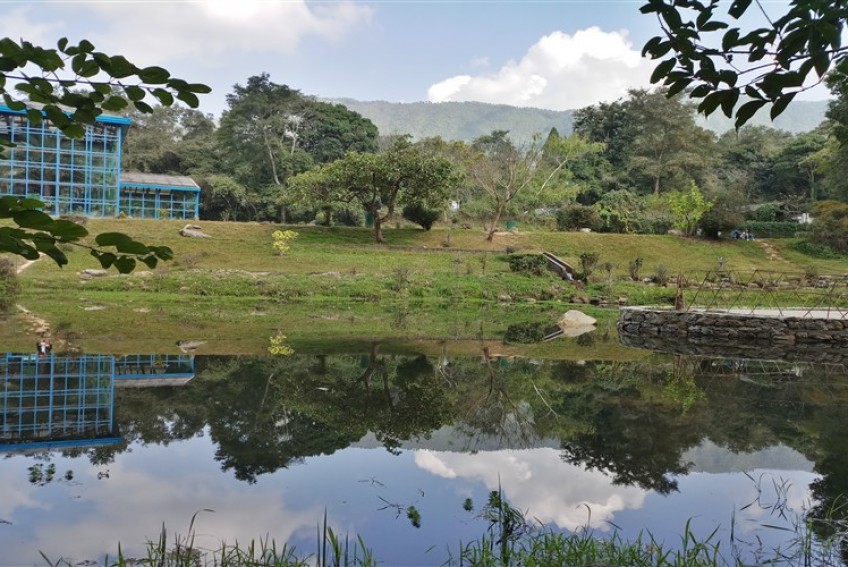
Also known as the National Botanical Garden, it sits roughly 14 to 16 kilometres southeast of the capital in Lalitpur district, making it one of the easiest full nature escapes available on a single day trip.
The garden traces its layout to a collaboration involving British horticulturists Geoffrey Herklots and Tony Schilling, with support tied to the Royal Botanic Garden Edinburgh. It spans about 82 hectares, of which roughly 40 hectares have been developed into distinct thematic sections. Inside, visitors move between a rock garden, a fern house, an orchid collection, a bonsai display, a Japanese-style garden, and a medicinal plant section, along with a dedicated area for endangered species. There is even a VVIP garden lined with trees planted by visiting dignitaries over the decades. Depending on the source, the garden's plant inventory ranges from several hundred to over a thousand species, a spread that reflects both ongoing planting and the difficulty of keeping a live count in a working conservation site. Godawari is also a recognised member of Botanic Garden Conservation International, underscoring its role beyond simple sightseeing.
Spring, from March through April, is when the garden earns its reputation. Rhododendrons, Nepal's national flower, bloom heavily on the surrounding slopes of Phulchowki, and the garden's own flowering beds fill out at the same time. That said, the site stays worth visiting through the year, with winter months offering quieter trails and cooler air for walking.
Opening hours run roughly 9 am to 5 pm most of the year, though they may shorten slightly to around 9 am to 4 pm during the coldest winter months, so it is worth checking locally before setting out. Entry fees differ by nationality, with foreign visitors typically paying a few hundred rupees and Nepali citizens paying a much smaller flat fee. Rates have shifted over time, so confirming the current price at the gate is sensible.
Getting there is straightforward. From central Kathmandu, a taxi takes about an hour, while travellers relying on public transport usually catch a bus to Lagankhel in Patan and transfer to a Godawari-bound minivan from there. The drive itself is part of the appeal, passing through older Newari settlements on the way out of the valley.
Beyond the garden gates, the area rewards a longer stay. Godawari Kunda, a natural spring considered sacred, sits close by, along with a small Tibetan monastery. Serious hikers can continue up Phulchowki itself, a climb that takes several hours round trip and is best started early in the morning. Birdwatchers will also find plenty to look for, with well over a hundred species recorded in and around the garden.
For anyone travelling in, visiting, or based in Kathmandu who wants greenery, quiet, and a slower pace without a long journey, Godawari remains one of the valley's most reliable choices.