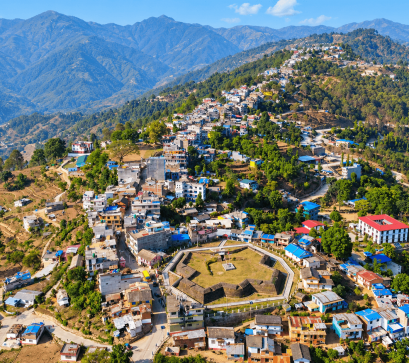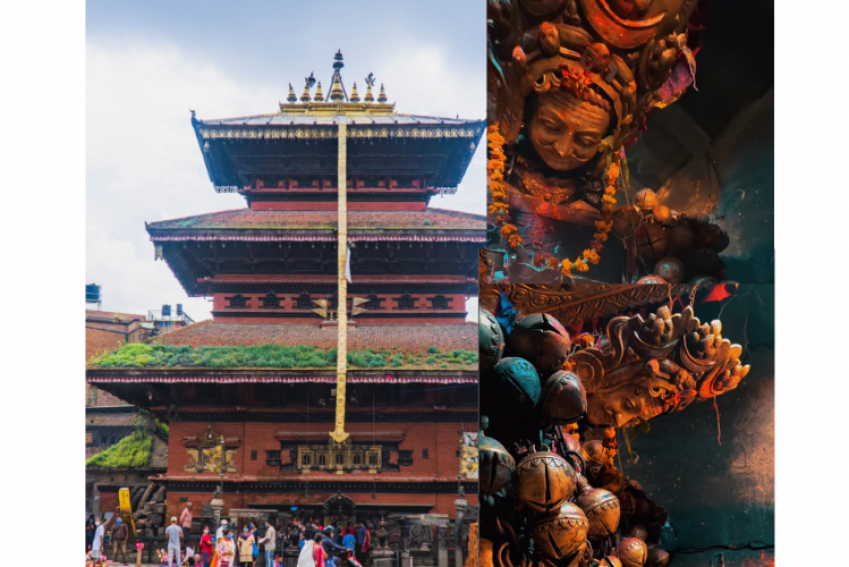
Most visitors standing before the towering silhouette of Nyatapola Temple are drawn to its grandeur, often missing what lies just behind Bhairavnath Temple.
Tucked into a quieter corner is the shrine of Bir Betal, a Tantrik guardian deity unlike any other in Bhaktapur. Unlike serene or seated deities commonly found across Nepal’s temples, Betal is hung upside down, bound with iron chains and adorned with bells that echo softly with every movement of wind and ritual activity.
This unusual posture immediately raises the question: why would a deity be displayed in such a manner?
The answer lies in a blend of Tantrik philosophy, local belief systems, and centuries-old Newar cultural interpretation.
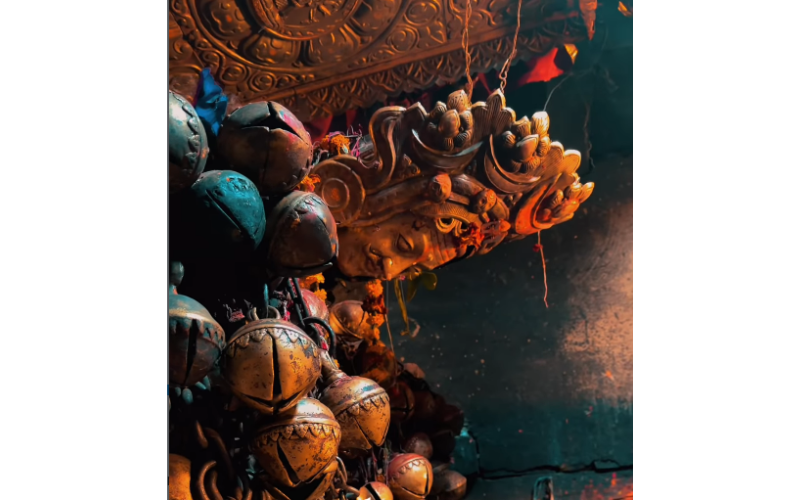
In Tantrik traditions, divinity is not always gentle or composed. Certain energies are considered wild, volatile, and difficult to contain. Bir Betal is believed to represent exactly this force.
Locals do not interpret his upside-down suspension as punishment. Instead, it is understood as a ritual method of containment.
The chains are symbolic rather than punitive:
In this worldview, restraint is not disrespect, it is spiritual engineering.
Betal is considered a liminal deity, one who exists between worlds: order and chaos, protection and destruction, playfulness and fury.
Farmers in Bhaktapur are known to visit his shrine before planting seasons, seeking blessings for fertile land and protection from unpredictable natural forces. Despite his fearsome Tantrik associations, Betal is also viewed as a protector of livelihoods.
Elders recount stories of a glowing, mischievous boy appearing to children, only to vanish moments later. These narratives reinforce Betal’s dual identity: both guardian and trickster.
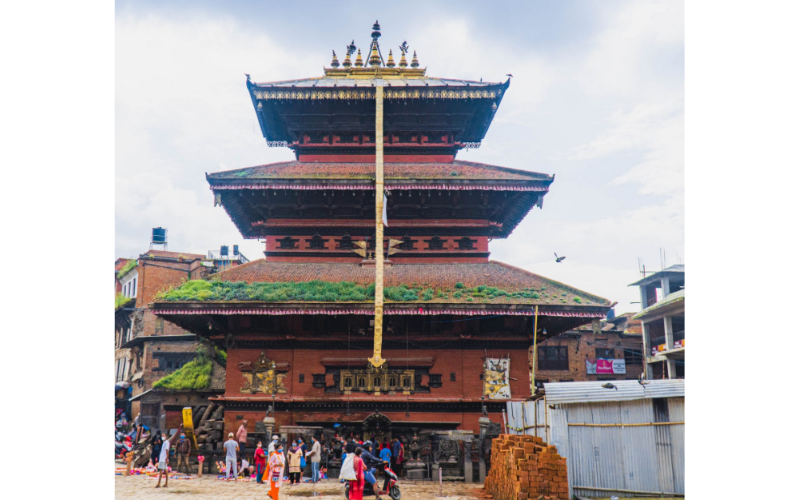
During the grand festival of Biska Jatra, Betal’s role becomes especially significant.
The festival procession through Taumadhi Square is believed to be guided not only by human participants but also by unseen spiritual forces. Betal is said to accompany or influence the movement of the chariot of Bhairav through the crowded streets.
Locals observe his face carefully during this time. According to belief, any change in his expression is interpreted as an omen for the festival’s unfolding.
Such interpretations highlight how deeply ritual and intuition are intertwined in Bhaktapur’s living traditions.
The most widely accepted cultural interpretations of Betal’s inverted form include:
Betal’s energy is believed to be too intense for conventional representation. Hanging him upside down symbolically stabilises his force.
In Tantrik philosophy, inversion often represents transformation; turning chaos into order, or raw energy into protection.
Placed behind Bhairavnath Temple, Betal is thought to act as a secondary guardian, absorbing disruptive energies before they reach the main sanctum.
One of the most enduring legends associated with Betal claims that he once ascended the great Nyatapola Temple in human form when no one else could complete a sacred task. Whether myth or metaphor, such stories reinforce his place as a protector who operates beyond human limitation.
Meanwhile, the history of Bhairavnath Temple itself developed under the Malla rulers and shaped through centuries of reconstruction adds further layers to this sacred landscape. The temple’s evolution reflects Bhaktapur’s resilience, especially after major earthquakes in 1934 and 2015.
Bir Betal is not worshipped in the conventional sense. He is respected, negotiated with, and acknowledged.
In Bhaktapur’s spiritual landscape, divinity is not always about peace. Sometimes, it is about balance through restraint, ensuring that powerful forces remain within boundaries that protect rather than destroy.
Betal’s upside-down form captures this philosophy perfectly.
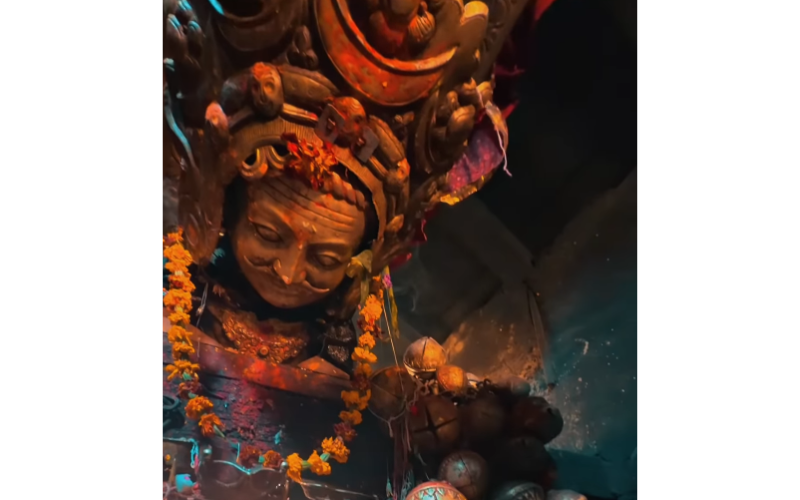
Today, many visitors walk past his shrine unaware. Yet for those who pause behind Bhairavnath Temple, Betal offers a different understanding of faith, where gods are not only adored but also carefully held in place.
In Bhaktapur, even inversion has meaning. And even the most chaotic energy, when respected, becomes protection.
Also Read