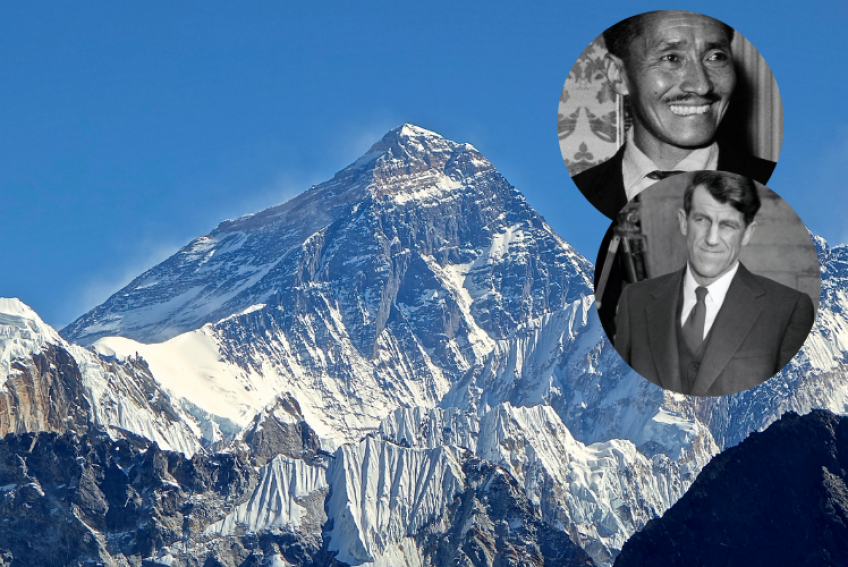
Every year on 29 May, Nepal and the global mountaineering community celebrate International Everest Day, honouring the first successful ascent of Mount Everest by Edmund Hillary and Tenzing Norgay in 1953.
Towering at 8,848.86 metres above sea level, Mount Everest is not only the highest mountain on Earth but also a global symbol of endurance, exploration, and human ambition. Known locally as Sagarmatha in Nepal and Chomolungma in Tibet, Everest has shaped the identity of Himalayan tourism and mountaineering for decades.
As the world marks International Everest Day, here is a look into the fascinating history, remarkable firsts, and enduring legacy of the iconic peak.
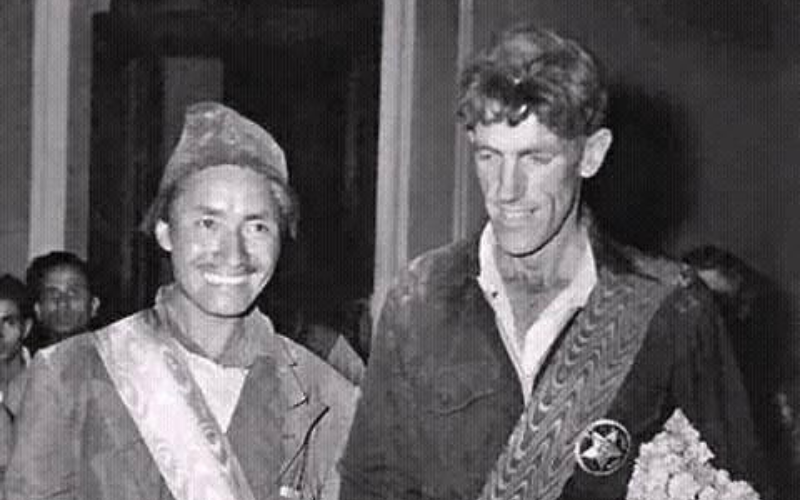
International Everest Day was officially announced by the Government of Nepal in 2008 following the death of Sir Edmund Hillary on 11 January of that year.
The day is observed annually on 29 May to commemorate the historic first ascent of Mount Everest by Hillary and Tenzing Norgay on 29 May 1953. The celebration serves as a tribute not only to the legendary climbers but also to Nepal’s mountaineering heritage, Sherpa culture, and the global significance of Everest tourism.
Since its establishment, International Everest Day has been marked through commemorative events, mountaineering gatherings, tourism promotions, photo exhibitions, environmental campaigns, and tributes to climbers and guides who continue to shape Himalayan adventure tourism.
Although local communities had known about the mountain for centuries, Everest gained international recognition during the 19th century through the Great Trigonometrical Survey of India.
In 1856, the mountain was officially identified as the world’s highest peak and named after Sir George Everest, the former Surveyor General of India. Interestingly, Sir George Everest himself had never seen the mountain in person.
For decades, Everest remained unconquered due to its extreme altitude, unpredictable weather, avalanches, crevasses, and lack of modern climbing technology. Numerous expeditions attempted the summit throughout the early 20th century, particularly from the Tibetan side, but many ended in tragedy or failure.
One of the most famous early mountaineers associated with Everest was George Mallory, who disappeared on the mountain in 1924 alongside Andrew Irvine. To this day, historians continue debating whether the pair may have reached the summit before their disappearance.
The breakthrough finally came on 29 May 1953 when Sir Edmund Hillary and Tenzing Norgay successfully reached the summit as part of the British Everest Expedition led by John Hunt.
Ascending via the South Col route from Nepal, the pair overcame freezing temperatures, dangerous icefalls, and the now-famous Hillary Step to stand atop the world’s highest mountain.
Their achievement instantly became one of the greatest exploration milestones of the 20th century.
Tenzing Norgay later became an international icon representing the Sherpa community and Himalayan mountaineering excellence, while Hillary remained deeply connected to Nepal through his philanthropic work, including building schools and hospitals in the Everest region.
Today, Everest is far more than a mountaineering destination. It has become a cornerstone of Nepal’s global tourism identity.
Thousands of trekkers and climbers travel to the Everest region every year, supporting local communities, mountain guides, teahouses, airlines, and tourism businesses. The Everest Base Camp trek remains one of the most sought-after trekking experiences in the world.
At the same time, Everest also highlights growing conversations around sustainable tourism, waste management, overcrowding, and climate change in the Himalayas.
Melting glaciers, changing weather patterns, and environmental degradation have increasingly become major concerns for the future of Himalayan mountaineering.
International Everest Day is not merely about celebrating a mountain. It is about recognising the courage of climbers, the resilience of Sherpa communities, and Nepal’s invaluable contribution to global adventure tourism.
It also serves as a reminder of humanity’s enduring spirit of exploration and the responsibility to preserve fragile mountain ecosystems for future generations.
More than seven decades after the first successful ascent, Mount Everest continues to inspire dreamers, adventurers, and travellers from across the globe.
Also Read