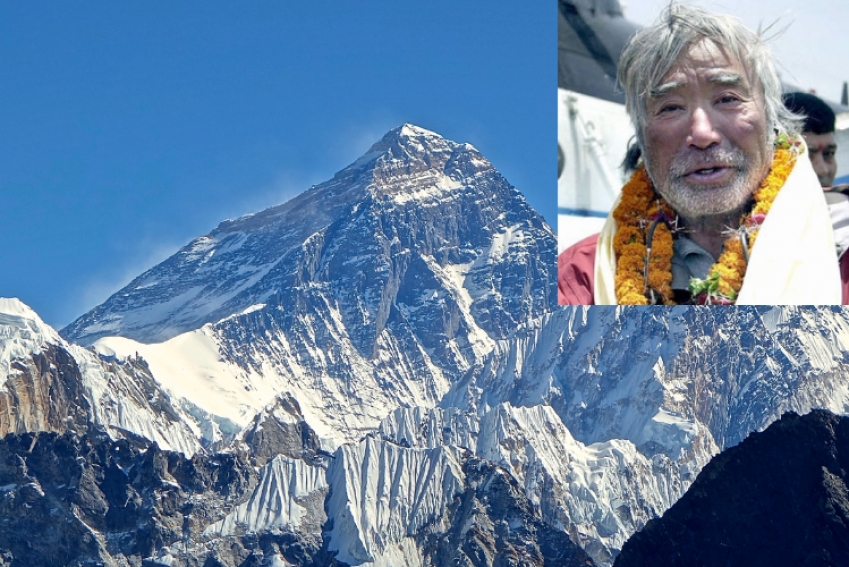
Every year on 29 May, the world commemorates International Everest Day: a tribute to the first successful ascent of Mount Everest by Sir Edmund Hillary and Tenzing Norgay Sherpa in 1953. While the mountain has since witnessed countless triumphs, few stories are as extraordinary and inspiring as that of Yuichiro Miura, the Japanese adventurer who challenged the limits of age on the world’s highest peak.
For many climbers, Everest is a once-in-a-lifetime ambition. For Miura, it became a lifelong pursuit of resilience, reinvention and human endurance.
Born in 1932 in Aomori, Yuichiro Miura was already globally recognised for his daring feats long before his Everest records. A professional skier and mountaineer, he became internationally famous in 1970 after skiing down Everest’s South Col, a dangerous and nearly unimaginable descent at the time. The expedition later inspired the Academy Award-winning documentary "The Man Who Skied Down Everest."
Yet it was not his youthful adventures that captivated the world most profoundly. It was what he achieved decades later.
At an age when most people retire from strenuous physical activity, Miura began preparing for Everest once again. Battling heart problems, multiple surgeries and the physical effects of ageing, he refused to accept limitations imposed by time.
In 2003, at the age of 70, Miura successfully reached the summit of Everest, becoming the oldest person in history at the time to stand atop the mountain.
His ascent shocked the mountaineering world. Everest is notoriously unforgiving: thin oxygen levels, avalanches, brutal cold and unpredictable weather challenge even elite climbers in peak condition. For a septuagenarian to succeed on the mountain was considered nearly impossible.
But Miura was not finished.
Five years later, in 2008, he returned to Everest and reclaimed his own record by summiting again at the age of 75.
Still, his greatest achievement was yet to come.
On 23 May 2013, Yuichiro Miura once again reached the summit of Everest; this time at the age of 80.
The achievement stunned the world and rewrote assumptions about ageing and physical endurance.
His expedition required immense preparation. Miura reportedly trained rigorously for years, carrying heavy packs, climbing mountains regularly and rebuilding his physical condition after heart surgery. His determination became symbolic not merely of mountaineering ambition, but of the human spirit itself.
At Everest’s summit, where oxygen levels are perilously low and every movement demands effort, Miura proved that perseverance can transcend age.
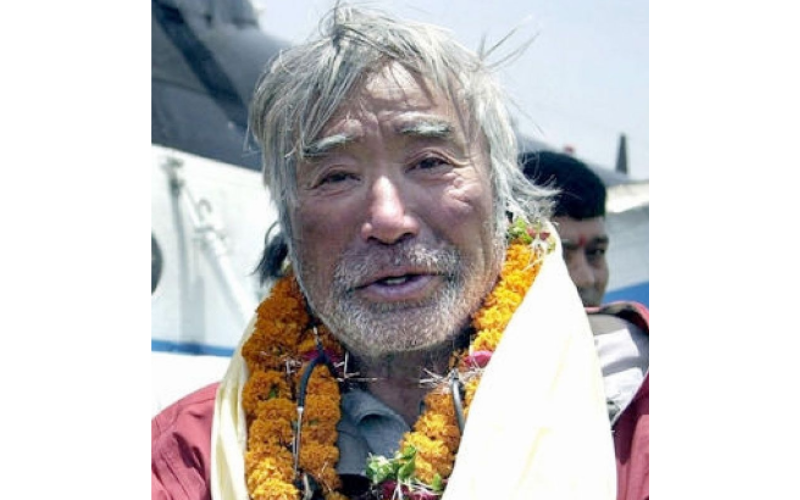
Though Yuichiro Miura is Japanese, his legacy is inseparable from Nepal and the Himalayas. Like every successful Everest climber, his achievements were made possible through the expertise, resilience and support of Nepal’s Sherpa community and mountain workers.
International Everest Day is not only a celebration of summits, but also of the people who make those journeys possible: guides, climbers, porters and local communities whose lives remain intertwined with the mountain.
Miura’s repeated returns to Nepal reflected his enduring admiration for Everest and the Himalayan landscape. His story also helped bring renewed global attention to Nepal’s mountaineering heritage and the possibilities of active ageing.
Yuichiro Miura’s Everest journey resonates far beyond the climbing world because it speaks to something universal: the refusal to surrender to limitations.
In an era increasingly concerned with longevity, wellness and mental resilience, his story remains remarkably relevant. He transformed Everest from a symbol of conquest into a symbol of persistence.
For younger generations, he represents courage. For older generations, possibility.
And for Nepal, his ascents remain part of Everest’s ever-growing tapestry of human stories.
As Nepal marks International Everest Day each year on 29 May, the legacy of Yuichiro Miura deserves remembrance alongside the mountain’s greatest achievements.
Because Everest is not measured solely by altitude.
Sometimes, it is measured by the strength of the people who continue climbing long after the world expects them to stop.
Also Read