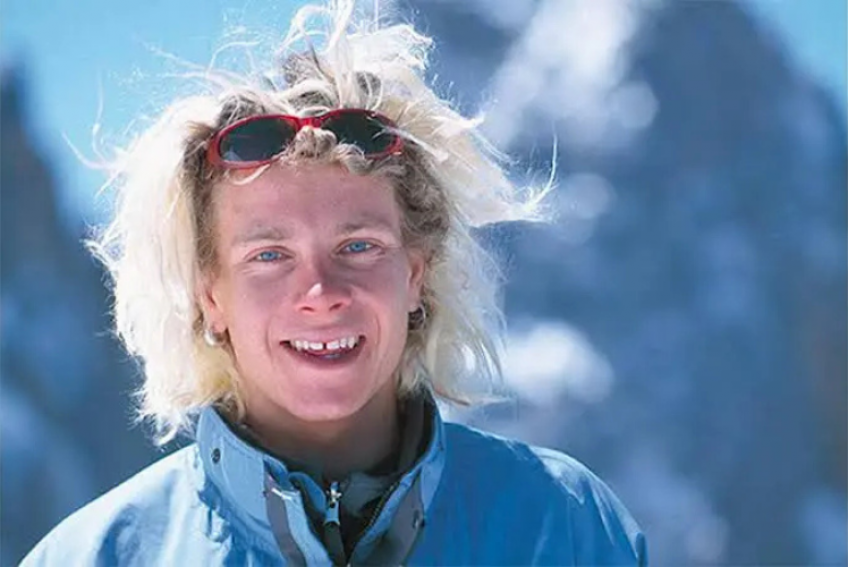
In 2001, the young French snowboarder made history by becoming the first person to complete a full snowboard descent from Everest’s summit. But while the achievement stunned the mountaineering world, Siffredi himself remained unsatisfied.
The route he truly wanted, the terrifying Hornbein Couloir had escaped him.
A year later, he returned to Everest to attempt it again.
He was never seen alive afterward.
Born in Chamonix, France, in 1979, Marco Siffredi grew up surrounded by mountaineering culture. His father was a mountain guide, and the Alps shaped much of his childhood. By his teenage years, Siffredi had already gained recognition for tackling dangerously steep descents that few snowboarders dared attempt.
Unlike conventional snowboarders focused on tricks or competitions, Siffredi was drawn toward extreme alpine riding:
He quickly earned a reputation for riding aggressively on terrain many mountaineers considered nearly impossible to descend on a snowboard.
Before Everest, he had already completed significant descents in the Alps, Peru, and the Himalayas, including descents on peaks such as Cho Oyu and Dorje Lhakpa.
But Everest remained his greatest ambition.
Snowboarding Everest is vastly different from simply climbing it.
Above 8,000 metres, the so-called “death zone” oxygen levels become dangerously low. Temperatures plunge far below freezing, weather shifts unpredictably, and snow conditions can change within minutes.
Descending on a snowboard adds another level of risk entirely.
One mistake can mean:
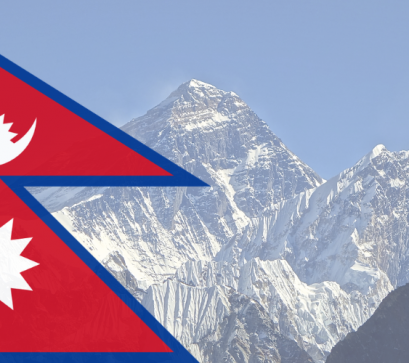
And Everest’s north face, approached from Tibet, contains some of the steepest and most dangerous terrain on the mountain.
In May 2001, Siffredi successfully reached Everest’s summit from the Tibetan side with Sherpa support and supplemental oxygen during part of the climb.
His original dream had been to descend via the Hornbein Couloir: a steep, narrow gully slicing through Everest’s north face often considered the “holy grail” of snowboard descents.
But conditions were poor.
There was not enough snow in the Hornbein Couloir to safely ride it. Instead, Siffredi chose the Norton Couloir, another dangerous route descending from Everest’s north face.
After spending time on the summit, he began his descent.
The ride itself was brutal:
At one point, a snowboard binding reportedly broke due to the extreme cold, forcing him to stop and repair it before continuing.
Despite the difficulties, Siffredi successfully snowboarded down to Advanced Base Camp in roughly two hours and twenty minutes, becoming the first person to complete a full snowboard descent of Everest.
The achievement instantly became one of the boldest feats in Everest history.
Austrian snowboarder Stefan Gatt had summited Everest shortly before Siffredi while carrying a snowboard. However, difficult snow conditions forced Gatt to descend portions of the mountain on foot instead of continuously riding.
Because Siffredi completed the descent primarily on his snowboard, he became widely recognised for the first complete snowboard descent of Everest.
Even today, the feat remains extraordinarily rare.
Despite global recognition, Siffredi felt unfinished.
The Hornbein Couloir still haunted him.
Unlike the Norton Couloir, the Hornbein route is steeper, narrower, and significantly more dangerous.
To snowboard it successfully would have been one of the greatest descents in mountaineering history.
In 2002, Siffredi returned to Everest late in the climbing season, believing deeper snow conditions would make the Hornbein Couloir rideable.
On September 8, 2002, Siffredi reached Everest’s summit again alongside Sherpas after an exhausting ascent reportedly lasting around 12 to 13 hours.
But conditions were deteriorating.
Clouds moved in. Visibility worsened. Sherpas reportedly warned him not to begin the descent.
Siffredi ignored the warnings.
Shortly after 3 p.m., he strapped into his snowboard and pushed toward the Hornbein Couloir.
It was the last confirmed sighting of him alive.
Some Sherpas later reported seeing a distant figure descending before disappearing into clouds and snow. After that, nothing.
No confirmed trace of Marco Siffredi has ever been found.
To this day, nobody knows exactly how Siffredi disappeared.
Theories include:
The Hornbein Couloir remains one of Everest’s most dangerous routes, even for elite mountaineers.
Its remoteness and technical difficulty make recovery operations almost impossible.
More than two decades later, Marco Siffredi’s story continues to fascinate climbers, snowboarders, and Everest historians alike.
His 2001 descent changed perceptions of what was possible on the world’s highest mountain. At the same time, his disappearance became one of Everest’s enduring mysteries.
For many in the mountaineering world, Siffredi represented something rare:
not simply fearlessness, but an obsession with mountains that pushed beyond conventional limits.
He came to Everest searching for the perfect line down the mountain.
And somewhere on the vast face beneath the Hornbein Couloir, the mountain kept him forever.
PC: Tahoequarterly.com
Also Read