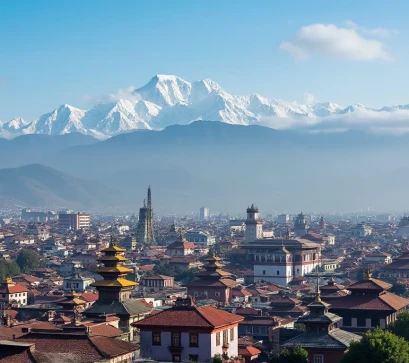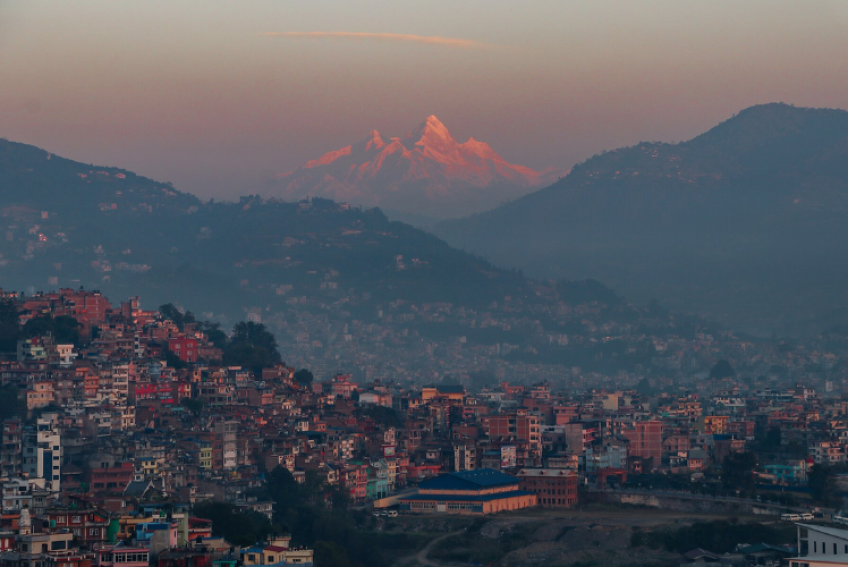
Kirtipur doesn't advertise itself. It sits five kilometres southwest of Thamel – a hilltop town of temples and narrow lanes overlooking the Kathmandu Valley – and receives a fraction of the visitors who crowd Bhaktapur or Patan on any given day, despite being as historically rich as either. There are guesthouses here, and places to eat with views that would stop you cold. What there isn't, mostly, is a queue.
That might have something to do with the history.
In 1757, Prithvi Narayan Shah sent his army to take Kirtipur as part of his campaign to unify Nepal's fragmented kingdoms. Kirtipur said no. His commander Kalu Pandey was killed in the fighting. Shah came back in 1764 – this time his brother Surpratap led the charge – and the people of Kirtipur beat the Gorkhalis back again, this time putting an arrow through Surpratap's eye in the process. The man was blinded. Shah was furious.
He returned a third time in 1767. After a months-long siege that cut off the city's water supply, and after an internal betrayal let Gorkhali troops through the walls, Kirtipur fell. Shah had promised an amnesty. He did not keep it.
An Italian Capuchin missionary present in the valley at the time wrote that it was 'most shocking to see so many living people' reduced to resembling the skulls of the deceased.
What followed is one of the more disturbing episodes in the valley's recorded history – and also one of the most contested. According to multiple historical accounts, including those of European missionaries who witnessed the aftermath, Shah ordered the noses and lips of Kirtipur's male inhabitants removed as punishment for the two prior defeats. Historian Daniel Wright put the number of mutilated at 865. Those who could play wind instruments were spared their lips, on the grounds that someone had to keep the music going. The noses and lips were reportedly collected and weighed.
Some Nepali historians argue the accounts are exaggerated, or that the missionary sources were biased by their expulsion from Nepal. The debate is unresolved. But 26 years after the siege, a British envoy named Colonel Kirkpatrick visited Kathmandu and personally recorded seeing noseless men from Kirtipur serving as porters. It's not nothing.
What's less contested is what happened next. Kirtipur rebuilt. It kept its Newar language, its festivals, its stubborn civic identity. There is a stone near Chilancho Stupa – called Chhyaka Lohan – that locals have reportedly been spitting on for 250 years in memory of their conqueror. The grudge, as grudges go, has impressive longevity.
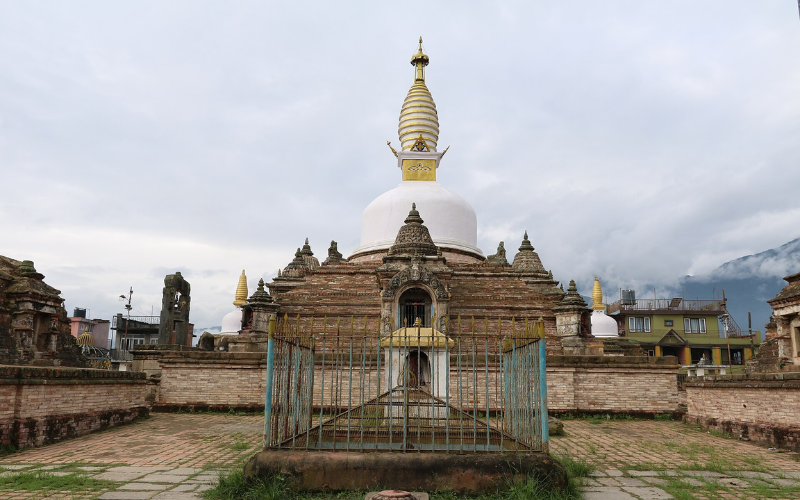
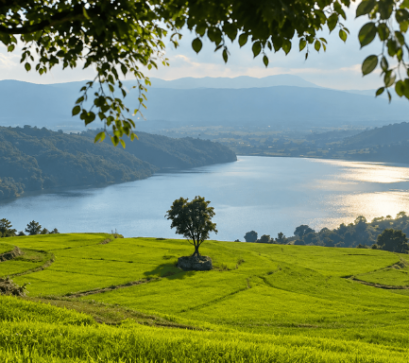
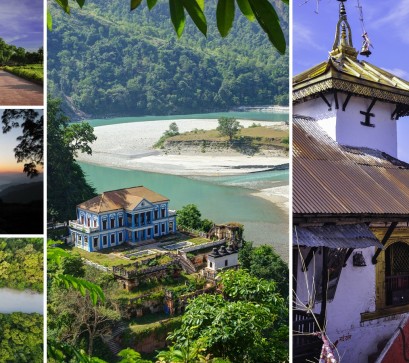
Walk through the city on a quiet morning and you feel it – not hostility, but a kind of self-possession that comes from a place that has been through something and knows it. The temples at Uma Maheshwar are beautiful. The views from the ridge over the valley are the sort you'd pay serious money for anywhere else. Bagh Bhairab Temple, where Kathmandu's king once hung the weapons of a defeated Gorkhali general as a trophy, is a ten-minute walk from the main road.
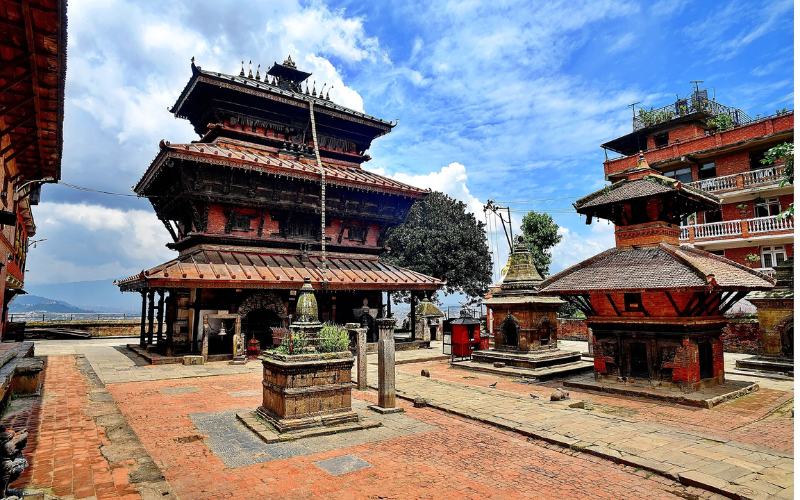
Kirtipur doesn't need you to come. That's part of what makes it worth going.
Eat at one of the local restaurants near Bagh Bhairab. Order the dhindo. If you ask about the history, people will talk – and they won't sand the edges off for you. This is a city that has been spitting on a stone for two and a half centuries. It hasn't softened its position.
Picture Credits: Wikimedia Commons