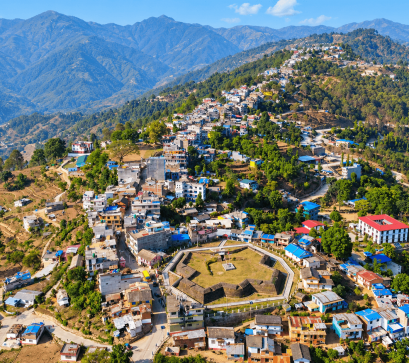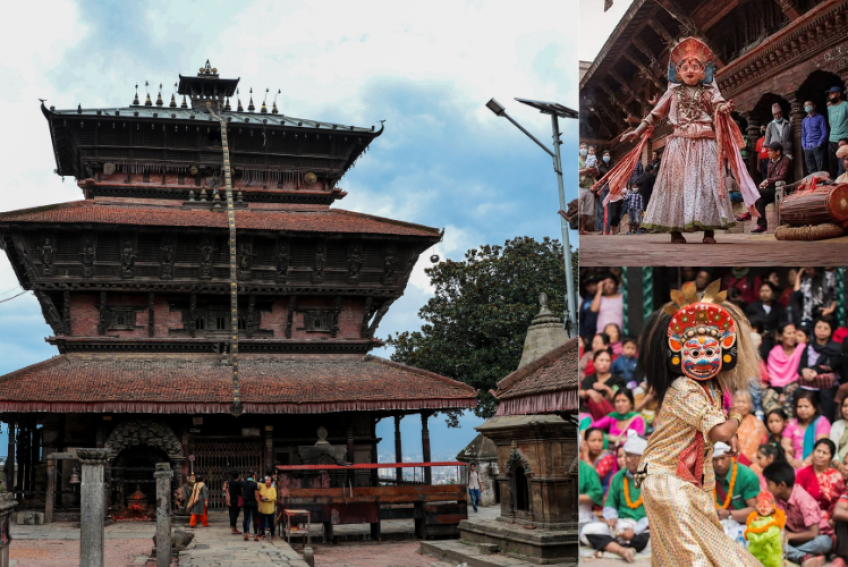
Nestled atop a ridge overlooking the Kathmandu Valley, Kirtipur is a treasure trove of Newar heritage, where ancient temples, traditional settlements, and centuries-old customs continue to shape everyday life. Among its most remarkable cultural traditions is Gathu Pyakhan, a sacred masked dance that forms an integral part of the town's spiritual identity and ritual heritage.
Unlike many cultural performances showcased for entertainment, Gathu Pyakhan is a deeply religious tradition rooted in devotion, symbolism, and community participation. Passed down through generations, it remains one of Kirtipur's most revered expressions of intangible cultural heritage.
At the heart of Gathu Pyakhan lies the worship of Bagh Bhairab, the guardian deity of Kirtipur. Revered as the protector of the town, Bagh Bhairab occupies a central place in local religious life, with the historic Bagh Bhairab Temple serving as one of Kirtipur's most important spiritual landmarks.
For centuries, the deity has been honoured through rituals, festivals, and ceremonial performances that strengthen the bond between faith and community. Gathu Pyakhan stands as one of the most significant manifestations of this devotion.
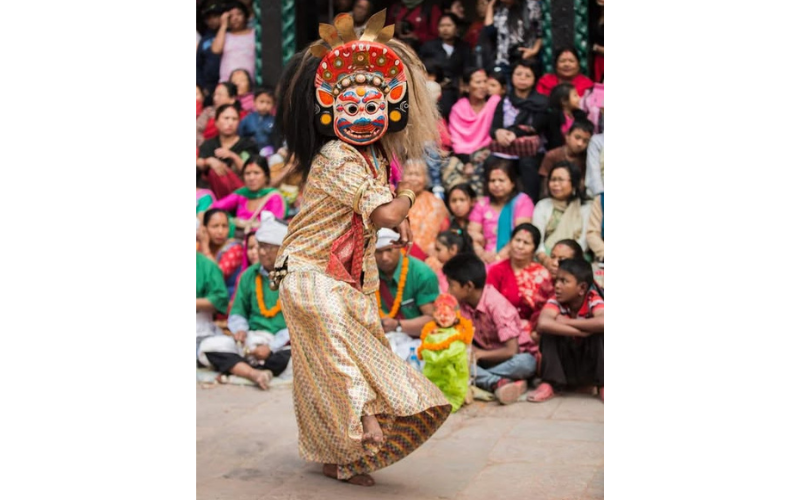
While Bagh Bhairab is worshipped throughout the year and celebrated annually through local festivities, the grand form of Gathu Pyakhan is most closely associated with the Barha Barse Shree Bagh Bhairab Jatra, a major religious festival held once every twelve years. The next Gathu Pyakhan will be celebrated in Kirtipur in 2084 B.S.
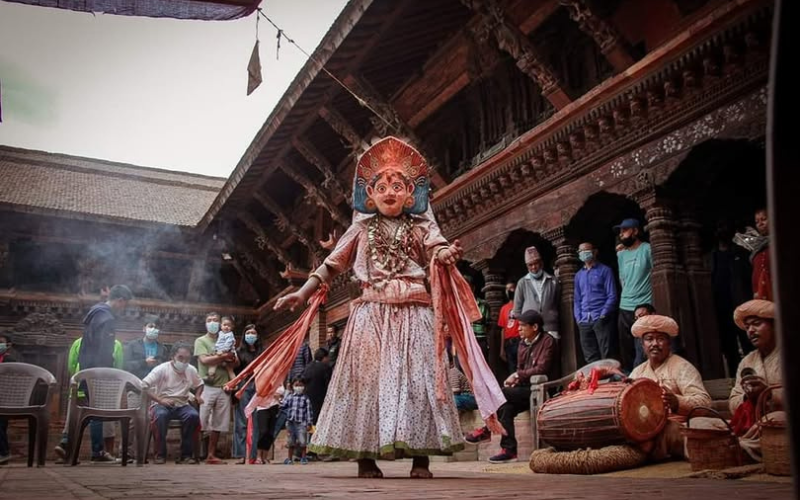
This rare celebration transforms Kirtipur into a vibrant stage of ritual performances, sacred ceremonies, and communal gatherings. During the festival, masked dancers representing divine and mythological figures perform age-old choreographies accompanied by traditional music, creating a powerful display of faith, culture, and artistic expression.
The twelve-year cycle adds to the significance of the event, making it one of the Kathmandu Valley's most anticipated heritage celebrations and a rare opportunity for younger generations to witness traditions that have endured for centuries.
One of the defining features of Gathu Pyakhan is its elaborate use of masks and ceremonial costumes. Each character embodies specific religious and symbolic meanings, with performers undergoing careful preparation before participating in the sacred dance.
Accompanied by traditional Newar musical instruments, the performance unfolds through rhythmic movements and ritual sequences that have been preserved through oral tradition and community practice. More than a visual spectacle, the dance serves as a spiritual offering that connects participants with their ancestral heritage.
The survival of Gathu Pyakhan reflects the enduring strength of Kirtipur's community institutions and guthi traditions. Through collective effort, knowledge of the dance, its rituals, and its symbolism continues to be passed on from elders to younger generations.
In a rapidly modernising world, such traditions play a crucial role in safeguarding Nepal's intangible cultural heritage. They serve as living links between the past and present, ensuring that local history, beliefs, and artistic expressions remain relevant in contemporary society.
For visitors seeking authentic cultural experiences beyond conventional sightseeing, Gathu Pyakhan offers a fascinating glimpse into the spiritual and artistic traditions of the Newar community. Witnessing the ritual dance against the backdrop of Kirtipur's historic temples and traditional architecture provides an immersive encounter with one of the Kathmandu Valley's living heritage traditions.
Combined with Kirtipur's panoramic valley views, historic monuments, and renowned local cuisine, the experience reveals a side of Nepal that extends far beyond its mountain landscapes.
Gathu Pyakhan is more than a dance; it is a testament to Kirtipur's enduring cultural identity. Through its masks, music, and sacred performances, the tradition continues to preserve stories, beliefs, and values that have shaped the community for generations.
As Nepal increasingly celebrates its intangible cultural heritage, Gathu Pyakhan stands as a powerful reminder that some of the country's most extraordinary traditions are not found in museums, but in the living communities that continue to practice and cherish them. For Kirtipur, the sacred dance remains a symbol of faith, continuity, and cultural pride, brought to life most spectacularly once every twelve years.
PC: Jheegu Newa Sanskriti Facebook
Also Read