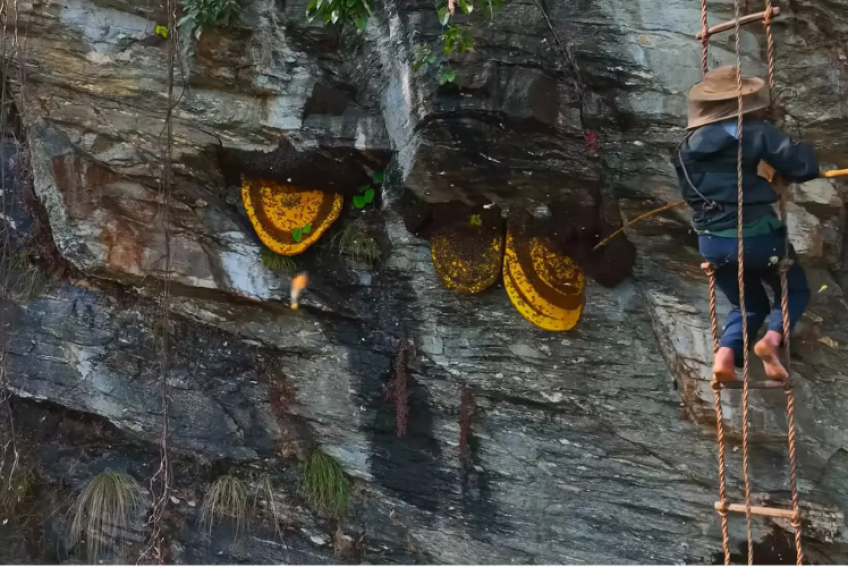
High above the forested cliffs of central Nepal, smoke curls into the Himalayan air as a man suspended from a handmade rope ladder inches down a vertical rock face. Hundreds of feet below, the valley disappears into silence. Around him swarms a furious cloud of giant bees. Armed only with a bamboo pole, courage and inherited instinct, he reaches for a dripping amber hive clinging impossibly to the cliff wall.
This is honey hunting in Lamjung District, one of Nepal’s oldest and most dangerous living traditions.
For generations, the indigenous Gurung community has harvested wild cliff honey from the towering Himalayan slopes of villages such as Bhujung, Ghanpokhara and Nayagaun. More than a livelihood, the practice is a ritual of endurance, spirituality and ecological knowledge passed from one generation to another.
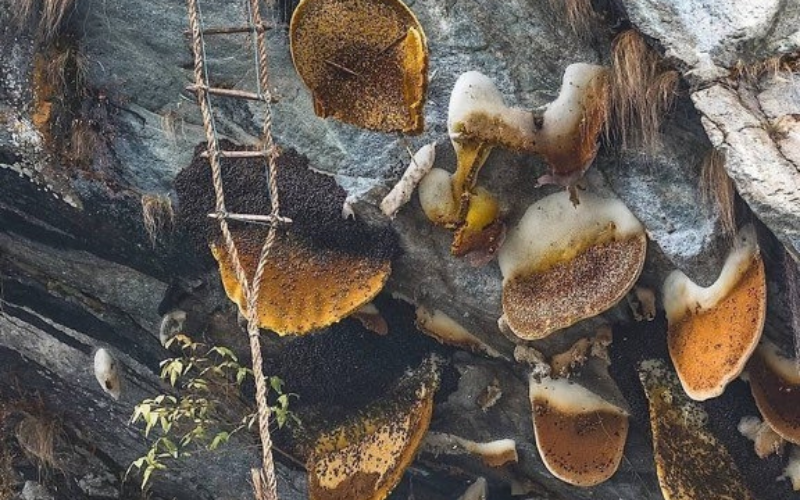
At the centre of this extraordinary tradition is Apis laboriosa, the Himalayan giant honey bee and the largest honey bee species in the world. These bees build massive combs on inaccessible cliff faces across Nepal’s mid-hills and Himalayan foothills, often at altitudes above 2,500 metres.
Unlike domesticated bees, Apis laboriosa cannot be farmed. They thrive in wild mountain ecosystems where rhododendron forests bloom during spring. As the bees gather nectar from these flowers, traces of naturally occurring grayanotoxins enter the honey. The result is the famed reddish “mad honey”, known for its intoxicating and mildly hallucinogenic effects when consumed in excess.
In small quantities, locals traditionally use the honey for medicinal purposes, believing it helps with fatigue, digestion and blood pressure. However, excessive consumption may cause dizziness, nausea, lowered heart rate and hallucinations.
Honey hunting season usually takes place twice a year during spring and autumn when teams of experienced hunters gather before dawn beneath the cliffs. Before the climb begins, rituals and offerings are often made to local spirits and cliff deities seeking protection from accidents.
The hunt itself is astonishing.
Using ladders woven from bamboo and forest vines, hunters descend cliffs reaching over 200 feet, and sometimes far higher while companions above control the ropes. Below the hives, fires are lit to create thick smoke that calms the bees. Suspended mid-air, the lead hunter uses a long bamboo pole fitted with a blade to slice away heavy honeycombs while enduring relentless bee stings and dizzying heights.
There are no harnesses. No modern climbing systems. Only balance, experience and trust.
In Gurung villages, honey hunters are deeply respected figures. They are regarded as the guardians of a skill that few younger generations are willing to continue due to the danger involved.
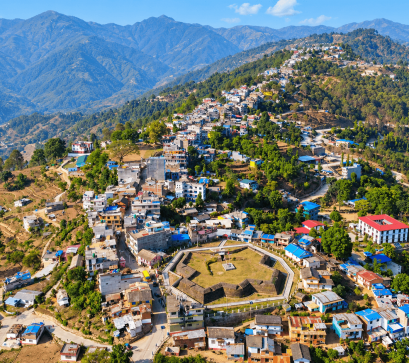
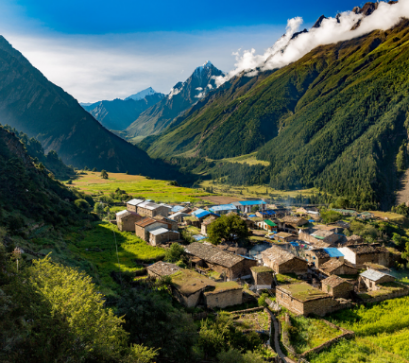
Some of Lamjung’s best-known honey-hunting settlements include Bhujung, Ghanpokhara and Nayagaun, remote Gurung villages surrounded by forests, terraced hillsides and Himalayan panoramas. These settlements remain among the few places where visitors can still witness traditional cliff honey harvesting in its authentic form.
The journey to these villages is part of the experience itself. Trails wind through rhododendron forests, suspension bridges and stone settlements where Gurung culture remains deeply preserved. During hunting season, entire communities often participate in the preparation, rituals and collection process.
For travellers, witnessing a honey hunt is less about adventure tourism and more about understanding the relationship between people, mountains and survival.
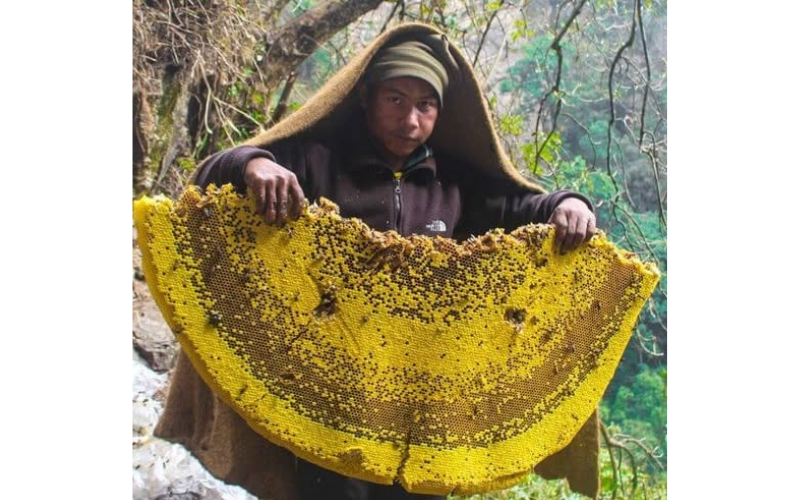
Today, Lamjung’s honey hunters face growing uncertainty.
Local hunters report declining bee populations, fewer hives and lower honey yields due to climate change, deforestation, changing flowering cycles and environmental degradation. Warmer temperatures and erratic weather patterns are affecting both the bees and the fragile Himalayan ecosystems they depend on.
Many younger villagers are also leaving for cities or foreign employment, making it increasingly difficult to sustain the physically demanding tradition.
What once existed purely as a cultural necessity is now slowly transforming into a rare cultural spectacle; one balancing between preservation and disappearance.
To outsiders, “mad honey” may sound exotic or mysterious. But in Lamjung, honey hunting represents something far deeper.
It is the story of people suspended between cliffs and clouds.
Of ancestral knowledge surviving in dangerous landscapes.
Of rituals shaped by mountains, bees and seasons.
And perhaps most remarkably, it is a reminder that even in an increasingly modern world, some traditions still demand human courage in its rawest form.
PC: Archaeology & Civilizations, Nepal Social Treks, Nepal Environmental Treks & Expedition
Also Read