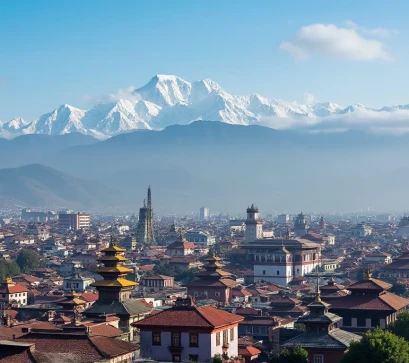
Nepal is one of the richest countries in the world for rhododendron diversity. These iconic flowering plants carpet hillsides and mountain slopes with colour each spring, drawing nature lovers and trekkers from around the globe. Nepal is home to about 33 species of rhododendron, most of them found in Province 1 in the eastern Himalaya.
Locally known as Gurans or Lali Gurans, rhododendrons are deeply woven into Nepali culture with Rhododendron arboreum (Lali Gurans) celebrated as the national flower.
Types of Rhododendrons Found in Nepal
Rather than local names for every species (which can vary by region and language), rhododendrons in Nepal are best understood by their growth form and altitude which also tells travellers where to see them.

1. Tree Rhododendrons (Lower to Mid-Hills)
These species grow as trees or large shrubs, often forming striking forest stands between roughly 1,200 m and 3,500 m.
Key species include:
Rhododendron arboreum – the classic Lali Gurans tree
Rhododendron barbatum
Rhododendron griffithianum
Rhododendron falconeri
Rhododendron hodgsonii
Rhododendron grande - a very tall tree species up to 15 m
These species dominate parts of Nepal’s hill forests and paint them with reds, pinks, whites, and other hues each spring.
2. Shrub Rhododendrons (Montane Zone)
At mid-to-high elevations (around 2,800 m to 4,000 m), rhododendrons form large shrubs or small trees.
Common species include:
Rhododendron campanulatum
Rhododendron thomsonii
Rhododendron fulgens
Rhododendron cinnabarinum
Rhododendron wallichii
Rhododendron ponticum (in some regions)
These often grow along ridgelines and blooming trails, mixed with oak, fir, and pine forests.
3. Alpine and Dwarf Rhododendrons (High Himalaya)
Above 4,000 m, rhododendrons adapt to harsh alpine conditions, growing low to the ground.
Notable alpine species include:
Rhododendron anthopogon
Rhododendron lepidotum
Rhododendron nivale
Rhododendron pumilum
Some of these are locally called Sunpati (especially R. anthopogon), valued for their fragrance and traditional medicinal uses.

Best Places to See Rhododendrons in Nepal
Tinjure Milke Jaljale (TMJ) - Province 1
Often called the “Rhododendron Capital of Nepal”, this eastern Himalayan region harbours the highest diversity of species, with around 28 out of Nepal’s 33 found here.
Ghorepani-Poon Hill (Annapurna Region)
One of the world’s most famous rhododendron forests, especially rich in R. arboreum.
Langtang Valley
Diverse rhododendrons along accessible trails close to Kathmandu.
Kanchenjunga Conservation Area
A biodiversity hotspot with many rare, high-altitude species.
Everest Region (Sagarmatha)
Upper trails around Namche Bazaar, Gokyo, and Tengboche showcase both shrub and dwarf rhododendrons.
Khaptad National Park
Less visited but with extensive rhododendron stands in western Nepal.
Best Time to See Rhododendrons in Nepal
• Peak flowering season: March to May - this is when most rhododendrons across elevations are in bloom.
• Lower elevations: Late February to March
• Higher elevations: April to early May
Weather variation and local climate can shift this slightly, but spring remains the most reliable for rhododendron viewing.
Why Rhododendrons Matter to Travellers
Rhododendrons do more than decorate landscapes, they are a signature part of spring trekking culture in Nepal. Trails lined with blooming Gurans offer cool temperatures, vivid colours, panoramic mountain views, and a vibrant natural backdrop that makes spring one of the most rewarding seasons to explore Nepal’s hills and Himalaya.
PC: Flickr, Wikimedia Commons, Inside Himalayas
Also Read