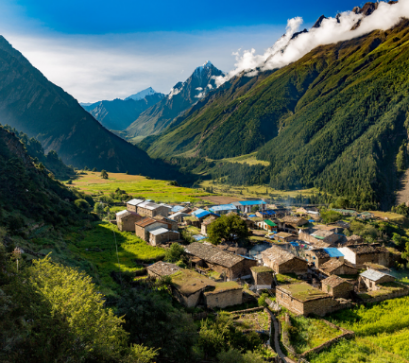
Thorong La Pass (also spelled Thorung La) is a lofty mountain crossing at 5,416 m (17,769 ft) in the Damodar Himal of central Nepal. It links the Manang District in the east with Mustang and the sacred Muktinath temple in the west. As the highest point on the Annapurna Circuit, spanning roughly 160–230 km, it’s used not only by trekkers but also by local traders.
Best Time & Weather
The safest trekking seasons are March–May and September–November, offering stable weather and clear skies. Outside these windows, conditions worsen due to avalanches, snowstorms, frostbite, and frequent whiteouts. Winter temperatures can drop to –20 °C, and snowfall reaches 1–3 inches, while spring and autumn offer mild daytime highs (5–12 °C).
Trekkers typically begin the ascent very early—around 3–5 AM—to avoid strong afternoon winds and reach the summit in calmer conditions.

Trekking Route & Acclimatization
An anti-clockwise route (Manang → Muktinath) is recommended for better acclimatization. Trekkers usually: Arrive at Manang (~3,540 m) and stay 2–5 nights for acclimatization.
Trek to Yak Kharka (~4,050 m), then to Thorong Phedi (~4,540 m) or High Camp (~4,880 m).
Cross the pass early, and descend to Muktinath (~3,800 m).
Reverse direction (west–east) is more challenging due to abrupt altitude gain.
Trek Difficulty & Hazards
Crossing Thorong La is non-technical but physically intense:
High altitude (5,416 m) → risk of acute mountain sickness (AMS).
Rugged terrain: rocky or icy stretches at higher elevations.
Unpredictable weather: snowstorms, high winds, and avalanches are threats.
Remote area: limited medical access; even rescues may require helicopters.

Highlights & Cultural Significance
The pass sits in a rugged, roadless final section of the Annapurna Circuit.
Panoramic views include Annapurna I–IV (8,091 m), Dhaulagiri (8,167 m), Machapuchhre, Manaslu, Gangapurna, Tilicho, Nilgiri, and more.
Descending into Mustang’s arid, Tibetan-influenced landscapes, leading to Muktinath Temple—sacred to Hindus and Buddhists, known for its 108 water spouts and eternal flame.
Rich cultural tapestry of Gurung, Thakali, and Tibetan communities along the route.
Must-Know Essentials
Permits: ACAP and TIMS are mandatory; obtain them in Kathmandu or Pokhara.
Fitness & gear: Train cardio and strength; pack layered clothing, sturdy boots, and medical kit for altitude sickness.
Guides & support: Hiring a local guide or porter is advised due to the remoteness and cultural insight.
Altitude safety: Follow the “gain no more than 300–500 m/day” rule, hydrate, enjoy carbs, avoid alcohol, and descend if symptoms worsen.
Thorong La Pass is a once-in-a-lifetime Himalayan challenge. Beyond the physical demands lies a tapestry of breathtaking mountain panoramas, harsh remote beauty, Himalayan cultures, and spiritual milestones. When trekking in prime season with careful acclimatization, it’s an unforgettable journey—one that defines the Annapurna Circuit.
PC: Wikimedia Commons, Greg Willis, Flickr
Also Read