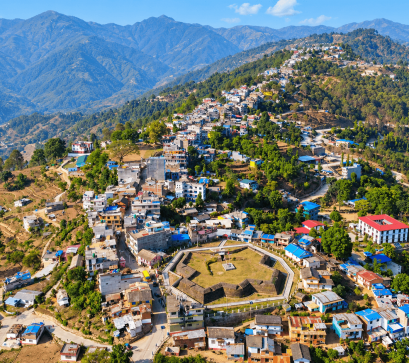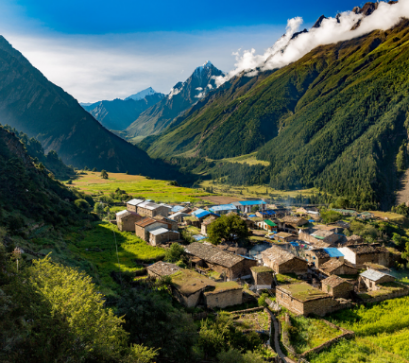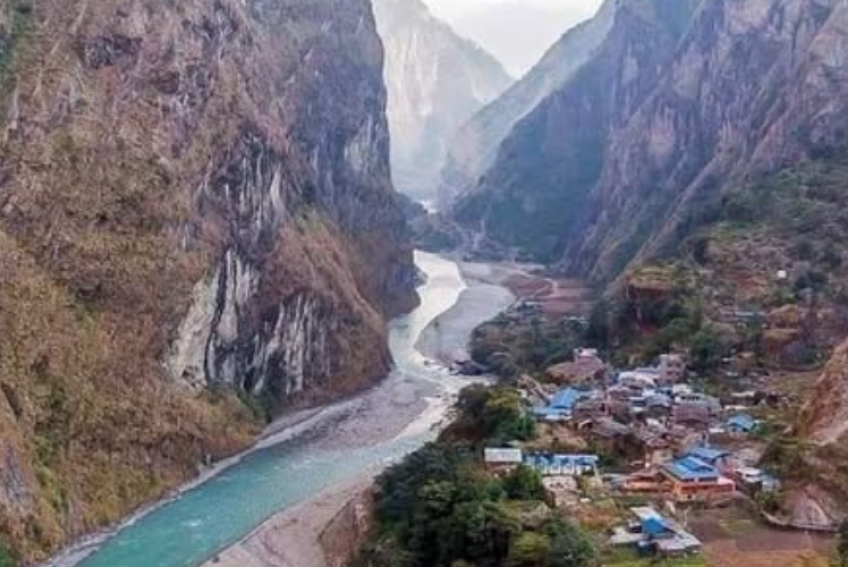
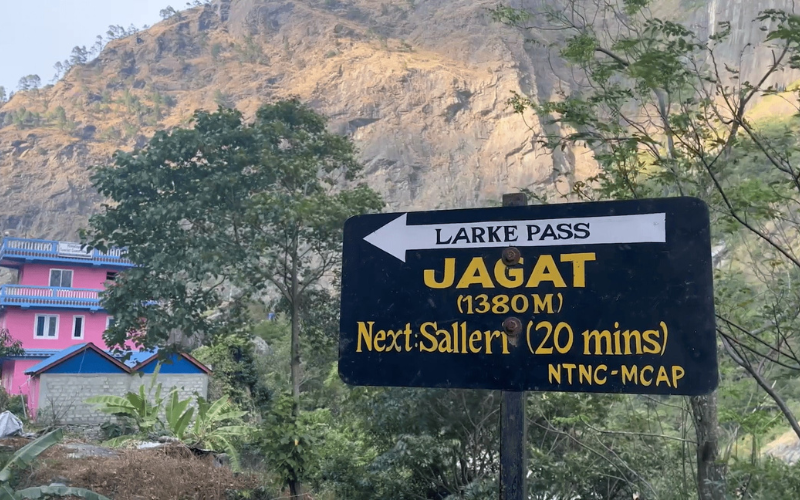
Hidden within the deep valley carved by the Budhi Gandaki River, Jagat is one of the most distinctive settlements along the Manaslu trekking route. Located in Gorkha District at an elevation of roughly 1,400 metres, this picturesque village serves as the official entry point to the Manaslu Conservation Area and a key stop for trekkers embarking on the Manaslu Circuit Trek.
Although relatively small, Jagat carries a remarkable sense of history. Its stone-paved pathways, compact hillside houses, and quiet mountain setting create an atmosphere that reflects centuries of life along an important Himalayan corridor.
A Gateway into the Manaslu Region
For many travellers and trekkers, Jagat marks the moment when the journey truly enters the Manaslu region. After passing through subtropical river valleys and small roadside settlements, the trail gradually leads to this well-preserved village where trekking permits are checked before continuing north.
Beyond Jagat, the landscape begins to transform dramatically. Forested hills give way to steeper terrain, deeper gorges, and eventually the high alpine environments that define the Manaslu Circuit. Because of this transition, the village is often regarded as the threshold between Nepal’s mid-hills and the remote Himalayan highlands.
A Village of Stone Pathways and Mountain Homes
One of Jagat’s most striking features is its traditional architecture. The settlement is built almost entirely from locally sourced stone, creating a distinctive cluster of sturdy homes and narrow alleyways that climb the hillside.
The cobbled lanes that run through the village were originally designed to accommodate mule caravans and traders travelling between the Himalayas and the lower hills. Even today, walking through these pathways offers visitors a glimpse into the historic rhythm of mountain life.
Small tea houses and family-run lodges now welcome trekkers who pause here for rest and warm hospitality before continuing their journey deeper into the Manaslu valley.
Echoes of an Ancient Trade Route
Long before trekking routes were established, Jagat played an important role along an old trade corridor linking Nepal’s hill regions with Tibet. Merchants once travelled through the valley carrying goods such as salt, wool, herbs, and grain. The village functioned as a taxation and resting point where caravans paused before continuing their journeys across the mountains.
Although these trade routes gradually declined in the twentieth century, Jagat’s historical significance remains embedded in its layout and architecture. The stone pathways, traditional houses, and communal spaces still echo the movement of traders who once passed through this mountain gateway.
Where Cultures Begin to Change
Jagat also represents a fascinating cultural transition zone. South of the village, communities reflect the traditions of Nepal’s mid-hill societies, while north of Jagat the cultural landscape becomes increasingly influenced by Tibetan Buddhist heritage.
This blend of traditions is visible in local customs, architecture, and spiritual symbols scattered throughout the settlement. Prayer flags flutter along the pathways, while carved stones and small shrines hint at the Buddhist influences that grow stronger further along the Manaslu trail.
The village is home to diverse ethnic communities, including Gurung, Magar, and Tamang families, whose agricultural livelihoods remain closely tied to the surrounding hills and terraced fields.
A Peaceful Himalayan Stop for Travellers
Today, Jagat remains a tranquil yet important stop for those exploring the Manaslu region. Unlike some trekking destinations that have become heavily commercialised, the village has retained much of its authentic character.
Visitors arriving here often find themselves slowing down, taking in the quiet scenery, and observing everyday village life unfolding against a dramatic Himalayan backdrop.
With its historic pathways, cultural richness, and strategic location along one of Nepal’s most scenic trekking routes, Jagat stands as more than just a waypoint. It is a living reminder of the region’s past, a place where ancient trade routes, evolving cultures, and modern Himalayan adventure meet.
PC: Adventure Vision Trek
Also Read