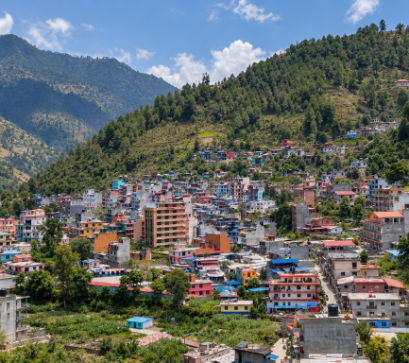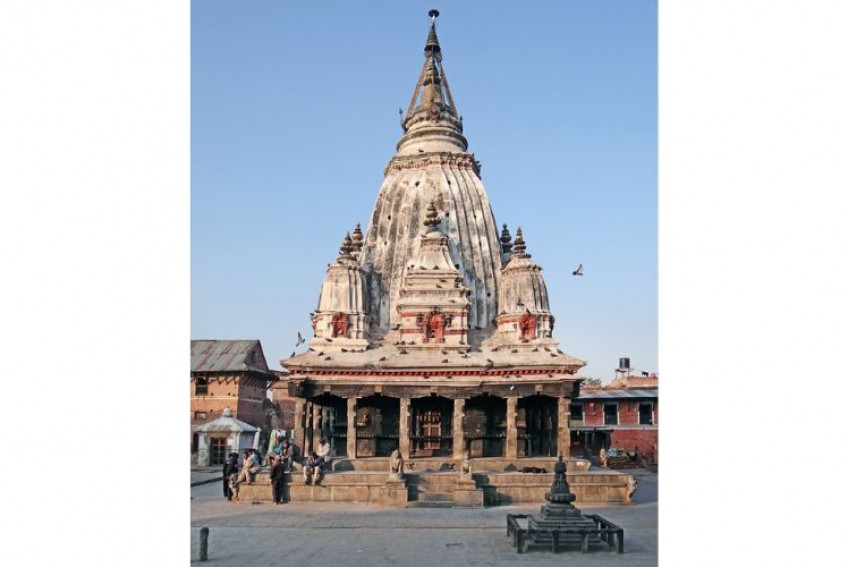
Tucked quietly on the southern edge of the Kathmandu Valley, just beyond the urban sprawl of Lalitpur, Bungamati feels suspended between centuries. Narrow brick alleys wind past intricately carved wooden windows, women gather around communal courtyards sorting mustard greens beneath the winter sun, and temple bells echo through a settlement where ritual and routine remain inseparable.
Often overshadowed by more frequently visited heritage centres such as Patan Durbar Square and Bhaktapur Durbar Square, Bungamati preserves something increasingly rare in the Kathmandu Valley: the continuity of a living Newar settlement where culture is not curated for tourism but woven into everyday life.
For travellers seeking the deeper cultural geography of Nepal, Bungamati offers one of the Valley’s most compelling historical experiences.
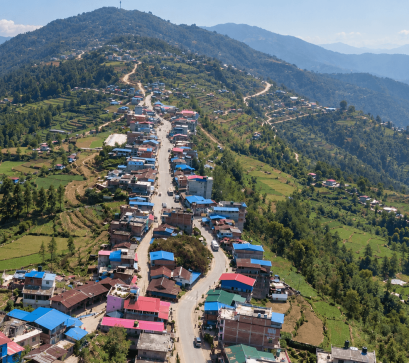
Believed to date back at least to the Licchavi period and flourishing during the Malla era, Bungamati developed as a traditional Newar settlement rooted in agriculture, craftsmanship, and religious culture. The town’s compact urban layout reflects classic Newar planning: dense brick homes clustered around courtyards, temples, rest houses, and communal spaces designed for social and ritual life.
The settlement remains predominantly inhabited by the Newar community, whose architecture, cuisine, festivals, language, and craftsmanship continue to shape Bungamati’s identity.
Unlike heavily commercialised heritage zones, Bungamati retains an atmosphere of lived authenticity. Elderly residents still sit outside wooden facades spinning thread or shelling peas, while artisans continue wood carving traditions passed down through generations.
Bungamati holds profound religious significance as the traditional home of Rato Machhindranath Temple, one of the most revered deities of the Kathmandu Valley.
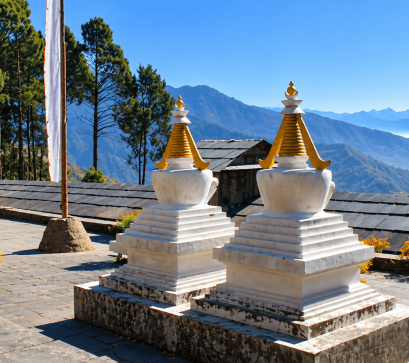
Known to Buddhists as Karunamaya and associated with Avalokiteshvara, while also worshipped by Hindus, Rato Machhindranath represents the syncretic spiritual culture that defines the Valley. The deity’s annual chariot procession remains one of Nepal’s oldest and most important festivals.
Each year, the idol is ceremonially transported from Bungamati to Patan during the famous Rato Machhindranath Jatra, a festival deeply connected to rain, harvests, and communal wellbeing.
This dual religious reverence illustrates a defining feature of Newar civilisation: the seamless coexistence of Hindu and Buddhist traditions within shared sacred spaces.
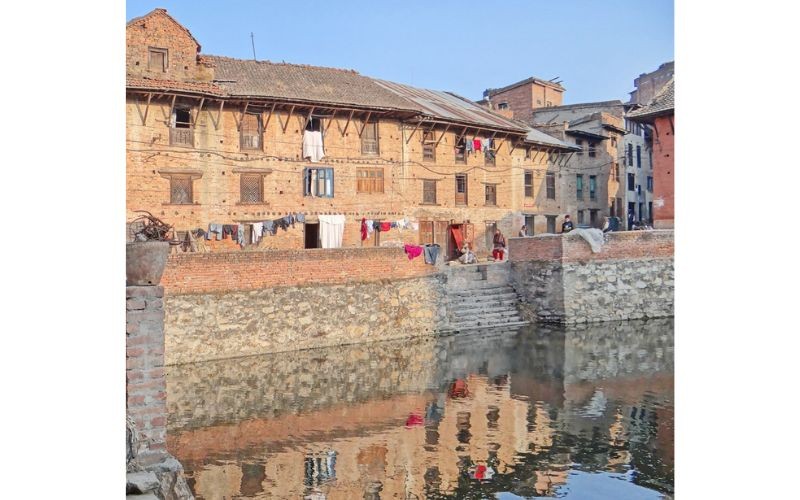
Bungamati suffered extensive destruction during the devastating 2015 earthquake. Historic temples collapsed, homes were damaged, and parts of its centuries-old architectural fabric were severely affected.
Yet reconstruction in Bungamati has become a story not only of rebuilding structures, but of preserving cultural identity.
Traditional brick masonry, carved timber windows, and Newar construction techniques continue to shape restoration efforts. Walking through Bungamati today reveals an evolving landscape where reconstruction exists alongside ruins, reminders of both fragility and resilience.
For visitors, this layered environment offers insight into how heritage settlements negotiate modern pressures while attempting to retain cultural continuity.
Khokana and the Agricultural Landscape
A short walk from Bungamati lies Khokana, another traditional Newar settlement historically known for mustard oil production and agricultural culture.
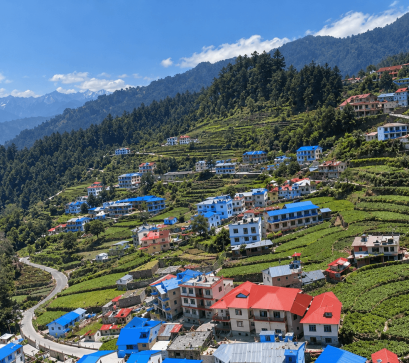
Together, Bungamati and Khokana represent one of the Valley’s last surviving traditional agrarian cultural landscapes. Rice fields, seasonal farming rhythms, communal festivals, and artisan traditions remain deeply embedded in local life.
This surrounding rural environment sharply contrasts with the rapidly urbanising Kathmandu Valley and offers travellers a glimpse into older patterns of settlement and subsistence.
Craftsmanship and Everyday Heritage
Bungamati is also recognised for traditional wood carving and handicrafts. Many local artisans continue producing intricately carved doors, windows, masks, and religious artefacts using skills inherited over generations.
What distinguishes Bungamati is that heritage here remains functional rather than performative. Sacred courtyards still host rituals. Rest houses remain gathering spaces. Traditional homes continue to be inhabited.
The town reveals how heritage in Nepal is often inseparable from ordinary daily life.
Tourism Beyond Monuments
Bungamati represents a quieter form of tourism — one centred on observation, slowness, and cultural immersion rather than checklists.
Travellers come here not for dramatic landmarks alone, but for:
The experience is especially rewarding for visitors interested in anthropology, heritage conservation, architecture, and intangible culture.
As Kathmandu Valley urbanises at extraordinary speed, settlements like Bungamati become increasingly significant. They preserve not only historic structures, but ways of living that are rapidly disappearing across South Asia.
Bungamati reminds visitors that Nepal’s cultural heritage is not confined to royal palaces or UNESCO monuments. Sometimes it survives most powerfully in ordinary courtyards, local rituals, carved windows, and communities that continue practising traditions not as performances for visitors, but as part of daily existence.
PC: Wikimedia Commons, Flickr
Also Read