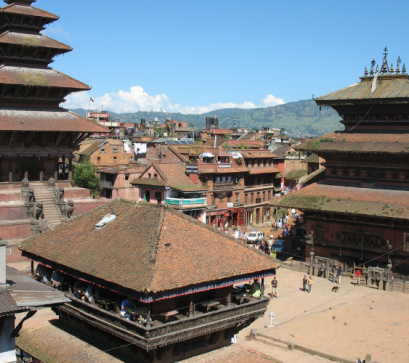
In the dense, historic core of Kathmandu Metropolitan City, not far from the ancient trading hub of Asan and within walking distance of Kathmandu Durbar Square, lies Bangemudha: a narrow roadside space where faith quietly endures in everyday form.
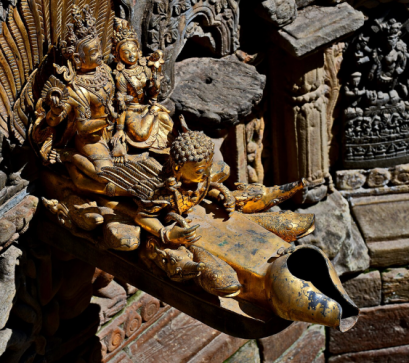
Here stands a small but deeply revered roadside shrine dedicated to Wa Sya Dya (literal translation is toothache deity), a local Newar deity traditionally associated with relief from toothache and minor ailments.
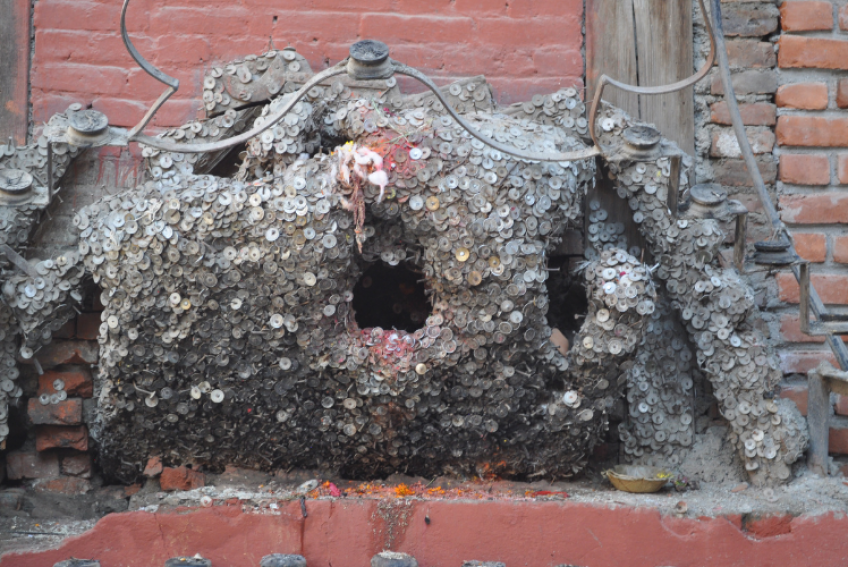
For generations since Lichchhavi era, people have arrived at this unassuming spot in moments of pain, especially dental discomfort. The ritual is simple yet powerful: a paisa/s coin often still used in earlier times, with 100 paisa equalling one rupee is pressed or nailed into the shrine as an offering and prayer for healing. Over time, thousands of coins have become embedded into the structure, forming a layered surface of devotion.
Unlike formal temple worship, this practice is immediate and personal. Passers-by stop briefly, offer their prayer, leave a coin, and continue on their way; trusting in the deity’s protective and healing presence. The tradition has been passed down through generations, becoming part of the everyday rhythm of the city.
What makes the Bangemudha shrine remarkable is not its size, but its memory. Each nailed coin represents an individual moment of hope, collectively turning a small roadside shrine into a living archive of faith, healing, and continuity in Kathmandu’s urban spiritual landscape.
If you were born and raised in the alleys of Kathmandu Metropolitan City, chances are you may have stopped by Bangemudha at some point and offered a silent prayer at the roadside shrine of Wa Sya Dya.
PC: Wikimedia Commons
Also Read