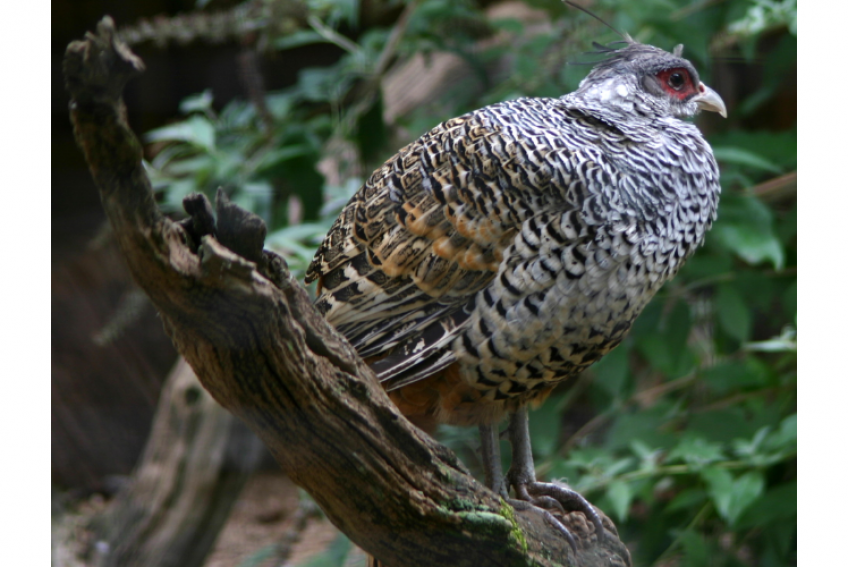
The Cheer Pheasant (Catreus wallichii) is a remarkable bird known for its long tail, subtle grey-brown plumage, and delicate beauty. Found in the mountainous regions of Nepal, India, and Pakistan, this elusive species thrives in grassy slopes, scrublands, and rocky terrains at altitudes ranging from 1,500 to 3,000 meters.
Unlike the more vibrant pheasant species, the Cheer Pheasant’s muted colors help it blend into its surroundings, offering protection from predators. Despite its camouflage, its long, elegant tail feathers and distinct calls—often heard at dawn and dusk—make it a sought-after sight for birdwatchers and nature enthusiasts.
Primarily ground-dwelling, the Cheer Pheasant feeds on seeds, insects, roots, and small invertebrates. This diet plays an essential role in controlling insect populations and dispersing plant seeds, highlighting its importance in the ecosystem. During the breeding season, males perform elaborate displays, fanning their tails and calling loudly to attract mates. The species nests on the ground, making it vulnerable to habitat disturbances.

Unfortunately, the Cheer Pheasant is classified as Vulnerable on the IUCN Red List. Habitat loss due to human encroachment, grazing, and deforestation poses significant threats. Additionally, hunting and trapping have contributed to its declining numbers. In Nepal, conservation areas like Dhorpatan Hunting Reserve have become key habitats for its preservation, with awareness programs aimed at protecting this shy bird.
Spotting a Cheer Pheasant in the wild is a rewarding experience. Patience and early morning treks through Himalayan trails often increase the chances of a sighting. Birdwatching tours in regions like western Nepal are gaining popularity, bringing attention to the need for habitat conservation.
Protecting the Cheer Pheasant goes beyond preserving a single species—it ensures the health of Himalayan ecosystems. Sustainable tourism, strict anti-poaching measures, and community-led conservation initiatives are crucial steps toward securing a future for this graceful bird.
Picture Credit- Wikimedia Commons
Also Read