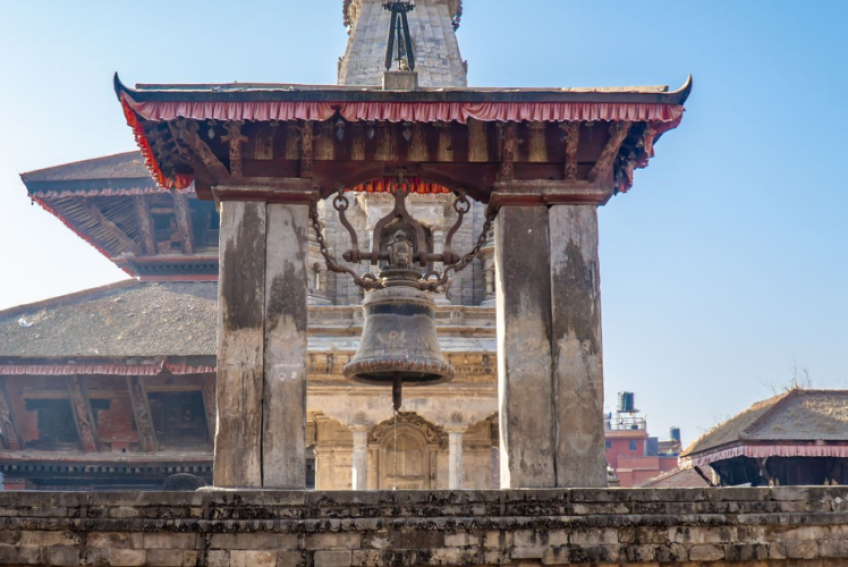
In the heart of Bhaktapur Durbar Square, where centuries-old temples glow beneath carved pagoda roofs and brick courtyards echo with history, one monument quietly captures the imagination of visitors the moment they notice it. Suspended beneath heavy iron chains near the famed Golden Gate stands the Taleju Bell aka Tagoun Ghan in Nepalbhasha, one of Bhaktapur’s most fascinating historical relics.
More than just a ceremonial bell, the Taleju Bell represents a powerful blend of mythology, royal devotion, craftsmanship, and living heritage. While tourists often admire the towering temples and intricate Newari artistry around the square, the chained bell remains a symbol of the spiritual and political world once ruled by the Malla kings.
The bell was installed during the reign of Ranajit Malla, the final king of Bhaktapur’s Malla dynasty, in the 18th century. Dedicated to Goddess Taleju Bhawani, the royal deity worshipped by the Malla rulers, the bell was not simply a public instrument it was considered a sacred offering tied directly to divine protection and royal authority.
For the Malla kings, Taleju Bhawani was believed to safeguard the kingdom and legitimise the ruler’s power. Temples, rituals, and ceremonial objects dedicated to the goddess carried immense spiritual significance, and the Taleju Bell became one of the most recognisable symbols of that devotion.
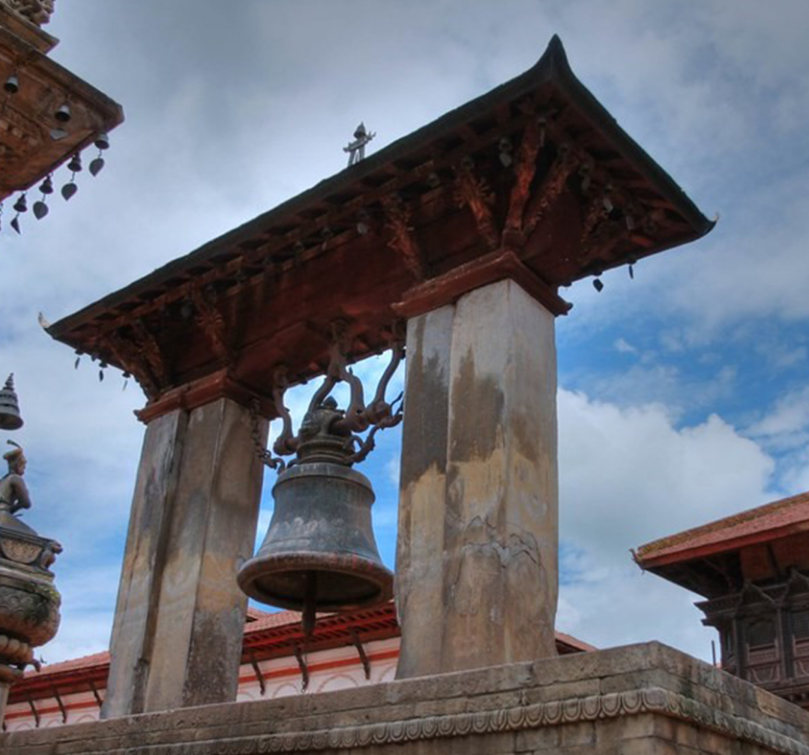
One of the most striking aspects of the Taleju Bell is the massive iron chains surrounding it. Over the years, several interpretations and local beliefs have emerged regarding their purpose.
Historically, chains likely helped secure and stabilise the enormous bronze bell while also protecting it from theft or damage. However, among locals and historians alike, the chains have come to symbolise something far deeper permanence, sacred ownership, and unwavering devotion to the goddess.
Unlike ordinary bells meant merely for public use, the Taleju Bell was regarded as an object belonging solely to the divine. The chains became part of its identity, reinforcing the belief that the sacred relic should remain eternally tied to the temple and its deity.
Among Bhaktapur’s many enduring legends, none is more intriguing than the story associated with the smaller bell located nearby Taleju Bell. According to local folklore, whenever the bell rang, dogs throughout the city would begin barking and howling simultaneously, which led to it being named “Barking Bell”.
For generations, residents believed the animals were reacting to a spiritual force awakened by the sound of the bell. Whether rooted in acoustics, coincidence, or pure mythology, the tale continues to fascinate visitors and has become inseparable from the bell’s identity.
Even today, guides and locals still recount the story to travellers exploring the ancient square, adding another layer of mystery to Bhaktapur’s already enchanting atmosphere.
The Taleju Bell has witnessed some of the most defining moments in Nepal’s history. It remained standing through the fall of the Malla kingdom after Prithvi Narayan Shah conquered Bhaktapur in 1769, ending centuries of Malla rule.
Over time, the Kathmandu Valley endured devastating earthquakes, political transitions, and rapid urban change, yet the bell survived as a silent witness to Nepal’s evolving story.
Today, surrounded by UNESCO-listed architecture, the Taleju Bell continues to draw pilgrims, historians, photographers, and curious travellers eager to uncover the stories hidden within Bhaktapur’s ancient streets.
What makes the Taleju Bell remarkable is not merely its age or craftsmanship, but the atmosphere surrounding it. The chains, the legends, the royal history, and the devotion attached to it transform the bell into something far greater than a historical object.
It stands as a reminder that in Nepal, heritage is not confined to museums or textbooks. It lives within temples, rituals, oral legends, and sacred spaces that continue to shape cultural identity even centuries later.
For travellers wandering through Bhaktapur Durbar Square, the Taleju Bell offers more than a glimpse into the past it offers a connection to the myths, beliefs, and enduring spirit of the Kathmandu Valley itself.
Also Read