Just an hour’s drive from the bustle of Kathmandu, tucked into the green folds of Bhaktapur’s Changunarayan municipality, lies a place where summer afternoons are measured in laughter, splashes and the cool rush of spring-fed water.
Muhan Pokhari is not a pristine alpine lake nor a grand heritage monument. Instead, it offers something far more grounded and familiar: an honest, unpretentious retreat where families gather beneath shaded trees, picnic mats are spread across warm rocks, and children spend entire afternoons beneath a roaring cascade of water.
During the warmer months, especially from March to June, the reservoir transforms into one of Bhaktapur’s favourite hidden picnic spots near Kathmandu. By winter, the stream softens and the crowds disappear, leaving behind a quieter landscape wrapped in forest calm.
What’s in a Name? Echoes of the Malla Era
The name Muhan Pokhari itself reveals much about the site’s origins. In Nepali, muhan refers to the source of a water channel, while pokhari means pond or reservoir.
Unlike natural lakes, Muhan Pokhari is believed to have originated during the Malla period as part of Bhaktapur’s historic water supply network. For generations, water from the reservoir has flowed towards Bhaktapur through municipal systems, reflecting the remarkable engineering foresight of the valley’s early rulers.
Over time, this practical water source gradually evolved into a recreational escape. Today, it remains especially popular among domestic travellers seeking relief from Kathmandu Valley’s rising summer heat.
The Main Attraction: The Waterfall
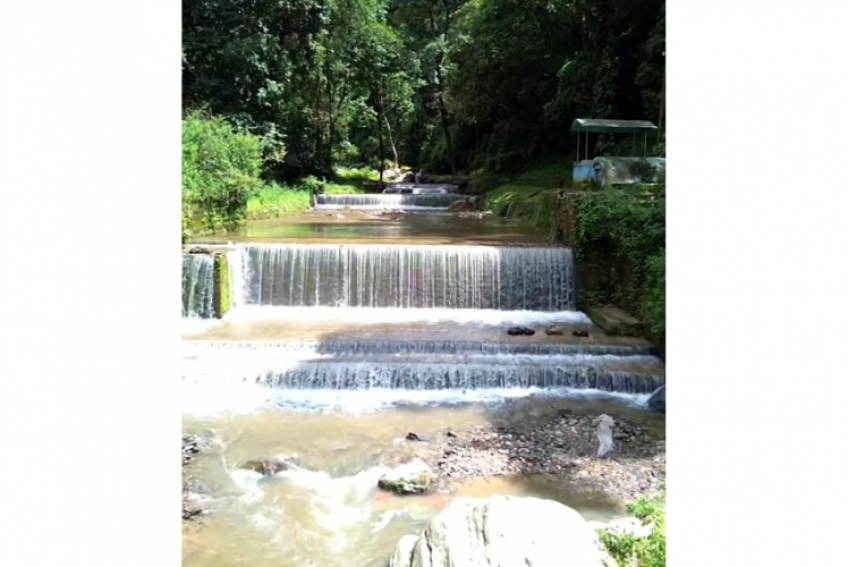
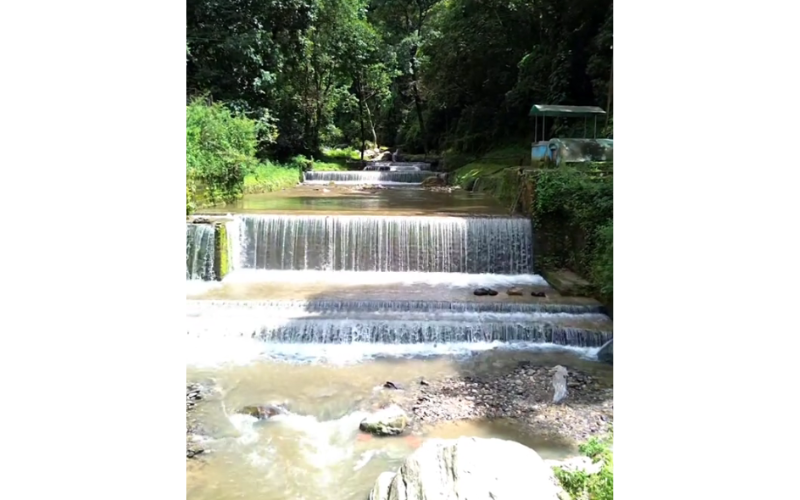
At the centre of Muhan Pokhari is a small concrete dam that creates a lively cascade flowing into the shallow stream below. During summer and post-monsoon months, the water gushes with enough force for visitors to stand beneath it like a natural shower hidden within the forest.
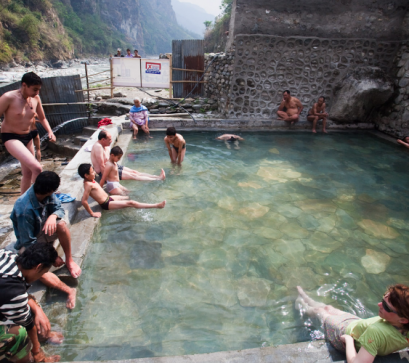
The water is cool, refreshing and irresistibly inviting on a hot afternoon. Families wade through the stream, groups gather for photographs beneath the falls, and children splash endlessly across the rocky shallows.
Weekends and public holidays bring the liveliest atmosphere, with visitors arriving from Kathmandu, Bhaktapur and nearby towns to escape the heat for a few carefree hours.
The Upper Waterfall
A short uphill trail from the main dam leads to a quieter secondary waterfall. The walk takes around fifteen minutes and passes through shaded woodland and rocky paths.
Unlike the main cascade, this upper fall depends heavily on seasonal rainfall and is best visited during or shortly after the monsoon months, when the water flow is strongest.
Forest Calm and Fresh Air
Even for those who prefer staying dry, the surrounding forest provides a welcome retreat from the valley’s dust and traffic. The air feels noticeably cooler beneath the trees, accompanied by birdsong and the steady sound of flowing water.
In many ways, the simplicity of the setting is what makes Muhan Pokhari so appealing. There are no elaborate attractions here; only water, forest and the timeless joy of a summer afternoon outdoors.
A Place with a Quiet History
Like many long-standing public reservoirs, Muhan Pokhari also carries a quieter and more complex history.
Following several tragic incidents over the years, including a widely reported case in 2007, protective fencing and gates were installed around parts of the reservoir area to improve visitor safety.
Today, the site remains family-friendly and widely enjoyed by local visitors, though its history serves as a reminder to approach the place with care and respect.
.png)
Best Time to Visit
By Public Transport
By Private Vehicle
The drive from Kathmandu takes approximately one hour depending on traffic. The final stretch includes rough and partially unpaved roads, especially slippery during the monsoon.
Muhan Pokhari pairs well with several nearby destinations, making it ideal for a relaxed day trip from Kathmandu.
A popular itinerary is to spend the morning at Muhan Pokhari before continuing towards Nagarkot for lunch and sunset views over the hills.
Perfect for:
Less suitable for:
Muhan Pokhari may never appear in glossy luxury travel brochures, yet that is precisely part of its charm.
There are no resorts here, no curated experiences and no polished tourist attractions. What you will find instead is something deeply familiar to Nepali summers — shared picnics, laughter echoing through the trees, steaming tea poured from flasks, and children playing beneath cold rushing water until sunset.
In a rapidly urbanising valley where open spaces continue to disappear, Muhan Pokhari remains a rare pocket of simplicity and relief.
Go on a weekday if you can. Carry your picnic basket. Step beneath the waterfall. And for a few hours, allow yourself to forget the noise of the city.
Also Read