

 Source::Rss
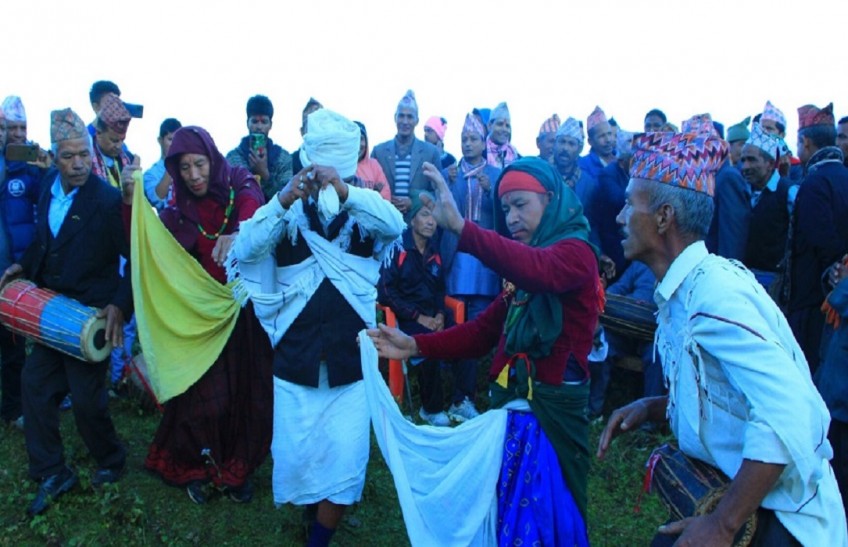
Bhoso is still played in Jajarkot village near the headquarters. Bhoso culture still exists in the Jajarkot, Rawatkot, Lankuri, Vindhyawasini, Sigaudi, Sattala, Chauratha, and Dullu areas of Dailekh. Bhoso is known by different names. Bhoso is sometimes called Bhuo, Bhosi or even Bassi. Since the beginning of time, this game has been considered zinc. As the game is played only once a year, this game is also called a 'one-day game'.
It is basically a male-dominated game. For women, it is like a nightshade. Earlier, the Bhosi game was played on a weekly basis, but in recent years, it has been shortened. There is a tradition of extracting Bhoso separately from different villages. Bhoso players of the village gather together and start playing Bhoso. To put it in the kothi made for Bhoso, the dialoko (jhoro) is prepared weeks in advance. There is a tradition of making a kothi made of sal or bamboo to hold the lamp. Which is made like a palanquin and four people sing Bhoso on their shoulders.
In the morning of Lakshmi Puja, there is a custom of eating food. Or it is customary to finish the meal. A river or a stream, close to the source or the designated place for the fishing is pre-determined. In the case of Narayan municipality-2 Jajarkot village, there is a tradition of this sale in Bhuwakhada, which is almost two kilometers away from where Bhoso started. Games such as bhoso, dhamari, and jokes with religious, cultural, and social values are not just jokes and dirty jokes, but strengthen the bonds of social harmony.
On the morning of Lakshmi Puja, there is a custom of eating food. Or it is customary to finish the meal. A river or a stream, close to the source or the designated place for the fishing is pre-determined. In the case of Narayan municipality-2 Jajarkot village, there is a tradition of this sale in Bhuwakhada, which is almost two kilometers away from where Bhoso started. Games such as bhoso, dhamari, and jokes with religious, cultural, and social values are not just jokes and dirty jokes, but strengthen the bonds of social harmony.
“The word to be expressed in Bhoso has been in vogue since the beginning. It is customary to call Bhoso players Bhuara. Kothi is made in Bhoso, and which burning place is called Bhuwakhada in most areas. It is customary to call the girl who manages food the hero. Similarly, it is customary to call the palanquin used for playing Bhoso called Kothi, which is made from straw.” Said Lal Bahadur Thapa of Narayan Municipality-2
“It is not easy for the new generation to learn the old rhythm by dancing or singing once a year. This culture from our ancestors should be revived, and attention should also be paid to its transmission” said Lakshmi Thapa of Jaharkot._Rss
(photo credit:newsaKhabar)
Also Read