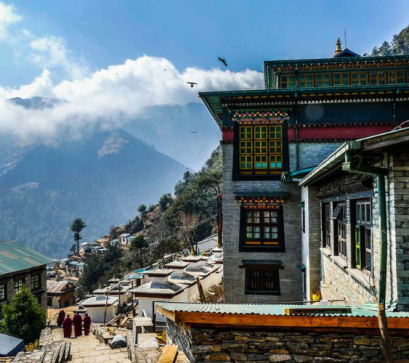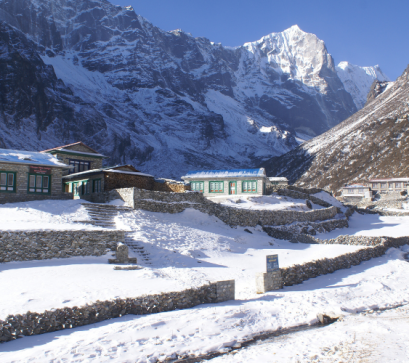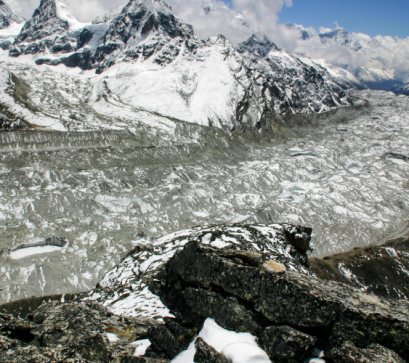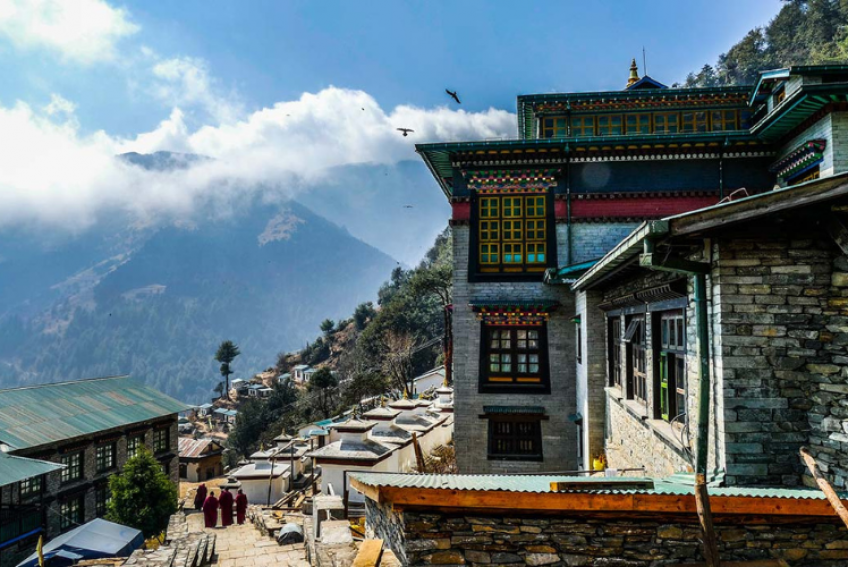
In the lower reaches of the Everest region, far from the crowded trails that lead to Base Camp, a different kind of sanctuary sits tucked into a forested valley. There are no summit bids here, no gear shops, no queues of trekkers. The sounds are not of footsteps and drone propellers, but of prayer bells, chanting, and the wind moving through pine trees.
Thupten Choling Monastery is not the oldest monastery in Nepal, nor the most famous. But it is one of the most unusual. It is the largest nunnery in the Everest region and one of the largest communities of Tibetan Buddhist nuns anywhere in the world. For the traveller who walks its path, Thupten Choling offers something the main trail cannot: a living, breathing centre of spiritual practice, built by refugees, sustained by women, and open to those who seek it out.
To call Thupten Choling simply a "monastery" misses the point. It is a retreat community and monastic complex that houses several hundred monastics: estimates range from 400 to over 900, with the majority being Tibetan refugee nuns. The community is divided between monks and nuns, but the nuns dominate in number, making this one of the most significant centres for female Buddhist practitioners in the Himalayas.
The full name in Wylie transliteration is thub bstan chos gling, which can be translated as "the place of the Dharma of the Teaching". It belongs to the Nyingma tradition, the oldest school of Tibetan Buddhism, known for its emphasis on Dzogchen (Great Perfection) teachings and ancient scriptural lineages.
Unlike the tourist-facing monasteries of Namche Bazaar or Tengboche, Thupten Choling remains first and foremost a place of practice. Visitors are welcome, but they enter a working religious community, not a museum or a viewpoint.
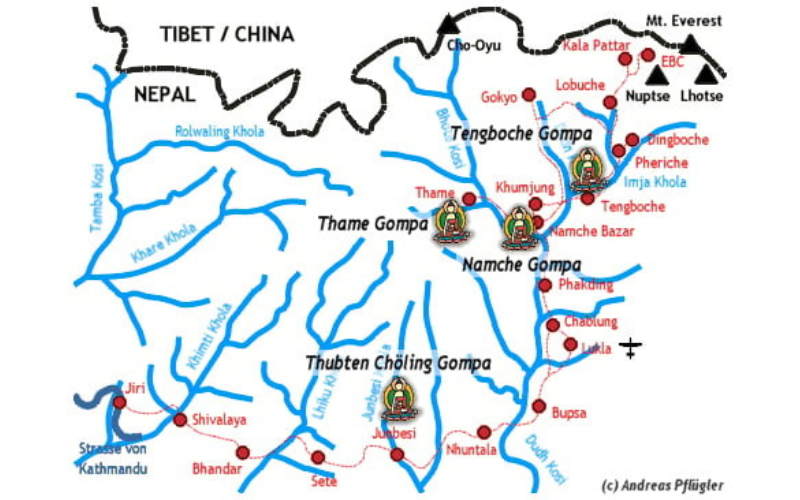
Thupten Choling is situated in the Solukhumbu District of northeastern Nepal, on the southern slopes of the Everest massif. It lies near the village of Junbesi, approximately 3,000 metres (9,842 feet) above sea level.
The monastery is not on the main Everest Base Camp trekking route. Instead, it sits along two quieter but historically significant paths:
The history of Thupten Choling is inseparable from the story of its founder, Kyabje Trulshik Rinpoche (1923-2011), one of the most revered masters of the Nyingma lineage.
Trulshik Rinpoche came to Nepal from Tibet in 1959. For several years, he stayed at existing monasteries in the Khumbu region, including Thangme, while hoping, perhaps against hope that he and his followers would soon return to his own monastery of Dza Rongphu in Tibet, located near the north side of Mount Everest.
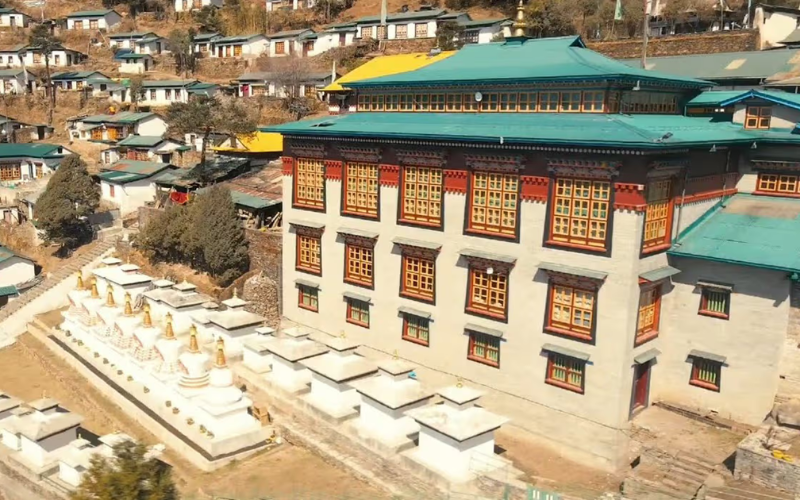
By 1968, it had become clear that return was not imminent. Rinpoche accepted donated land near Junbesi and built Thupten Choling. But here is a detail that reveals something about the community's mindset: Rinpoche did not build the monastery to last. Believing still that he and his followers would soon go home, he constructed the original buildings as temporary structures, not expecting them to survive for decades.
This provisional attitude explains why the monastery began to deteriorate in the 1990s. The buildings were never meant to see the turn of the millennium. But the community did not return to Tibet, and so the monastery was rebuilt as a permanent structure, with reconstruction beginning in 2001. The current buildings, therefore, date from the early 2000s, even though the community's roots stretch back to the 1960s.
In 1977, Thupten Choling received a visit from Dilgo Khyentse Rinpoche, another towering figure in Tibetan Buddhism. He stayed for several months, bestowing major empowerments including the Gyutrul Shyitro, Nyingtik Yabshyi, Damngak Dzo, and the Compendium of Sadhanas. This visit cemented Thupten Choling's reputation as a genuine centre of Nyingma learning and practice.
What makes Thupten Choling truly remarkable is its role in promoting women within Tibetan Buddhism. Historically, monastic education and leadership positions in Tibetan Buddhism have been dominated by monks. Nunneries existed, but they were often smaller, poorer, and less resourced than male monasteries.
Thupten Choling has helped change this. Under Trulshik Rinpoche's guidance, the monastery prioritised the education and spiritual growth of nuns on an equal footing with monks. Today, hundreds of nuns at Thupten Choling study ancient scriptures, Buddhist philosophy, meditation practices, and ritual traditions. Some also learn modern subjects, preparing them to engage with the wider world.
Visitors to the monastery often remark on the calm, focused, and sisterly atmosphere among the nuns: a sense of shared purpose and mutual support that stands as a quiet rebuke to centuries of male-dominated monastic hierarchies.
Life at Thupten Choling follows a disciplined daily rhythm, beginning well before sunrise.
Young monastics receive formal education from senior lamas, learning not only Buddhist texts but also debate, ethics, and moral values. The monastery also emphasises community service, with nuns and monks supporting the local population through education, healthcare assistance, and environmental conservation projects.
Simple meals are shared communally, consistent with the monastic ideal of modest living unattached to material wealth.
Thupten Choling is also a centre for traditional Tibetan arts. Nuns receive training in:
These arts are themselves forms of meditation in action, requiring focus, patience, and devotion. Visitors who are fortunate may see nuns at work on these pieces.
Like many monasteries in the Solukhumbu region, Thupten Choling celebrates Mani Rimdu, a 19-day festival marking the founding of Buddhism by Guru Rinpoche.
Throughout the year, high lamas visit Thupten Choling to give teachings on meditation, philosophy, and ethics. These gatherings attract pilgrims from Nepal, Tibet, and Bhutan.
Thupten Choling is accessible via two main travel methods, both of which begin with a flight from Kathmandu to Phaplu (a 45-minute flight).
Option 1: Fly to Phaplu + Drive + Short Hike (Fastest)
Option 2: Overland Jeep from Kathmandu (More Affordable)
For travellers wishing to experience the monastery as part of a longer trek, a typical 7-day itinerary includes:
Thupten Choling can be visited year-round, but the most comfortable conditions occur during:
Basic guesthouse accommodation is available at the monastery for visitors who wish to stay overnight and immerse themselves in the daily routine. Alternatively, teahouses in nearby Junbesi offer more varied amenities.
Thupten Choling is not a stopover on the way to something else. It is the destination. Or at least, it can be, for the traveller who understands that the Himalayas offer more than summits and viewpoints.
The monastery exists because of exile. It was built by people who had lost their homeland and who built their first structures with the assumption that they would soon return. When return became impossible, they rebuilt, not with bitterness, but with renewed commitment to their tradition.
The monastery endures because of the women who fill its prayer halls. In a tradition often dominated by men, Thupten Choling has quietly become a model for female monastic education, proving that nuns can study, lead, and preserve the Dharma as fully as any monk.
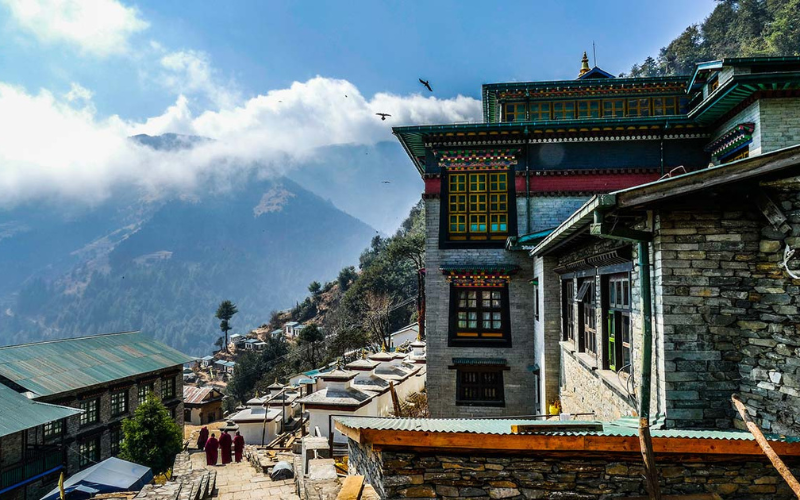
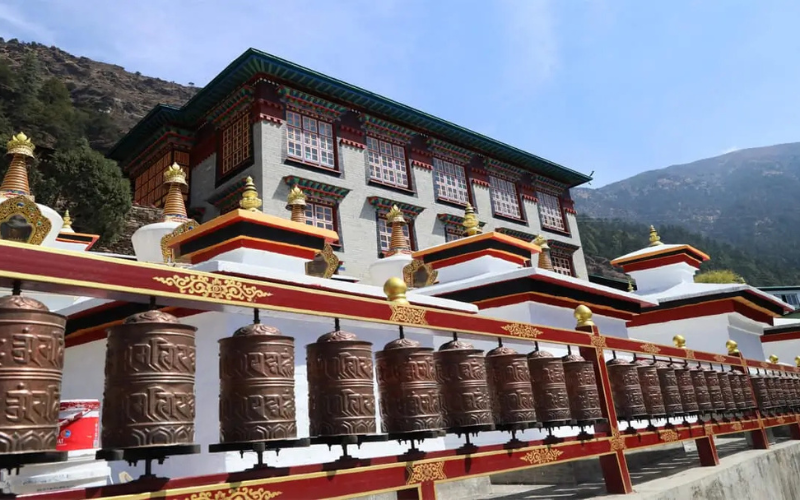
For the traveller who walks the trail to Thupten Choling, past Junbesi's stone houses, up through pine forest, around the bend where the monastery's golden roof first appears, the reward is this: a place where Buddhism is not performed for tourists but practised as a way of life.
And that, in a region increasingly crowded with trekkers, is a rare and precious thing.
How many nuns and monks live at Thupten Choling?
Estimates vary. Some sources cite over 400 nuns and monks; others state over 900 (80% of whom are Tibetan refugees). The exact number fluctuates as monastics come and go for study and retreat.
What is the altitude of Thupten Choling Monastery?
The monastery sits at approximately 3,000 metres (9,842 feet) above sea level. This is lower than Namche Bazaar (3,440m), making it accessible to trekkers without high-altitude acclimatisation.
Do I need a guide to visit Thupten Choling?
A guide is not legally required but is strongly recommended for navigation, cultural interpretation, and logistical support. Local guides can arrange transport, accommodation, and provide context for the monastery's history and practices.
Can I stay overnight at the monastery?
Yes. The monastery has a simple guesthouse for visitors. Accommodation is basic but clean. Staying overnight allows you to participate in morning prayers and experience the monastery's peace before day trekkers arrive.
Is there mobile phone coverage or Wi-Fi at the monastery?
Mobile coverage is limited. Do not rely on internet access. This is part of the monastery's appeal: it is a place to disconnect.
When is the Mani Rimdu festival at Thupten Choling?
Mani Rimdu typically falls in May (the ninth Tibetan month). Exact dates vary each year based on the lunar calendar. Check with local trekking agencies for current year dates.
Also Read