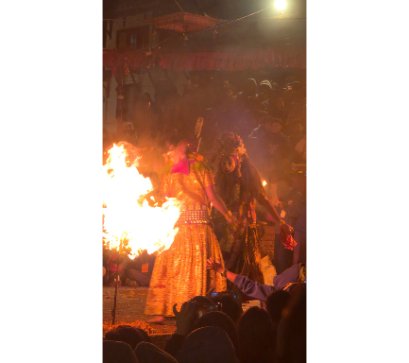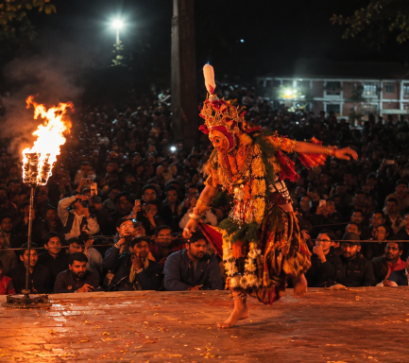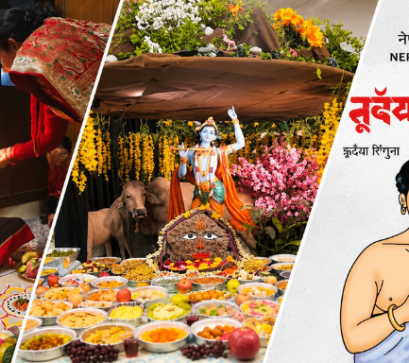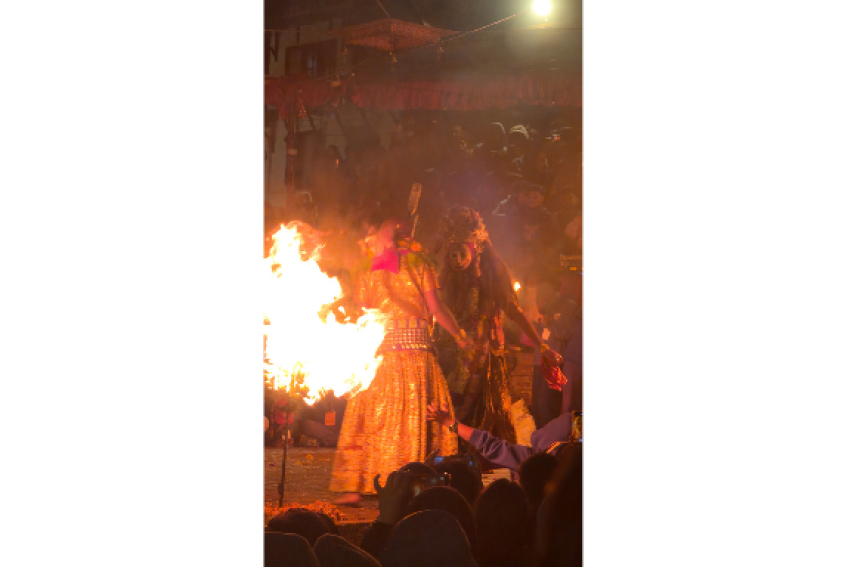
As flames illuminate the historic courtyards of Patan Durbar Square, elaborately costumed performers bring ancient Hindu mythology to life. Kartik Naach, a traditional Newar dance-drama dating back to 1641 AD, continues to captivate audiences in Lalitpur, with its 2026 edition concluding on November 24 after twelve evenings of cultural performances.
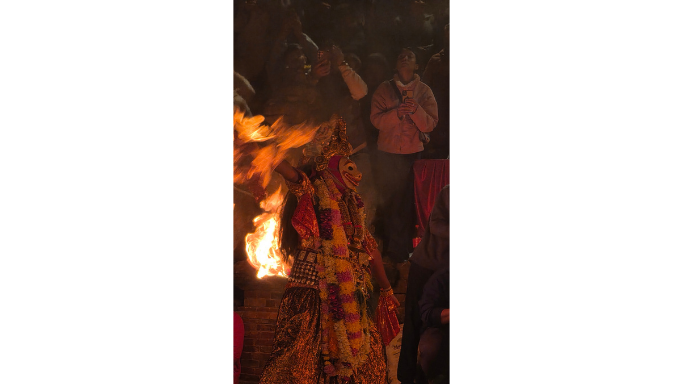
Originally staged over two days, the tradition was gradually expanded by successive Malla rulers, including Srinivas Malla and Yog Narendra Malla. Over time, it developed into an elaborate theatrical celebration featuring religious narratives, music, dance and social satire.
Today, the Kartik Naach Preservation Committee works to sustain this cultural legacy and pass its artistic traditions to younger generations.
Kartik Naach combines traditional Newar music, expressive dance movements, elaborate costumes, symbolic masks and tantric ritual practices. Performers portray Hindu deities, demons and mythological characters, transforming the historic square into an open-air theatre.
Among its most dramatic performances is Narasimha Avatar, which depicts the half-human, half-lion incarnation of Lord Vishnu defeating the demon king Hiranyakashipu and protecting his devotee Prahlad, according to Hindu mythology.
Illuminated by flaming torches and accompanied by traditional musical instruments, the performance symbolises the victory of good over evil. Other episodes explore the incarnations of Vishnu, stories of Lord Krishna and narratives reflecting Newar social life.
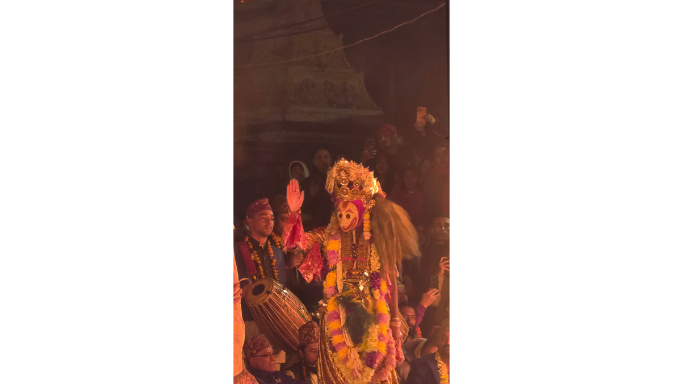
This year's programme features Madhavanal, Bathah Pyakhan, Jalashayan, Varaha Avatar and other traditional episodes. The Narasimha Avatar performance took place on November 22, followed by Vastraharan Lila on November 23.
The festival is scheduled to conclude on November 24 with Dadhi Lila, a performance inspired by Lord Krishna's playful association with yoghurt pots.
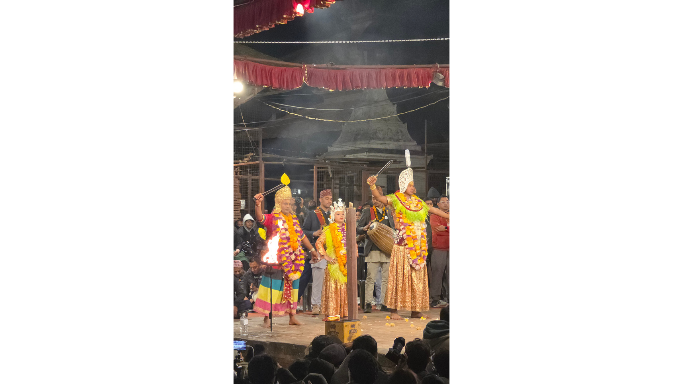
Its continued performance reflects the dedication of local artists, musicians and community members who have preserved this remarkable cultural practice across generations.
Against the historic architecture of Patan Durbar Square, Kartik Naach remains a living connection between Nepal's Malla-era heritage and contemporary Newar identity, reminding audiences that cultural heritage is not simply preserved in monuments but also through the traditions people continue to practise.