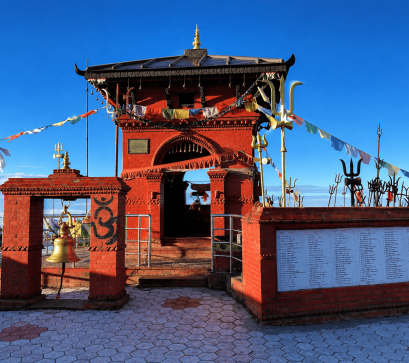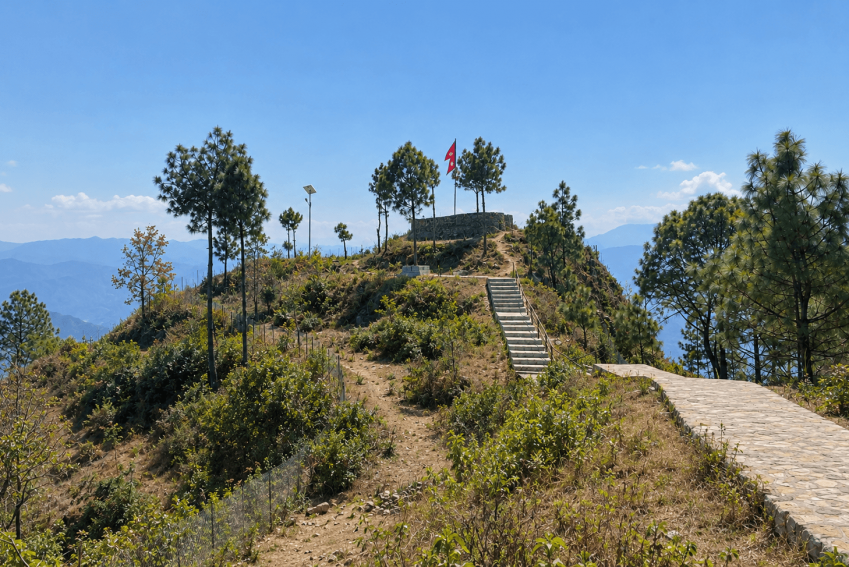
Climb the 465 stone steps that switch back up a ridge in Ramechhap district, and you arrive somewhere most travelers to Nepal never hear about a windswept hilltop where soldiers once drilled for a war that shaped the nation. This is Chisapani Gadhi, waiting quietly to be noticed.
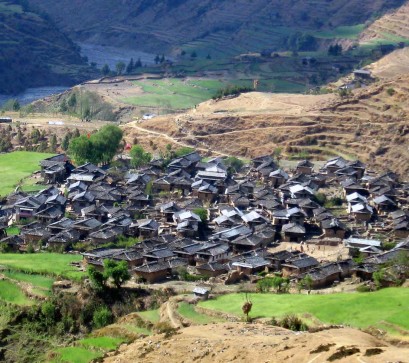
At 1,300 meters, in Manthali Municipality's Ward 8, the fort sits about 14 km from Manthali. It reveals itself slowly: a stone stairway, old weapons kept in villagers' homes, a mountain skyline that seems to go on forever.
The story begins in 1814, when Nepal refused to hand over the Butwal and Syuraj regions to the British East India Company, triggering the Anglo-Nepalese War. For roughly twenty months, Gorkhali soldiers fought to hold a kingdom stretching from the Teesta River in the east to the Sutlej in the west, a war that ultimately drew the borders Nepal still holds today.
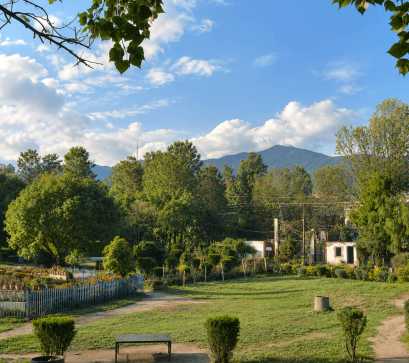
Legend in Ramechhap holds that Chisapani was one of many forts raised during this period, used as a training ground rather than a battlefield. Local accounts say troops drilled here before marching to the larger fort of Sindhuli Gadhi to face the British. Walk the ridge today and you can still trace the old parade ground and defensive walls soldiers once crouched behind. Villagers still keep swords, khukuris, bangles, and saligram stones from that era's heirlooms, not museum pieces.
Reach the top and the reward is immediate: Gauri Shankar and Numbur Himal on the horizon, the Mahabharat range, Manthali town below, and by local estimates more than 70 percent of Ramechhap district unfolding before you, with glimpses into six neighboring districts on a clear day.
Nearby, Ghadichhap forest turns brilliant with blooming rhododendrons and reportedly holds the remains of an old water clock. It's also a known habitat for the pangolin, one of the world's most endangered mammals.
Partway down the ridge, a natural rock formation is venerated as the goddess Siddhadevi, where locals offer flowers during Dashain and New Year. Nearby, the old settlement of Bhatere carries its own folklore, while the Bahunchaura Mahadev shrine and Bhimsenthan temple round out the route.
A motorable road runs almost to the ridge, and the walk up from Bhatere Tole takes just 15 minutes. From Kathmandu, the route runs through Manthali and Puranagaun about an hour's drive from Manthali, or 20 minutes by motorbike.
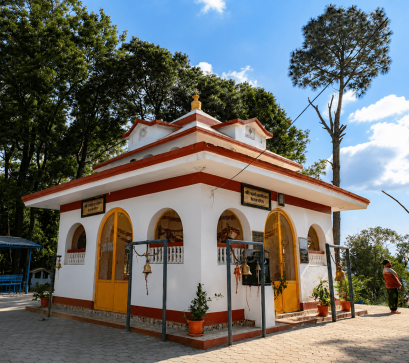
Bagmati Province and the local ward office have invested nearly NPR 6.3 million in a stepped trail and small temple, and visitor numbers are climbing. Locals now talk of homestays, even a cable car. Yet residents say Chisapani Gadhi remains overlooked as a genuine piece of Nepal's military history still waiting for the recognition it deserves. For travelers tired of well-worn circuits, that's the appeal: real stories, real relics, real views, and hardly anyone else on the trail.

.jpg)