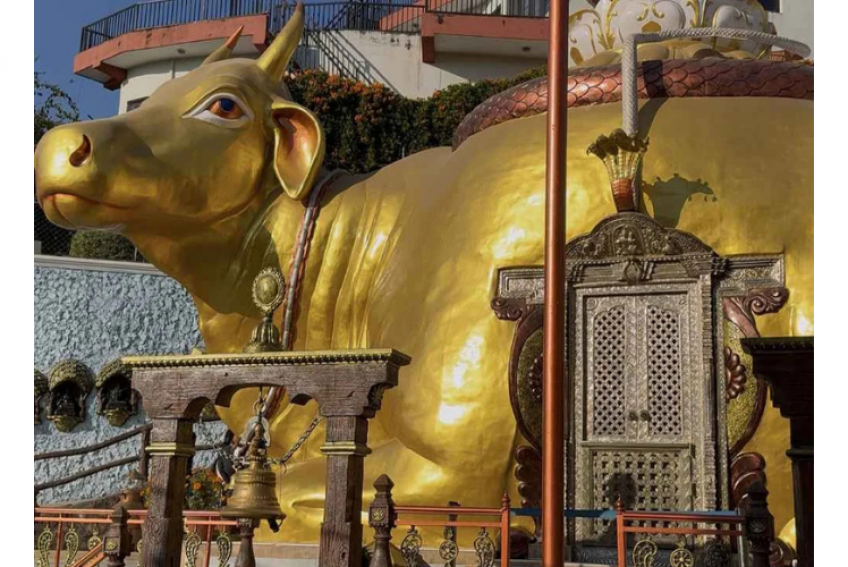
Located near the sacred banks of the Bagmati River in Gaurighat, Trigajur Shivalaya stands as a distinctive and relatively recent addition to Kathmandu’s evolving sacred landscape. Unlike the valley’s ancient pagoda temples, this shrine represents a modern architectural expression rooted in Hindu symbolism, drawing attention for its unconventional form and layered spiritual references.
Location and Setting
Trigajur Shivalaya is situated in Gaurighat, a historically significant spiritual zone just north of Pashupatinath Temple. Gaurighat itself lies along the Bagmati River, one of the most sacred rivers in the Kathmandu Valley and a key site for ritual practices, including cremation ceremonies and pilgrimage activity.
The temple’s placement within this spiritual corridor integrates it into a broader network of shrines dedicated to Shiva and Parvati traditions, reinforcing its cultural relevance despite its recent construction.
From Mitrapark, head towards Abhiyekti Marg, continue straight and take a right onto Gaurighat Marg, then proceed before turning left towards Tushal Marg, where Trigajur Shivalaya will appear on your right; the journey takes approximately 5 minutes by car or around 15 minutes on foot. The temple is generally open from 6:00 AM to 8:00 PM, although it remains closed between 12:00 PM and 4:00 PM during the day.
Architectural Features
A Contemporary Sacred Form
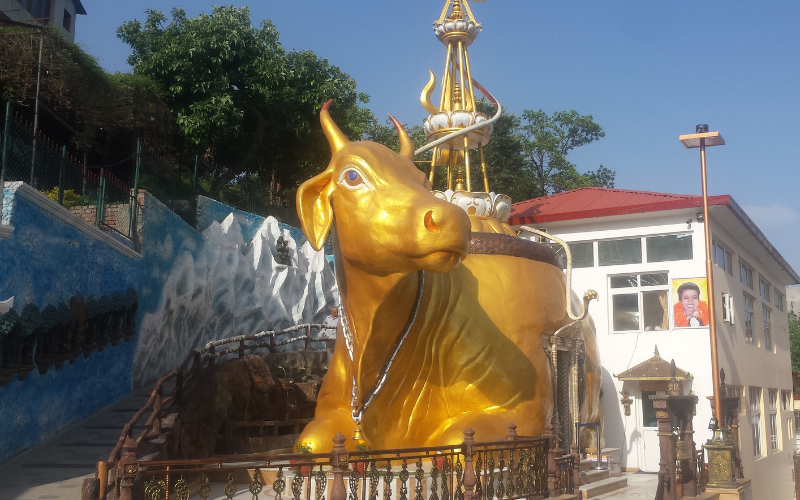
Trigajur Shivalaya was constructed in 2019 and is noted for its non-traditional design, departing from the classical pagoda and shikhara styles typically associated with Nepali temples.
Key Architectural Elements
Three Pinnacles (Trigajur Concept)
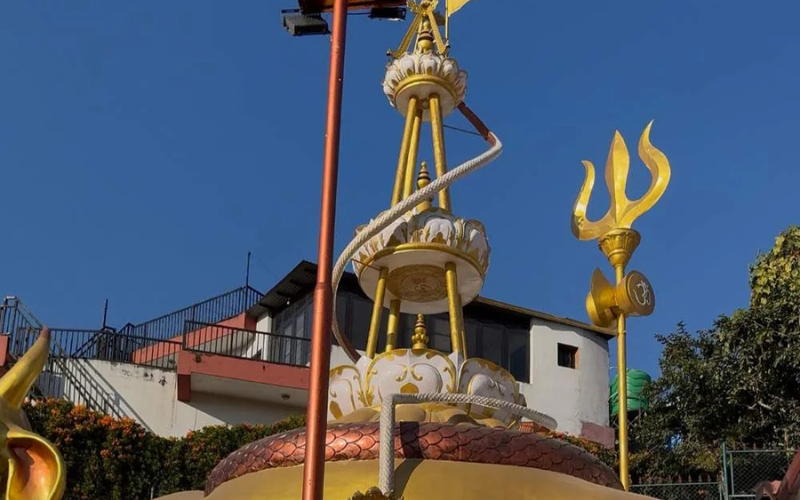
The temple features three prominent spires (gajurs), symbolically associated with the Hindu trinity: Brahma, Vishnu, and Shiva.
Nandi-Inspired Form
The structure incorporates symbolic references to Nandi, the sacred bull and vehicle of Lord Shiva, shaping both its conceptual and visual identity.
Central Shivalinga
At its core lies a Shivalinga, the primary object of worship, reinforcing the temple’s Shaivite identity.
Composite Symbolism
The design integrates multiple sacred motifs, including serpentine forms and sculptural detailing, creating a layered representation of Hindu cosmology.
Integrated Spatial Design
The worship area is embedded within the structure itself rather than housed in a separate sanctum, reflecting a more sculptural, immersive architectural approach.
Cultural and Religious Significance
A Modern Expression of Devotion
Despite its recent origin, Trigajur Shivalaya functions as an active Hindu shrine dedicated to Lord Shiva, contributing to the spiritual ecosystem of the Gaurighat-Pashupatinath area.
Its symbolism, particularly the presence of Nandi and the Shivalinga anchors it firmly within Shaivite worship traditions, which remain central to Nepal’s religious life.
Symbolism Over Historicity
Unlike ancient temples built under royal patronage, this structure reflects a contemporary devotional initiative, where symbolic meaning takes precedence over historical lineage. Its design demonstrates how modern temple construction in Nepal continues to reinterpret traditional religious motifs in new forms.
Design Attribution and Construction
The temple is associated with the design concept of Aditya Dahal, with construction carried out by teams of engineers, artisans, and sculptors.
While widely discussed for its unusual origin story, verifiable information confirms primarily its design attribution and collaborative construction, rather than the broader narrative elements often circulated informally.
Tourism and Visitor Experience
Trigajur Shivalaya offers a contrasting experience within Kathmandu’s heritage tourism circuit:
Unlike UNESCO-listed monuments, its value lies not in antiquity but in interpretive curiosity and visual distinctiveness.
Trigajur Shivalaya represents a rare intersection of modern creativity and traditional belief within Kathmandu’s sacred geography. While it does not carry the historical depth of the valley’s ancient temples, its architectural ambition and symbolic layering make it a noteworthy addition to Nepal’s evolving religious landscape.
PC: Travel Nepal Guides, Local Guides Connect
Also Read