Tucked beneath the forested slopes of Shivapuri Hill, Budhanilkantha Temple stands as one of Nepal’s most intriguing sacred sites where mythology, artistry, and religious harmony converge. Here are Nepal Traveller’s Friday facts about this remarkable monument:
1. Nepal’s Largest Stone-Carved Vishnu
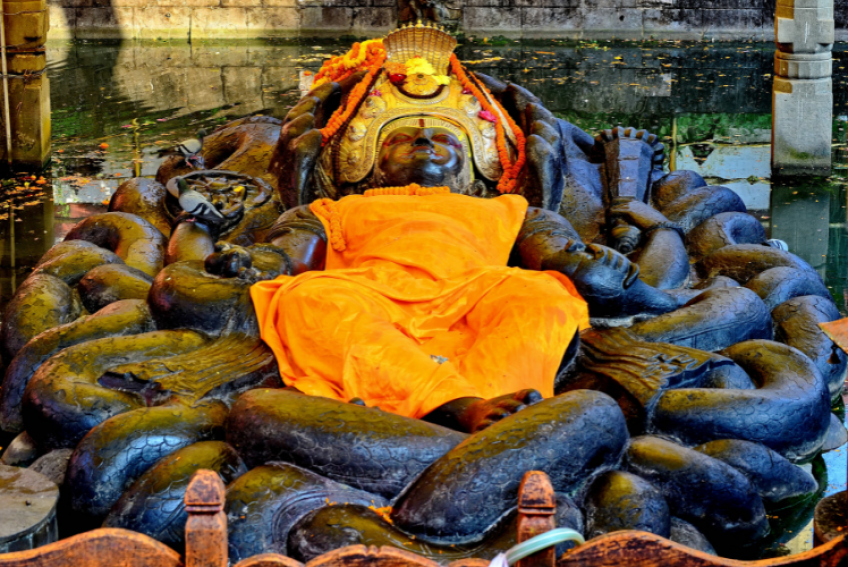
The temple’s centrepiece is a monumental reclining statue of Lord Vishnu, carved from a single block of black basalt stone. It measures approximately 5 metres in length and rests in a 13-metre-long water tank, making it the largest stone carving in Nepal.
2. A 1,400-Year-Old Masterpiece
Scholarly and historical references place the statue at over 1,400 years old, with origins often linked to the Licchavi period.
3. The “Sleeping Vishnu” in the Cosmic Ocean
The sculpture depicts Vishnu in a reclining pose known as Jalakshayan Narayan, resting on the coiled serpent Shesha—a symbolic representation of the cosmic ocean and eternal time in Hindu cosmology.
4. A Sacred Site for Both Hindus and Buddhists
Though dedicated to Vishnu, the site is also revered by Buddhists, who associate the figure with Avalokiteshvara (Lokeshvara). This dual reverence makes the temple a living example of religious harmony in Nepal.
5. The Meaning Behind “Budhanilkantha”
The name translates roughly to “Old Blue Throat”, an epithet traditionally associated with Lord Shiva. Despite this, the temple is dedicated to Vishnu—reflecting a layered blend of Shaivite and Vaishnavite symbolism.
6. Discovered by Farmers (According to Legend)
Local tradition holds that the statue was unearthed by farmers ploughing a field, who discovered the buried figure beneath the soil—transforming it into an object of divine revelation rather than a conventional installation.
7. A Royal Taboo
A long-standing legend claims that Nepalese monarchs avoided visiting the temple, following a prophecy during the reign of King Pratap Malla that foretold death for any ruling king who set eyes on the deity.
8. Rituals That Mark Vishnu’s “Awakening”
The temple becomes especially vibrant during Haribodhini Ekadashi (Kartik, October–November), when thousands gather to symbolically awaken Vishnu from his cosmic sleep, marking the end of a four-month sacred period.
9. The Water’s Sacred Association
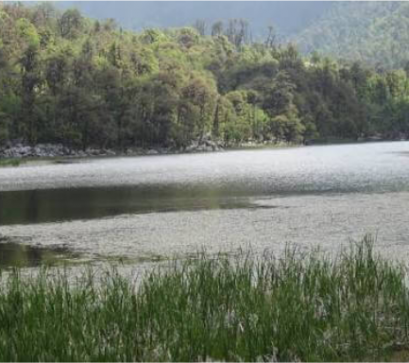
The pool surrounding the statue is believed—within religious tradition—to be linked to Gosaikunda, a sacred alpine lake associated with Shiva, reinforcing the temple’s mythological connections across Nepal’s sacred geography.
10. An Open-Air Temple Unlike Most Shrines
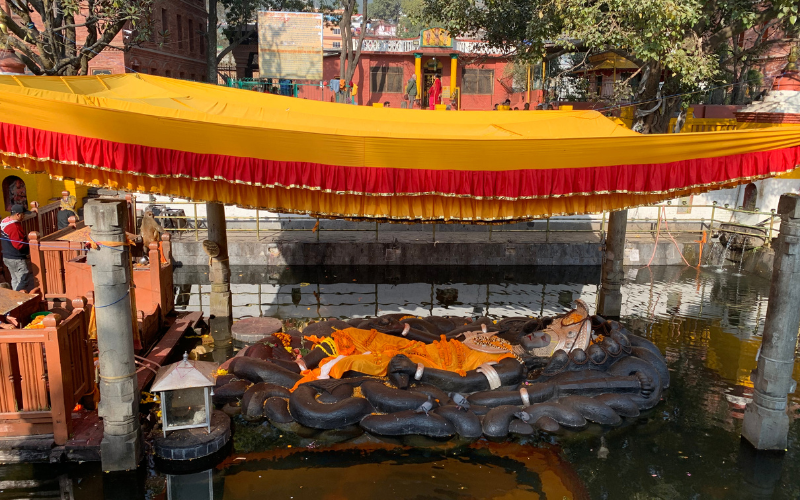
Unlike typical pagoda-style temples in the Kathmandu Valley, Budhanilkantha is an open-air shrine, with the deity exposed within a sunken basin—an architectural form that enhances its distinct identity.
Budhanilkantha Temple is not merely a religious site—it is a layered cultural landmark where ancient craftsmanship, mythic narrative, and interfaith reverence coexist. For travellers and observers alike, it offers a rare glimpse into Nepal’s enduring spiritual landscape—quietly powerful, and deeply symbolic.
Also Read