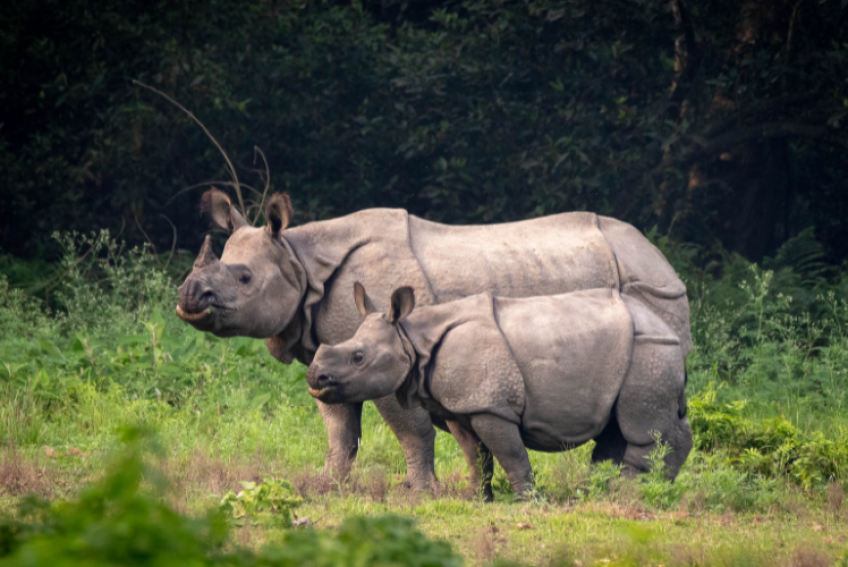
The one-horned rhinoceros, also known as the greater one-horned rhinoceros (Rhinoceros unicornis), is one of the most important and recognisable wildlife species of Nepal. Distinguished by its single horn and thick, armour-like skin, this magnificent animal represents both the country’s rich biodiversity and its global leadership in wildlife conservation.
Physical Features and Behaviour
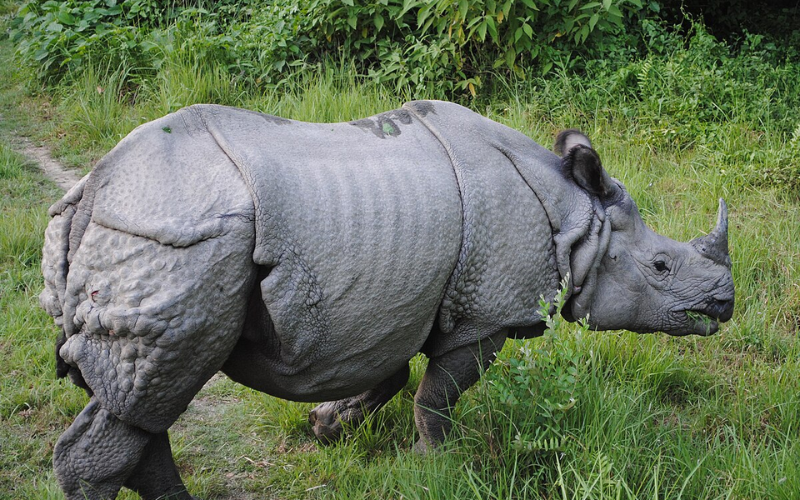
The greater one-horned rhino is the largest rhino species in Asia. Adult individuals typically weigh between 1,800 and 2,700 kilograms and stand 1.7 to 2 metres tall at the shoulder. Its grey-brown skin forms deep folds that resemble protective armour, giving the species its distinctive appearance.
Despite their massive size, these rhinos are agile and excellent swimmers. They frequently wallow in mud and water to regulate body temperature and protect their skin from parasites. One-horned rhinos are generally solitary animals, although they may be seen together at feeding grounds or wallowing sites. They are herbivores, feeding mainly on grasses, aquatic plants, leaves, shoots, and fruits.
Habitat and Distribution in Nepal
In Nepal, one-horned rhinos inhabit the Terai lowlands, where riverine forests, tall grasslands, wetlands, and floodplains provide ideal conditions for feeding and breeding. The largest population is found in Chitwan National Park, a UNESCO World Heritage Site renowned for its biodiversity.
Smaller populations also exist in Bardia National Park and Shuklaphanta National Park, where rhinos have been reintroduced as part of national conservation programmes.
Conservation History and Recovery
During the mid-twentieth century, uncontrolled poaching and habitat destruction caused Nepal’s rhino population to decline dramatically, falling to fewer individuals by the 1960s. In response, the Government of Nepal introduced strict conservation measures, including the establishment of national parks, armed anti-poaching patrols, legal protection, and community-based conservation initiatives.
These efforts have led to one of the world’s most successful wildlife recoveries. According to the 2021 National Rhino Census, Nepal is home to around 752 one-horned rhinos, making it the second-largest range country for the species after India. Nepal has also achieved several years of zero rhino poaching, earning international recognition for its conservation achievements.
Ecological and Cultural Importance
The one-horned rhino plays a vital ecological role as a keystone species. By grazing and moving through dense vegetation, it helps maintain grassland ecosystems that support many other plants and animals. Rhinos are also central to Nepal’s eco-tourism industry, attracting visitors from around the world and providing sustainable income for local communities.
Culturally, the rhino is a national symbol of conservation success and environmental pride, reflecting Nepal’s commitment to protecting its natural heritage.
The story of the one-horned rhino in Nepal demonstrates how strong laws, scientific management, and community involvement can reverse the decline of an endangered species. Continued protection of habitats and wildlife is essential to ensure that this iconic animal remains a living symbol of Nepal’s natural legacy for generations to come.
PC: ADITY, Ajay Sood, Wikimedia Commons - Wikimedia.org
Also Read