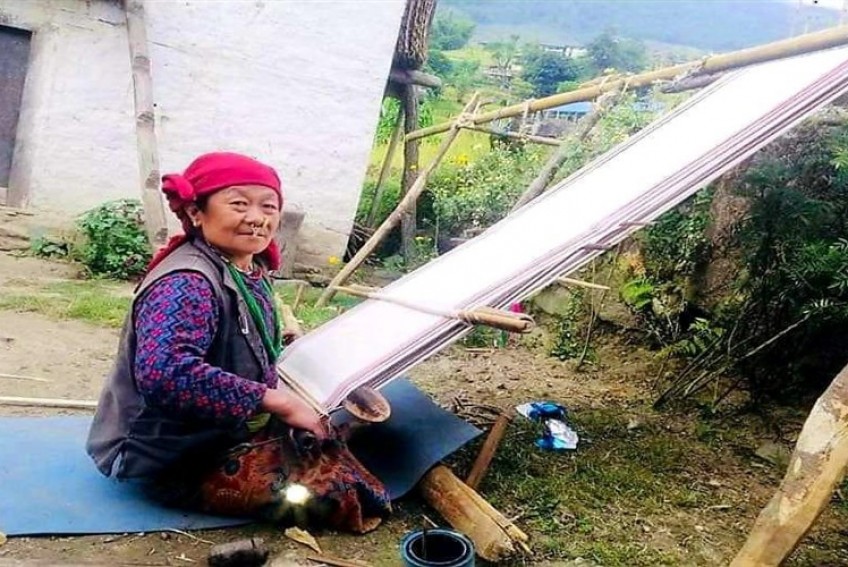
Allo comes from the Himalayan giant nettle, Girardinia diversifolia, a wild plant that can grow up to three or four metres tall in the mid-altitude forests between 1,000 and 3,000 metres. Communities including the Rai, Magar, Tamang, Gurung, and the nomadic Raute have extracted and spun its bark fibre for generations, long before allo bags and scarves started showing up in tourist shops in Kathmandu.

The process is entirely manual. Harvested stalks are softened overnight in a wood ash bath, beaten against stone, then rubbed with clay to strip away plant debris before the fibre is hand spun into yarn. The resulting cloth is naturally hollow, which makes it breathable in summer and insulating in winter, and it was traditionally woven into ropes, fishing nets, sacks, and the crisscross carrying bags known as bhangre. In leaner times, allo cloth was even bartered for grain. Weaving is women's work in most communities, while men handle nets, ropes, and selling the finished pieces.
Nepal's pashmina comes from the Chyangra, a Himalayan mountain goat that survives at altitudes above 3,000 metres. Its soft undercoat is hand combed during the natural shedding season, cleaned, and hand spun before being set on a traditional handloom.
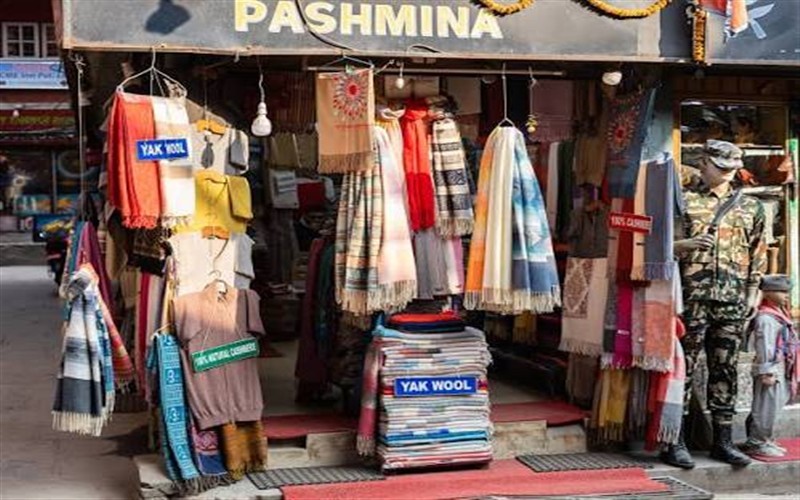
What separates genuine Chyangra pashmina from generic cashmere is certification. The trademark is issued by Nepal's Department of Cottage and Small Industries and is now recognised in 47 countries, guaranteeing fibre with an average diameter of 14.36 microns or less. It has also been registered as a Geographical Indication product, the same legal protection given to Champagne or Darjeeling tea, meaning only pashmina made from Chyangra goats in Nepal's designated Himalayan belt can carry the name.
In the mountain districts of the far west and east alike, from Karnali to Taplejung and Panchthar, women have long woven Radi (rugs) and Pakhi (blankets) from sheep and Chyangra wool during their spare hours between farm work. A saddle carpet depicted in a Nepali mandala painting from 1564 shows the craft is at least four centuries old, and old trade records even mention Nepali wool blankets being sold as far as Pataliputra, present day Patna.
These pieces were once dowry staples, and weaving skill was genuinely factored into a family's search for a bride. Finely made Radi were prized for being so tightly woven the wool never pricked the skin. The tradition has thinned as factory quilts became easier to reach, but it survives among older weavers in the hills who keep at it, as some put it, simply to save it.
Dhaka may be Nepal's best known export, but allo, pashmina, and Radi Pakhi are the quieter threads holding the country's hill and mountain communities together.
Picture Credits: Wikimedia Commons