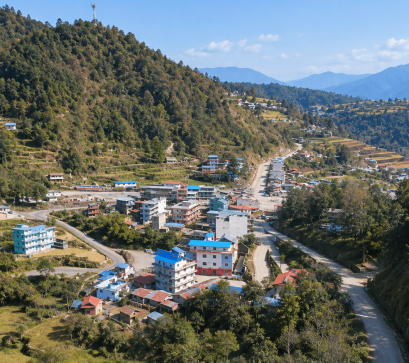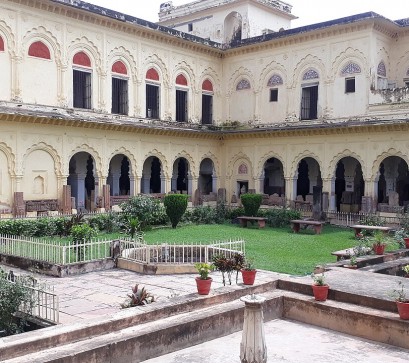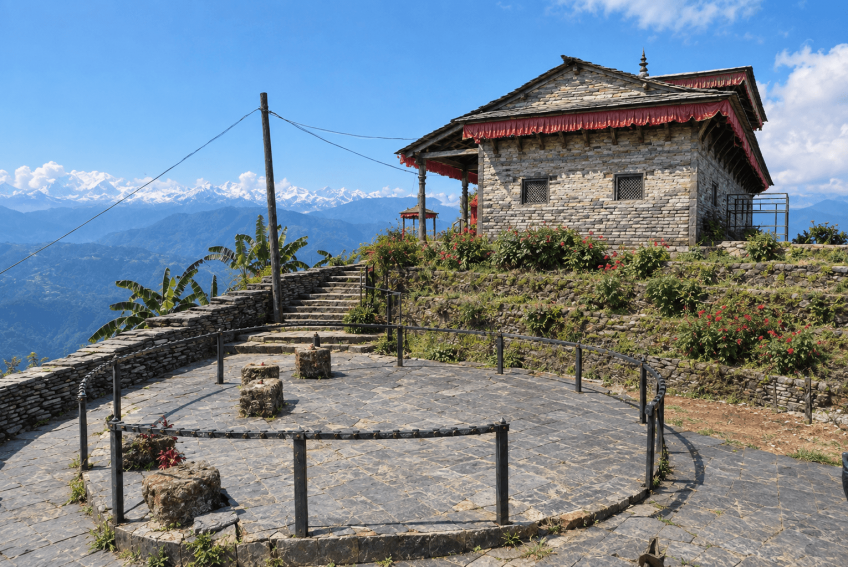
Kaskikot sits on a ridge west of Pokhara, past Sarangkot, and draws far fewer visitors despite similar mountain views. The site is now Ward 24 of Pokhara Metropolitan City in Kaski District, having earlier functioned as a separate village development committee. Before Nepal's unification, it was the seat of the small Kaski kingdom.
One of 24 principalities that once existed in western Nepal, and its ruined palace and hilltop temple still sit on the ridge at an elevation given variously as 1,700 and 1,788 metres.The kingdom's rulers, descended from Kulamandan Shah Khand, produced Drabya Shah, who went on to establish Gorkha the base from which the Shah dynasty later unified Nepal.
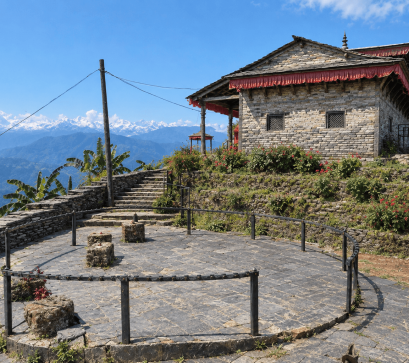
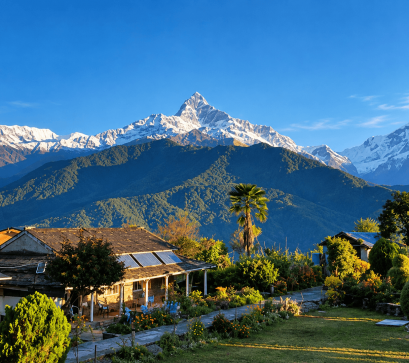
Geographically, Kaskikot lies within the Annapurna Massif on the route toward the Annapurna region. From the ridge, Dhaulagiri is visible to the far west and the Annapurna range to the north, while Pokhara and Fewa Lake spread out to the east.
The area borders Sarangkot, Chapakot, Dhikurpokhari and Hemja. A popular route links it to Sarangkot on foot, following ridgelines and village paths for roughly one to two hours, with views of the Annapurna range and glimpses of Fewa Lake below.
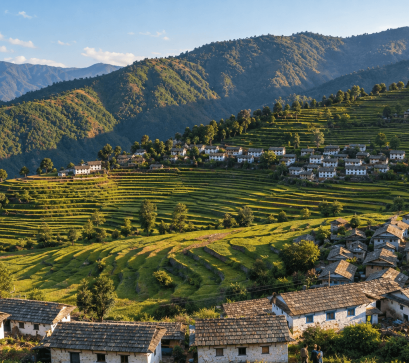
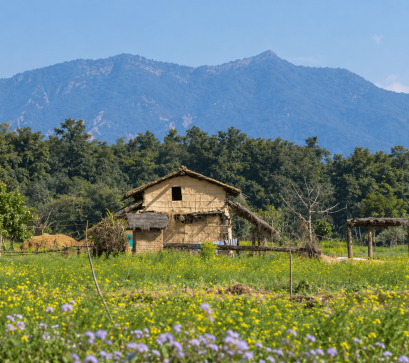
Census records show the population falling from 6,075 people in 1,185 households in 1991 to 5,892 people in 1,508 households by 2011, made up mostly of Brahmin, Chhetri, Thakuri, Magar and Dalit communities. Houses follow traditional Nepalese construction in wood, stone and mud.
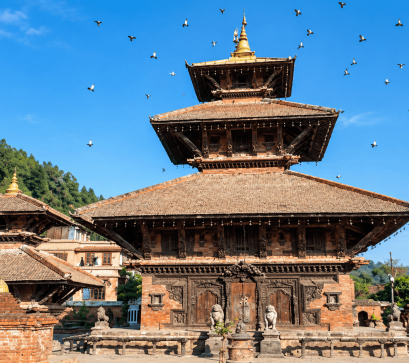
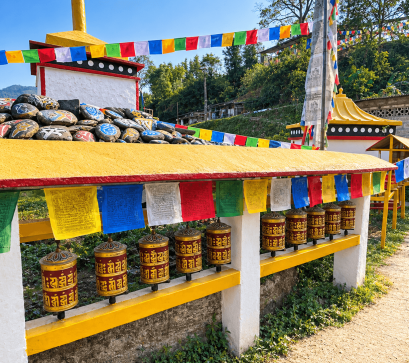
The Kalika Temple, within the old palace grounds, anchors local religious life: the Kaski Guthi Sanstha organises worship to Durga Bhawani during Nava Durga, Dashain and Chaitra Dashain, with large gatherings especially around Dashain Fulpati.
Most residents rely on agriculture, supplemented by a milk collection centre in Guntechour supplying Pokhara, along with small-scale poultry farming and handicrafts. Tourism has added hotels and guesthouses in Deurali and Maula, plus homestays and coffee houses, including one selling locally grown organic coffee.
Schooling is limited to Kalika Higher Secondary School at Mandredhunga, the only school reaching class 12; Siddha Bahara Lower Secondary School and the private Shree Bishwajyoti English Boarding School both stop at class 8. Health services consist of one general health post running monthly camps and a few sub-posts offering free treatment and vaccination for children.
October to April brings the clearest skies for mountain views, and early arrival means fewer crowds. Kaskikot can be reached by road from Pokhara in about 30 to 40 minutes, or combined with a hike from Sarangkot or Naudanda. Local transport runs on bus routes and agricultural jeeps over four rough motor roads, none paved throughout, one of which climbs from the Fewa Lake shore toward Guntechour and Naudanda.
Visitors should carry water, sun protection and layered clothing for the exposed ridge, and expect basic facilities homestays and small eateries serving standard meals like dal bhat rather than developed tourist infrastructure.