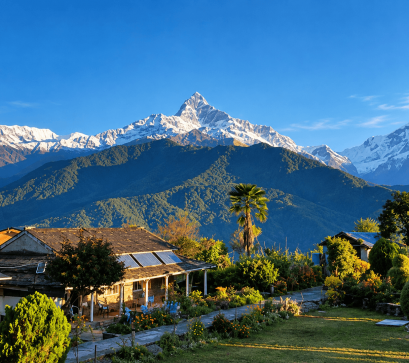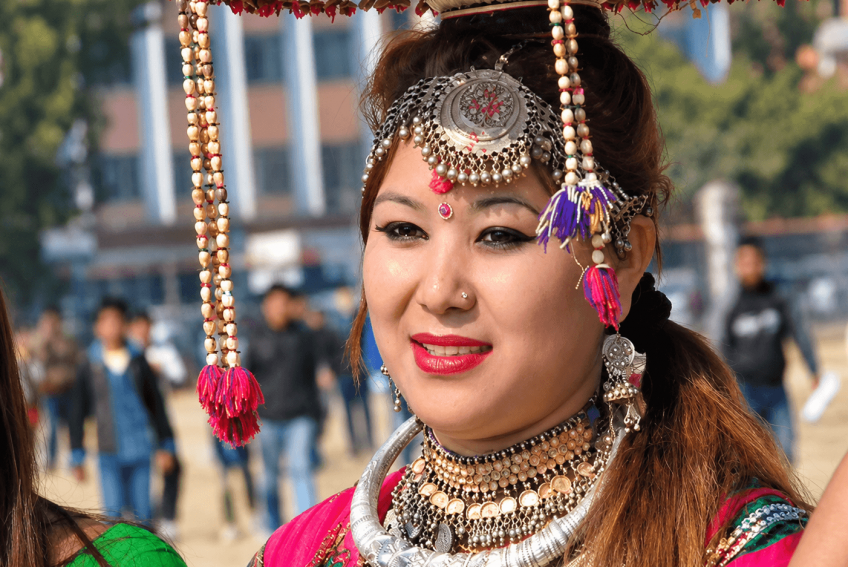
Situated between the Shivalik Hills and the Mahabharat Range in southwestern Nepal, the Dang Valley is a place where history breathes through everyday life. As Asia's second-largest valley, it is far more than a scenic stretch of the Terai it is the ancestral homeland of the Dangaura Tharu, one of Nepal's oldest indigenous communities, and the birthplace of a culture that has shaped the identity of Tharu people across the western Terai.
Every journey into Dang begins with a story. Local oral history speaks of King Dangisharan, the legendary first Tharu king, whose ancient capital once stood at Sukauragadh, near present-day Urahari.
Remnants of old palaces and coins bearing his name still surface in the region, and his name lives on in the Dangisharan Rural Municipality. Visitors who wander this part of the valley are, quite literally, walking through the opening chapter of Tharu civilization.
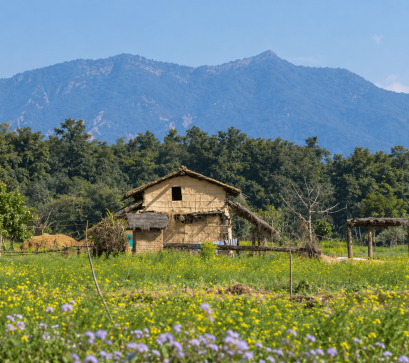
Travel deeper into Dang and you'll find villages that feel like living museums. Long, rectangular homes stretch north to south, built from reed, bamboo, mud, and dung naturally cooled, beautifully simple, and perfectly suited to the Terai climate.
Each community is guided by a Mahatawa, the village chief, and a Guruwa, a spiritual leader and traditional healer, roles that have endured for generations. Walking through these settlements offers a rare, unfiltered glimpse into a self-sufficient way of life built around forest, river, and soil.
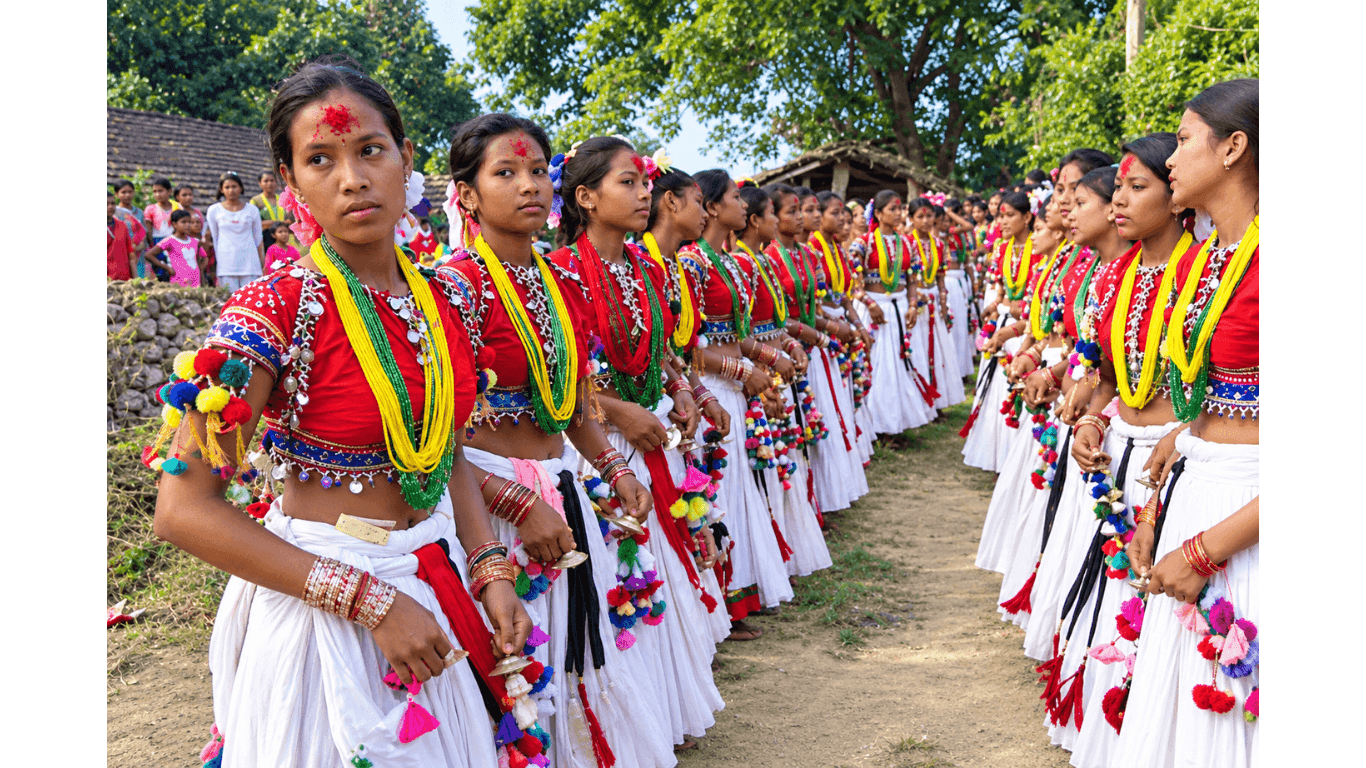
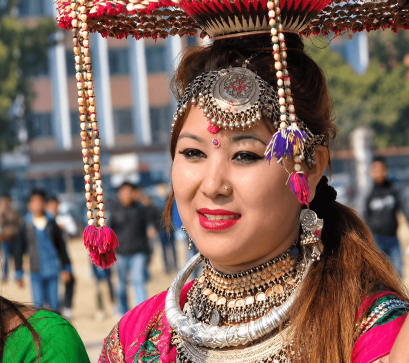
Time your visit right, and Dang rewards you with celebration. The energetic Danda Naach (Stick Dance) and graceful Mayur Naach (Peacock Dance) fill village courtyards with rhythm and color, while the rare Kathghori Naach (Wooden Horse Dance) survives only in a few corners of the valley, a hidden gem for the curious traveler.
During the Astimki festival, women transform mud walls into striking works of art, painting creation myths and folklore figures in bold line work. And every January, Maghi the Tharu New Year turns the valley into a feast of Dhikri, local spirits, music, and community renewal.
No visit to Dang is complete without the Tharu Cultural Museum at Chakhaura. Here, life-sized sculptures of King Dangisharan, traditional farming tools, heirloom jewelry, and lifecycle rituals bring centuries of history into vivid focus. The museum also tells a harder story the Dangaura Tharu's journey from the Kamaiya bonded-labor system, abolished in the early 2000s, to a community proudly reclaiming its indigenous roots.
Dang isn't a destination you simply see it's one you experience. Every mural, every song, every stick dance carries the memory of a people who have called this valley home for generations. As the Tharu Cultural Museum itself puts it: come discover a community that has always found beauty in everyday life.