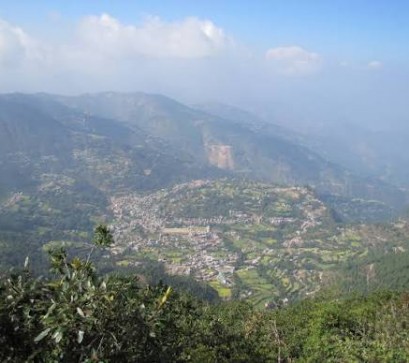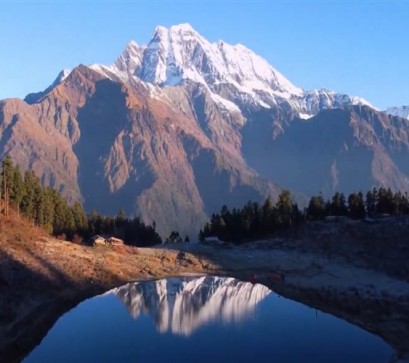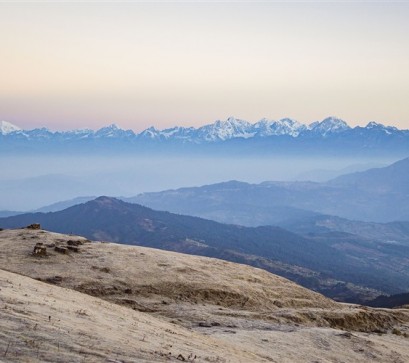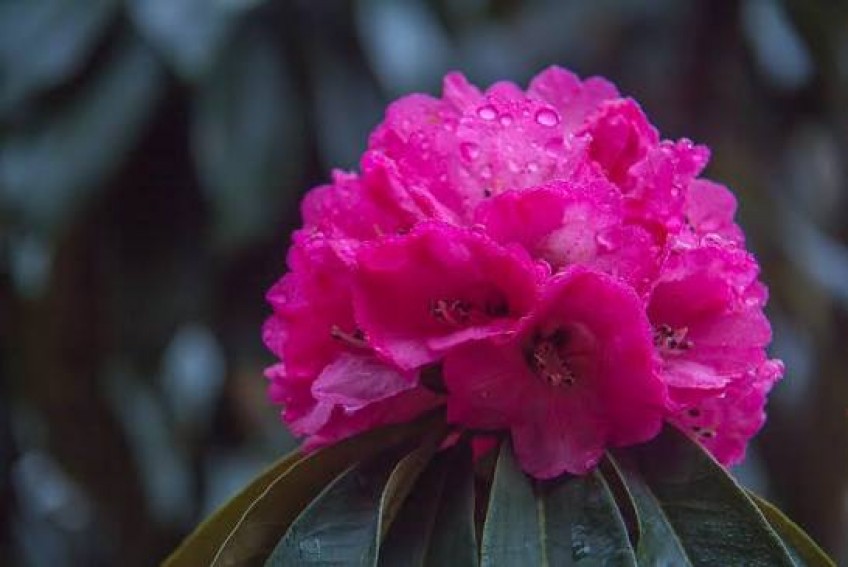
Deurali sits at roughly 3,200 metres, making it the last permanently inhabited stop before Machhapuchhre Base Camp on the standard Annapurna Base Camp route. Getting there means climbing steadily through the narrow Modi Khola gorge, past Sinuwa, Bamboo, Dovan, and Himalaya, each stage thinning the forest a little more. Lower down, the trail cuts through dense bamboo and oak. Higher up, rhododendron takes over, growing gnarled and low as the elevation climbs, until it finally gives way to open alpine scrub just past Deurali itself.
The blooming window here runs a little later than the famous lower-altitude displays around Ghorepani or Poon Hill, typically peaking in April and stretching into early May depending on the year's weather. Because the trail runs inside a steep gorge for much of the approach, the flowering trees frame narrow glimpses of Hiunchuli and Annapurna South rather than wide panoramas, which gives the walk a closed-in, almost tunnel-like quality that opens dramatically once the trees finally break.
Deurali is also known locally as an avalanche-prone stretch, sitting beneath steep slopes that have seen slide activity in past winters, so trekkers heading through in the shoulder seasons should check conditions with their guide or teahouse owner before continuing toward Machhapuchhre Base Camp. This is standard practice on the route rather than a reason to avoid it, and thousands of trekkers pass through safely every year.
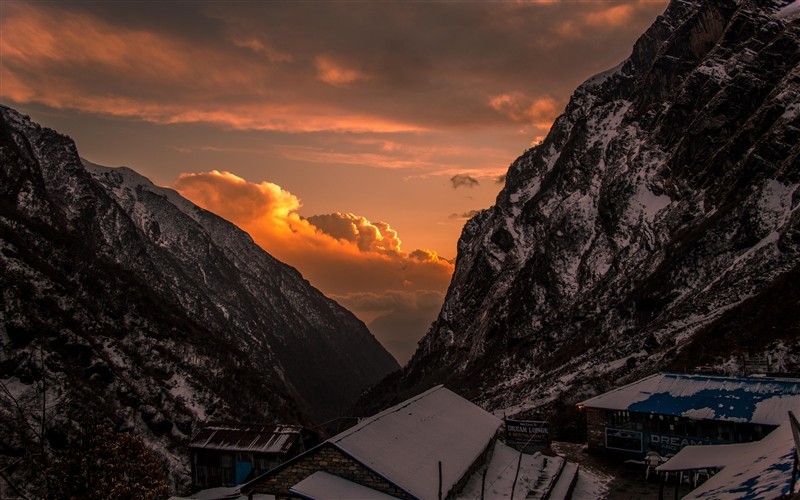
Practically, most itineraries treat Deurali as an overnight stop rather than a destination, with trekkers pushing on early the next morning to reach Machhapuchhre Base Camp and then Annapurna Base Camp itself. The teahouses are basic but functional, offering dal bhat, noodle soups, and hot drinks rather than an extensive menu, and the thinning air makes for cold nights even in spring. A proper sleeping bag rated for below-freezing temperatures is worth carrying rather than relying on lodge blankets alone, and a headlamp helps for the short walk between rooms and the dining hall after dark.
Getting to Deurali means committing to the standard Annapurna Base Camp itinerary, usually starting from Nayapul or Kimche and building up through Ghandruk or Chomrong before entering the Modi Khola gorge proper. Deurali typically falls on day four or five, depending on pace and acclimatisation stops. A permit from the Annapurna Conservation Area Project, plus a TIMS card, is required before setting out, and most independent trekkers arrange both in Pokhara.
Because the gorge traps cloud and mist easily, mornings tend to offer the clearest views of the surrounding peaks, while afternoons often bring a build-up of haze or light rain, especially outside the main autumn trekking season. Trekkers hoping for unobstructed photographs of Hiunchuli and Annapurna South from the rhododendron-lined approach should plan to walk the Deurali stretch earlier in the day rather than later.
For travellers planning the classic Annapurna Base Camp trek, Deurali is worth building into the itinerary as more than a transit stop. Slow down here in bloom season, and the last rhododendron ridge before the high mountains starts to feel like a destination of its own rather than a waypoint on the map.

.jpg)