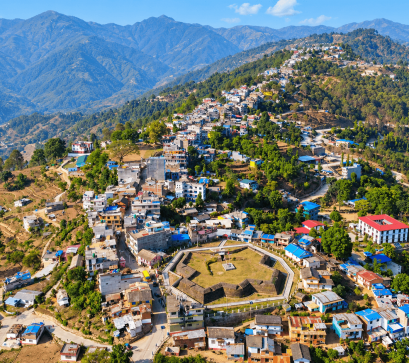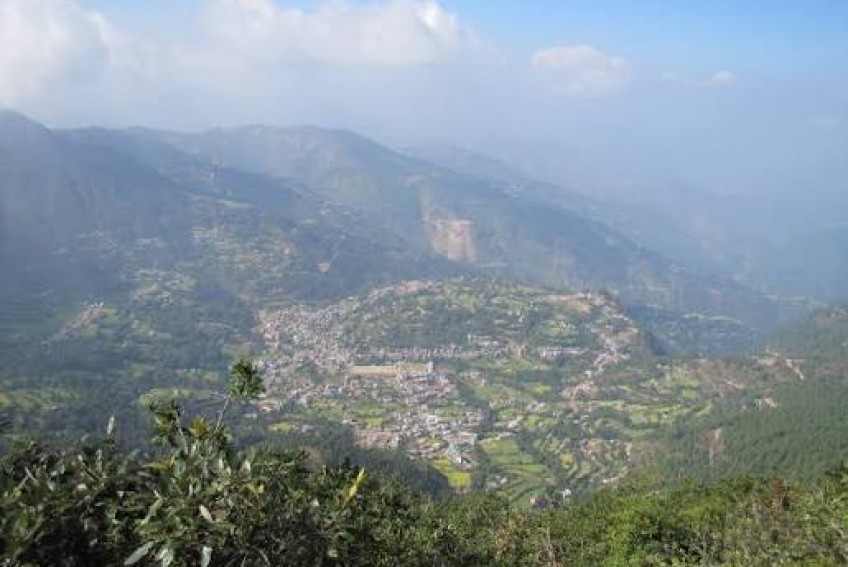
Most people who have heard of Ridi know it for one reason: the temples. Ruru Kshetra, the confluence of the Kali Gandaki and the Ridi Khola, draws pilgrims from across Nepal for its saligram stones and its ties to Lord Vishnu. But walk a few hundred meters from the ghats and you land in a different Ridi altogether, a bazar with narrow lanes, old brick facades, and a trading history that has quietly shaped the food and culture of the entire district.
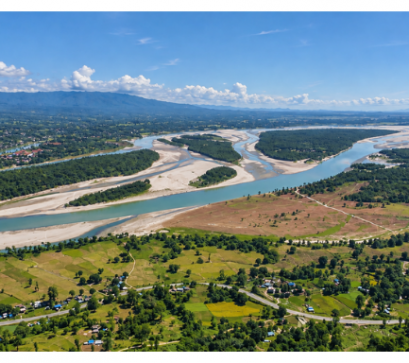
Ridi Bazar sits in Gulmi, right where National Highway 19 begins its climb toward Tamghas. That location was never an accident. For centuries, the spot where the Kali Gandaki meets the Ridi Khola was a natural stopover for traders moving goods between the mid hills and the Tarai. Newar merchants, the same community that built trading networks across Kathmandu, Tansen, and further into Tibet, settled here roughly two centuries ago and never really left. Their imprint is still visible in the bazar's older buildings and in a local dish called Ek Paak, a rich mutton preparation that Ridi's Newar families are credited with introducing to the region. Today no Dashain or wedding feast in Gulmi feels complete without it.
The bazar itself is compact and walkable. Expect close set shopfronts, a couple of old rest houses once used by traveling merchants, and a bridge over the Kali Gandaki that locals still treat as the town's meeting point. It is a working town first, not a curated tourist stop, which is exactly what makes it interesting. Market days bring in produce, spices, and household goods from surrounding villages, and during Maghe Sankranti the bazar fills up as pilgrims heading to Ruru Kshetra pass straight through it.
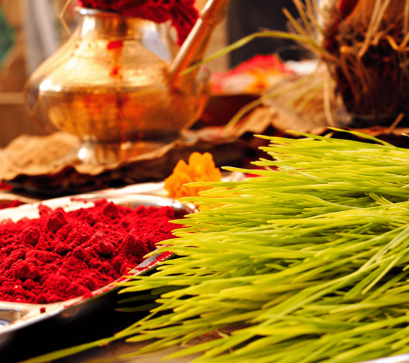
During Maghe Sankranti in mid January, Ridi shows its trading roots most clearly. Temporary stalls line the road down to the ghats, selling pilgrim offerings, brassware, clothing, and snacks, and the population multiplies well beyond its usual size. For a few days the bazar resembles the trade fair it once was, when Newar caravans passed through carrying goods between the hills and the Tarai. If you want to see Ridi at its most alive, this is the window to plan around.
Food is worth building time for. Ek Paak remains the signature dish, but Gulmi's Newar kitchens also turn out Chukauni, a tangy potato salad with curd and mustard oil, and Dhakani, a slow cooked rice pudding distinct from versions elsewhere in Nepal. Most of it comes from small, family run eateries near the bazar rather than polished restaurants. Accommodation in Ridi itself is basic, so many travelers base themselves in Tansen instead and treat Ridi as a half day excursion.
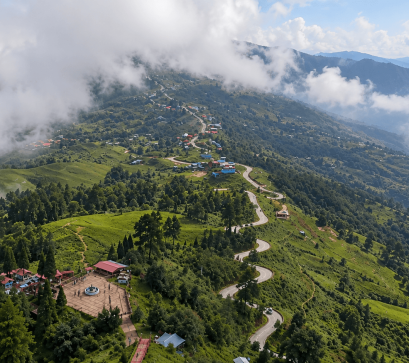
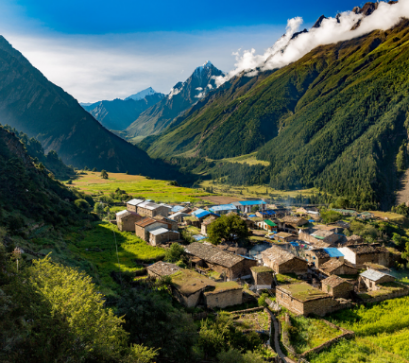
Getting there is straightforward. Ridi is accessible by road from both Tansen in Palpa and Butwal, with the drive taking you through winding hill roads and river valleys typical of this part of western Nepal. Most visitors combine it with a stop at Tansen, using Ridi as either a day trip or a stopover on the way further into Gulmi. October to March is the most comfortable window, with clearer skies and cooler temperatures, though the Maghe Sankranti period in mid January brings a livelier, more crowded version of the town if you want to see it at its busiest.
Ridi Bazar will probably never headline a Nepal itinerary the way Pokhara or Chitwan does. But for travelers curious about how trade, migration, and food shaped the hill towns of western Nepal long before roads and tourism arrived, it offers something genuinely underexplored. Pair it with a visit to the temples at Ruru Kshetra, but leave enough time to just walk the bazar itself.