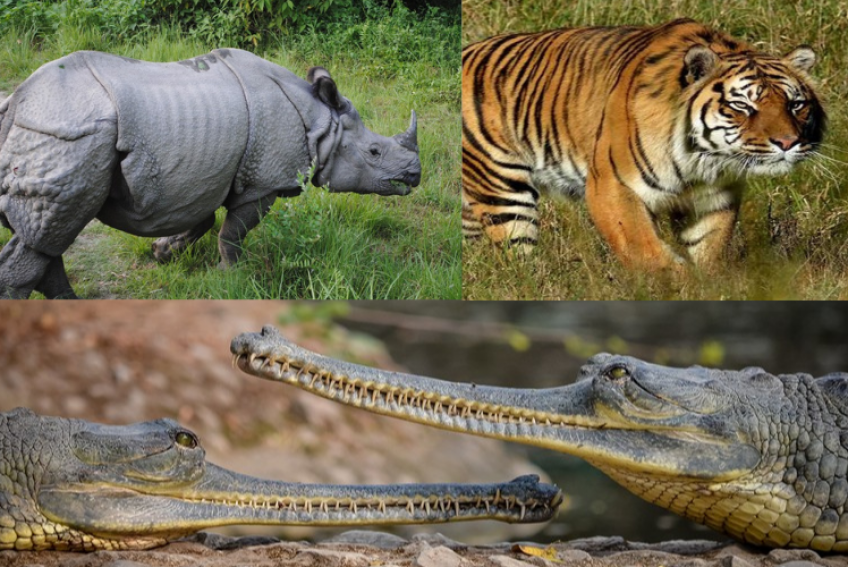
In 2010, Nepal counted 121 wild tigers and made a promise that sounded close to fantasy: double that number by 2022. Thirteen tiger-range countries signed the same pledge at the St. Petersburg summit that year. Nepal is the only one that didn't just meet it; it blew past it. The 2022 census recorded 355 tigers, nearly triple the 2010 baseline and a jump of roughly 190 percent.
The growth happened in visible steps: 198 tigers by 2013, 235 by 2018, then the leap to 355. Chitwan National Park now holds the largest share at 128, with Bardiya close behind at 125, and smaller but growing populations in Banke, Shuklaphanta, and Parsa. A new national census got underway in December 2025 with an expanded network of over 2,300 camera traps, and conservationists are watching closely to see whether the growth curve holds or whether Nepal's protected areas — estimated to carry around 400 tigers at capacity — are nearing their limit.

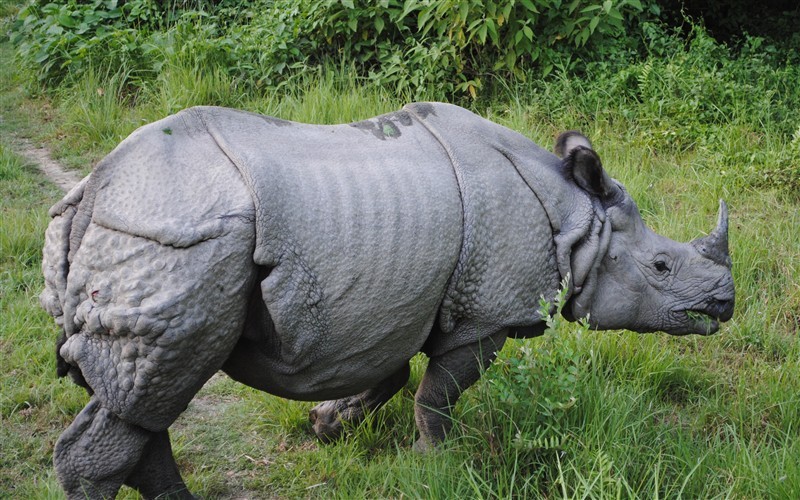
The greater one-horned rhino's story is the more dramatic reversal. In the 1960s, poaching and deforestation had driven Nepal's rhino population to fewer than 100 animals, all confined to a single population in Chitwan. Sixty years later, the national count stands at 752 — 694 of them in Chitwan, with smaller populations re-established in Bardiya, Shuklaphanta, and Parsa through active translocation.
The recovery hasn't been a straight line. Rhinos rebounded strongly after Chitwan National Park's establishment, then took a hit again during the 2000s insurgency, when instability opened the door to renewed poaching — 94 rhinos were lost in Chitwan between 2000 and 2004 alone. What followed was one of conservation's genuine good-news stories: community-based anti-poaching units, coordinated by park authorities and local user groups, helped Nepal achieve entire calendar years with zero rhino poaching — first in 2011, then again in 2013, 2014, and 2015. In 2014, Nepal became the first country in the world to record a full year of zero poaching across all three of its flagship species: rhinos, tigers, and elephants.
Fewer visitors ask about the gharial, and that's a shame, because its recovery is arguably the most fragile and the most long-fought of the three. This narrow-snouted, fish-eating crocodile crashed globally from an estimated 10,000 individuals in the 1940s to a tiny fraction of that by 1970. In Nepal, the population had fallen to under 100 by the mid-1970s, prompting the government to establish a breeding center at Kasara, inside Chitwan National Park, in 1978.
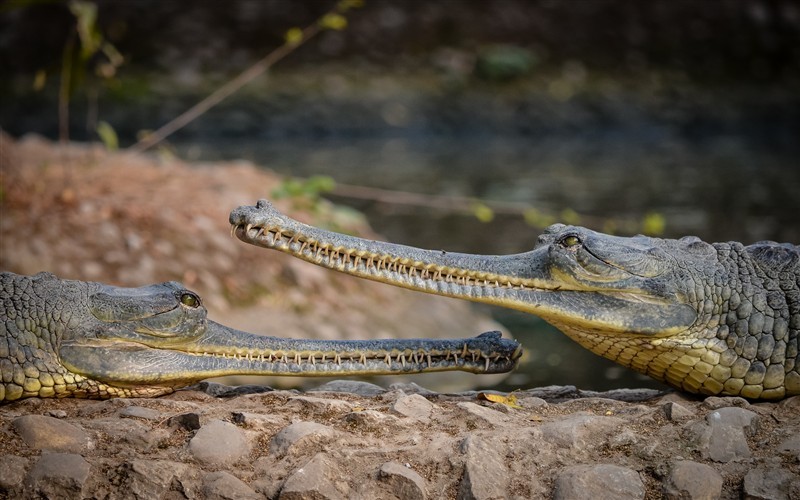
Since then, the center has released well over 2,300 captive-bred gharials into rivers including the Rapti, Narayani, and Koshi. But the wild population hasn't grown to match — recent surveys put Chitwan's gharial numbers at around 265, up about 11 percent from the year before, with researchers noting that juvenile survival in the wild remains stubbornly low. It's a reminder that breeding success in captivity and recovery in the wild are two very different battles, and Nepal is still fighting the second one.
None of this is abstract for anyone visiting Chitwan, Bardiya, or Shuklaphanta today. A jeep safari or canoe ride through these parks is, in a very literal sense, a chance to see conservation economics at work — community forestry, buffer-zone tourism revenue, and anti-poaching patrols all feeding into numbers that, unlike most wildlife statistics in the world right now, are actually going up.
Picture Credits: Wikimedia Commons