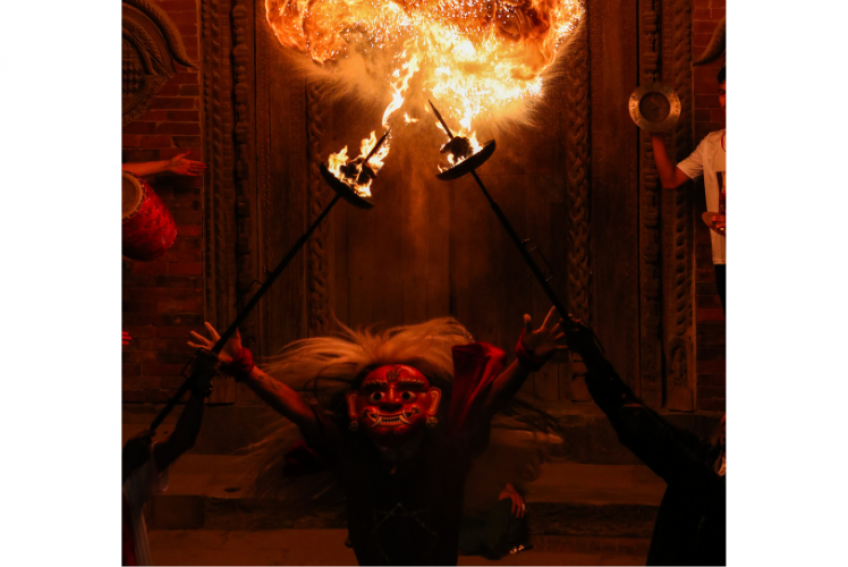
At first glance, Lakhey appears terrifying: wild hair, bulging eyes and sharp fangs dancing aggressively through narrow streets. Yet behind this fearsome facade lies one of Nepal’s most cherished cultural figures. Lakhey is not a demon to be feared, but a guardian spirit revered for centuries, especially within the Newar community of the Kathmandu Valley. Here are some fascinating facts that reveal the deeper meaning of Lakhey in Nepal’s living heritage.
Lakhey Is a Protector, Not a Demon
Despite its monstrous appearance, Lakhey is believed to be a benevolent protector. In Newar folklore, Lakhey guards neighbourhoods, children and sacred spaces from negative energies and malevolent spirits. The frightening form is intentional, it is meant to scare away evil rather than embody it.
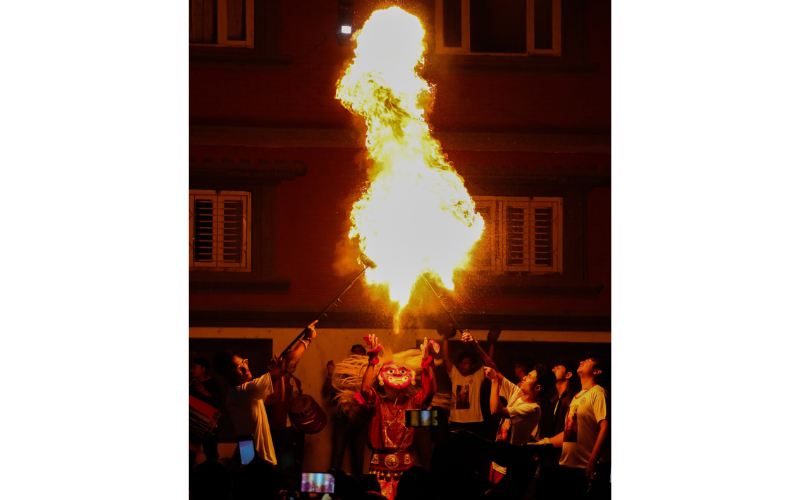
Rooted in Newar Culture and Vajrayana Belief
The tradition of Lakhey originates from the Newar civilisation, one of the oldest urban cultures in the Himalaya. Its symbolism is closely linked with Vajrayana Buddhism and Tantric practices, where wrathful deities are often depicted in fierce forms to represent power, transformation and spiritual protection.
Majipa Lakhey Is the Most Iconic
Among many forms of Lakhey, Majipa Lakhey of Kathmandu is the most famous. According to legend, he was once a forest spirit living near present-day Majipa. After being subdued through tantric rituals, he pledged to protect the city and its people; a powerful story of chaos transformed into guardianship.
Lakhey Dances Are Performed During Major Festivals
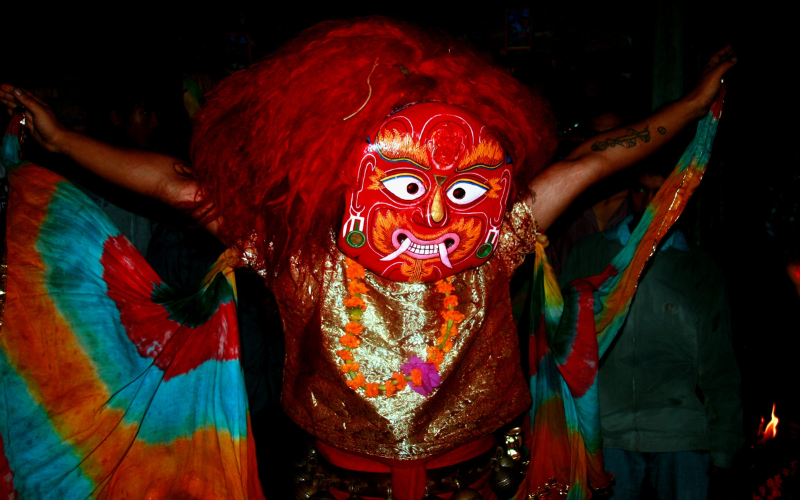
Lakhey comes alive during festivals, most notably Indra Jatra, one of Kathmandu’s grandest celebrations. Masked dancers move energetically through streets and courtyards, accompanied by traditional Newar drums and cymbals. These performances are believed to cleanse the surroundings spiritually while entertaining the community.
The Mask Carries Deep Symbolism
Every element of the Lakhey mask holds meaning. The large eyes symbolise vigilance, the fangs represent power over evil, and the flaming hair signifies uncontrolled energy brought under discipline. Bright colours are used to amplify Lakhey’s commanding presence.
A Living, Inherited Tradition
Lakhey dances are not casual performances. The role is often passed down through generations, with dancers observing ritual discipline and cultural responsibility. In many communities, performing as Lakhey is considered an honour, tied to spiritual duty rather than mere spectacle.
Fear as a Cultural Lesson
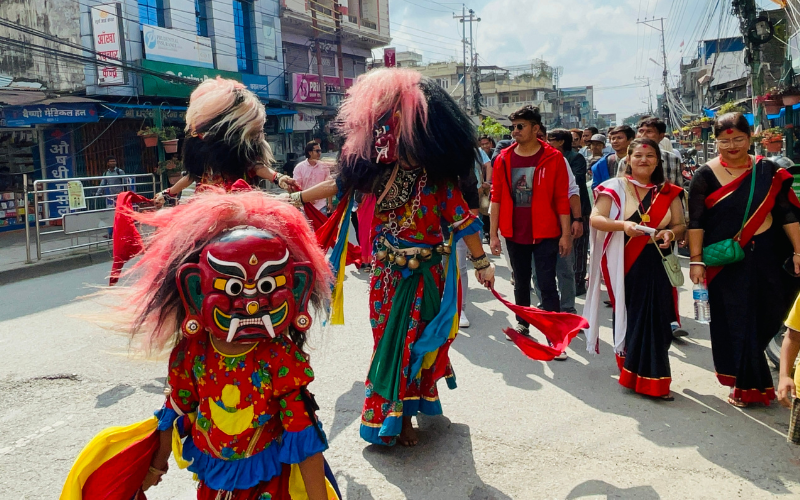
Traditionally, children are deliberately frightened by Lakhey during performances, only to later understand that Lakhey exists to protect them. This transformation of fear into reassurance is a subtle cultural lesson embedded within the tradition.
Lakhey in Modern Nepal
Even today, Lakhey remains culturally relevant. Performances are showcased during heritage walks, tourism festivals and cultural programmes, offering travellers an authentic glimpse into Nepal’s intangible heritage.
To witness Lakhey is to experience Nepal beyond temples and mountains. It is a reminder that Nepal’s identity is shaped as much by myth, movement and memory as it is by landscapes.
Also Read