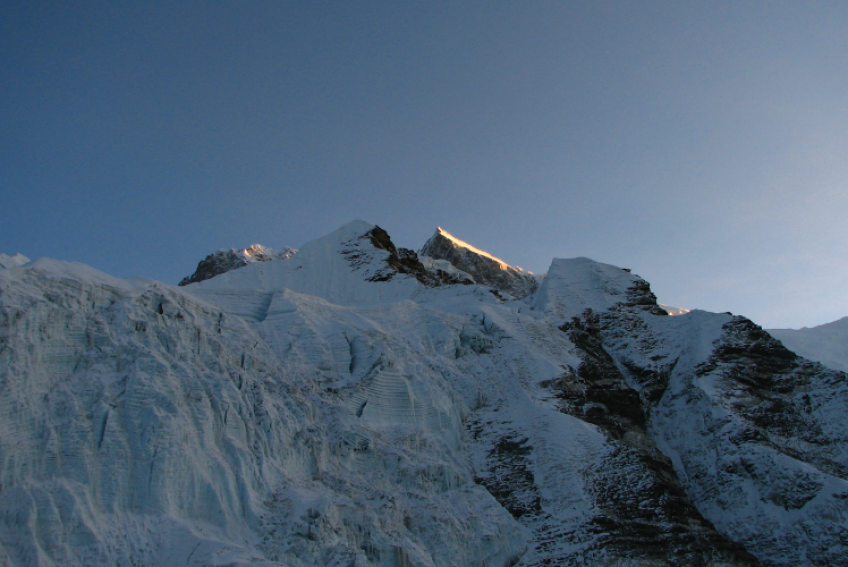
Lhotse Shar is one of the lesser-known yet formidable peaks of the Himalaya. With an elevation of 8,383 metres (27,503 feet), it is a major summit of the Lhotse massif and one of the world’s 14 eight-thousanders, placing it among the highest mountains on Earth.
Geographical Setting
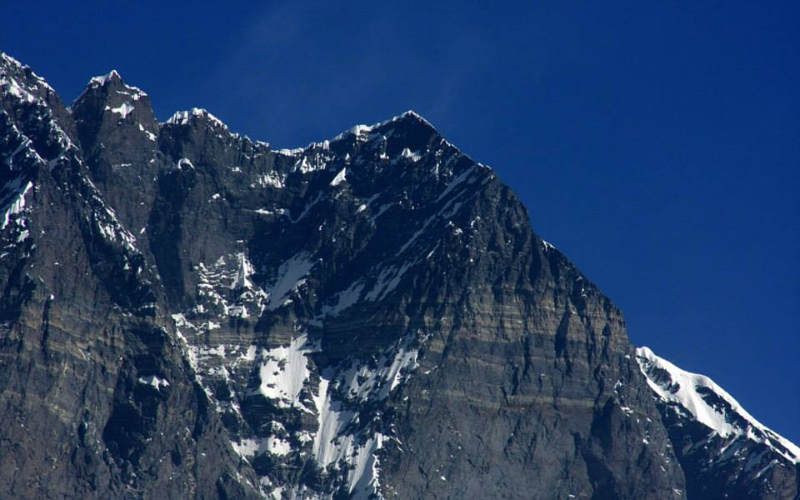
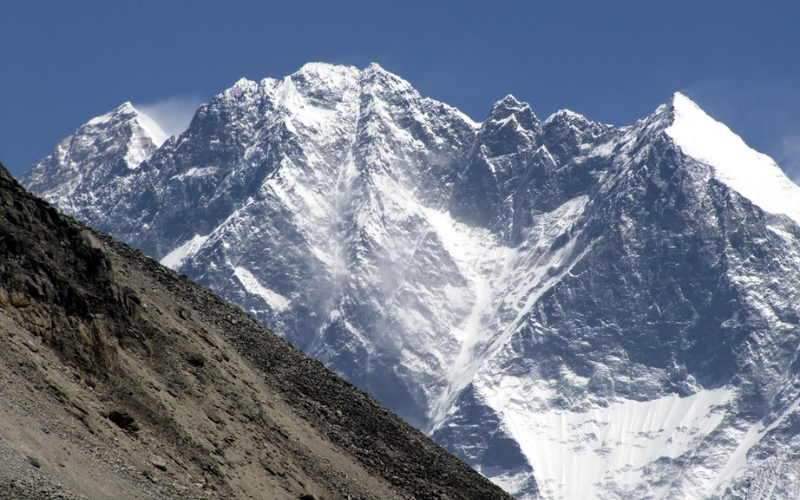
Lhotse Shar lies on the border between Nepal and the Tibet Autonomous Region of China, just southeast of Mount Everest. It forms the easternmost summit of the Lhotse massif, which also includes Lhotse Main (8,516 m) and Lhotse Middle (8,413 m). Despite its proximity to Everest, Lhotse Shar is distinguished by a steep, isolated profile, with dramatic ridges and faces that make it visually imposing.
A Reputation for Difficulty
Among mountaineers, Lhotse Shar is widely regarded as one of the most technically demanding eight-thousand-metre peaks. Its slopes are steeper and more unstable than those of Lhotse Main or Everest, featuring:
Long, exposed ridgelines
Complex ice and rock sections
High risk of avalanches
Few natural resting points
These challenges make climbing Lhotse Shar a serious undertaking, even for highly experienced alpinists.
Climbing History
The mountain resisted numerous attempts before being successfully climbed. The first ascent was made on 12 May 1970 by a Japanese expedition, which reached the summit via the south ridge. Since then, ascents have remained rare, and fatalities have underscored the mountain’s dangers.
Unlike Everest, Lhotse Shar has no commercial climbing routes, preserving its reputation as a peak for purist mountaineers rather than guided expeditions.
Why Lhotse Shar Matters
Although it lacks the fame of Everest or K2, Lhotse Shar holds a special place in mountaineering history:
It exemplifies the technical extremes of high-altitude climbing
It remains relatively untouched and uncrowded
It demonstrates that difficulty is not defined by height alone
For climbers, Lhotse Shar represents the idea that true challenge often lies away from the spotlight.
A Silent Titan
Lhotse Shar stands as a reminder that the Himalaya still hold peaks that command respect through sheer difficulty rather than popularity. Silent, steep, and unforgiving, it continues to test the limits of human endurance and skill—earning its reputation as one of the most serious mountains on Earth.
PC: Flickr, Wikimedia Commons - Wikimedia.org
Also Read