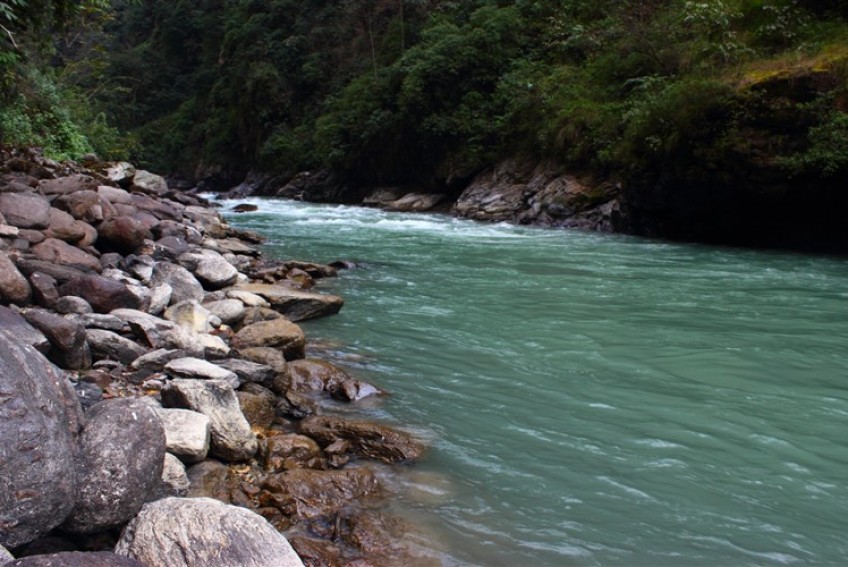
Koshi Province takes its name from the Sapta Koshi – "Seven Koshi" – formed by seven converging tributaries. Across the border in India, the same river is nicknamed the "Sorrow of Bihar" for its history of devastating floods, a reputation Nepali communities along its banks share. The Koshi Barrage, built in the late 1950s, exists to tame that danger, but locals still speak of the river's moods with something closer to respect than mere caution.
Near the confluence of the Koshi and Koka rivers sits Barah Kshetra, where legend holds that Vishnu, in his boar (Varaha) avatar, defeated a demon and restored cosmic order. Pilgrims believe a ritual dip here washes away sin, and the site draws temporary fairs during major festivals – the river confluence itself woven into the myth as the place the demon was finally cornered.
Above Dharan stands Dantakali Temple, one of eastern Nepal's Shakti Peethas – sites marking where pieces of the goddess Sati's body fell to earth after Shiva carried her corpse across the cosmos in grief and Vishnu cut it apart to end his wandering. Here, tradition says it was one of Sati's teeth ("danta") that landed, giving the temple and hill their name.