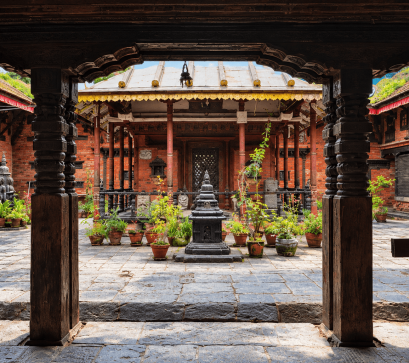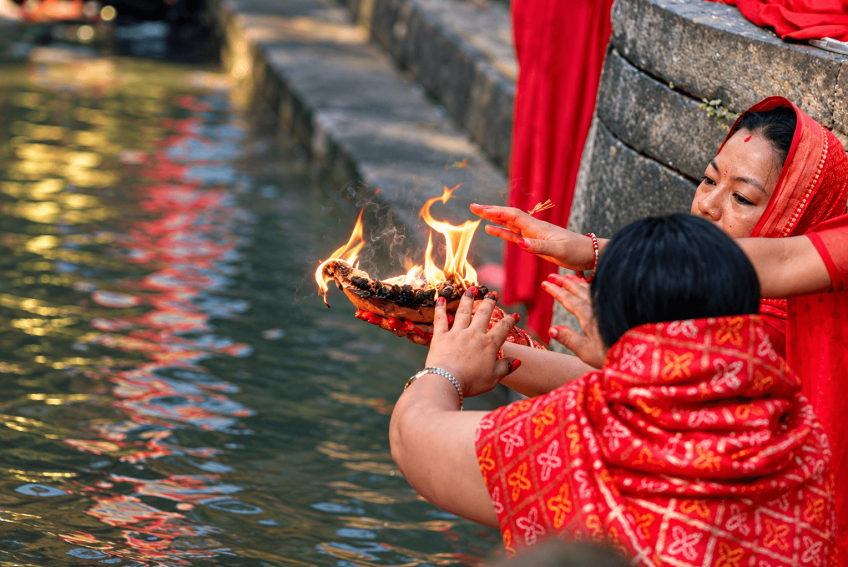
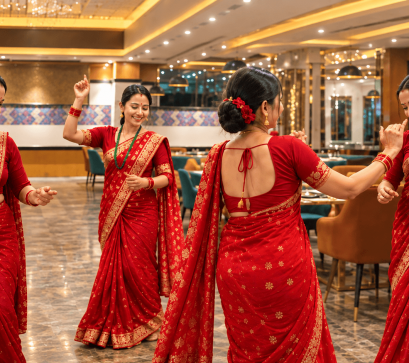
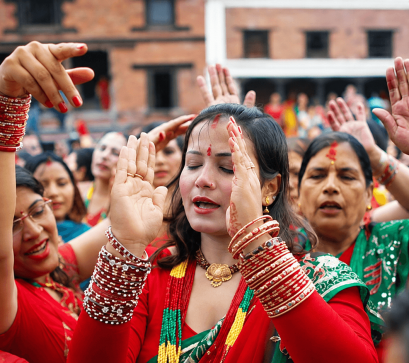
Rishi Panchami tends to get overlooked next to the two more visible days of Teej that come before it the feast day and the strict all-day fast, both marked by red saris, singing, and crowded temple courtyards. Rishi Panchami is the third day, and it's a calmer affair centered on ritual bathing and worship rather than public celebration.
It falls on the fifth day of Shukla Paksha in the Hindu month of Bhadrapada (Bhadra 30, 2083 BS this year), the day after Ganesh Chaturthi. The observance is dedicated to the Saptarishi, the seven sages of Hindu tradition Kashyapa, Atri, Bharadvaja, Vishvamitra, Gautama, Jamadagni, and Vasishtha along with Arundhati, wife of Vasishtha.
The day begins before sunrise. Women wake early and bathe using red mud and leaves from the Datiwan bush, a ritual meant to purify body and soul, and brush their teeth with Datiwan branches as part of the same cleansing process. Water is often mixed with Gangajal and Apamarg leaves for those bathing at home rather than in a river.
In 2026, the main worship window the Saptarishi Puja Muhurat, runs from 11:20 AM to 1:47 PM, giving devotees just under two and a half hours to complete the puja with offerings of white flowers, sandalwood, fruit, incense, and lamps.
The worship itself is aimed at seeking forgiveness for unwitting transgressions, traditionally linked to older menstrual-related taboos, a belief rooted in specific cultural and ritual frameworks rather than any medical basis. Both married and unmarried women, including girls who have had their first period, are expected to take part; men are also permitted to fast, generally for the wellbeing of their wives. Many households today observe the vrat out of family custom and continuity rather than literal endorsement of the underlying taboo.
Fasting rules follow their own logic: only foods believed to grow without a plough or ox are allowed, including wild grains like sama and kaguno, tubers, and taro roots. Rishi Panchami Bhaji a dish of seasonal, non-ploughed greens is closely associated with the day, while cereal grains, rice, and wheat are avoided. Most households eat a single such meal, taken only after the puja and Vrat Katha are complete.
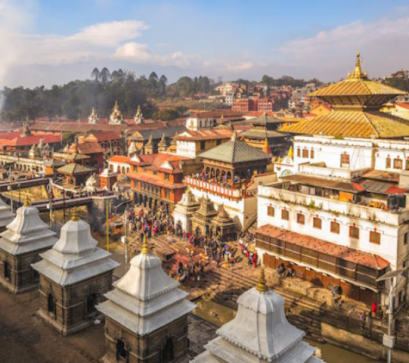
Devotees gather at Shiva temples and riverbanks across the country, though Kathmandu's Teku and Mulpani-12 temples see steady crowds, alongside the wider Teej crowds still lingering at Pashupatinath from the previous day. It's a national holiday, so expect many offices and shops closed.
If visiting a temple on this day, go early the core rituals happen before and shortly after sunrise and dress modestly. Carry small change for offerings, and don't expect much English signage or tourist infrastructure at the smaller neighborhood shrines; this is a local, family-oriented observance rather than a spectacle staged for visitors.

 (1).png)