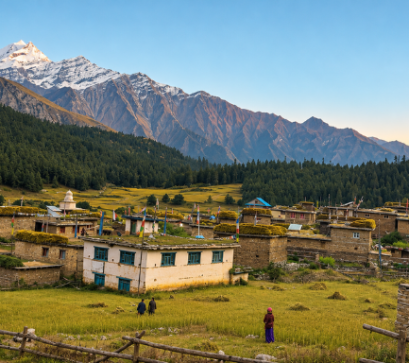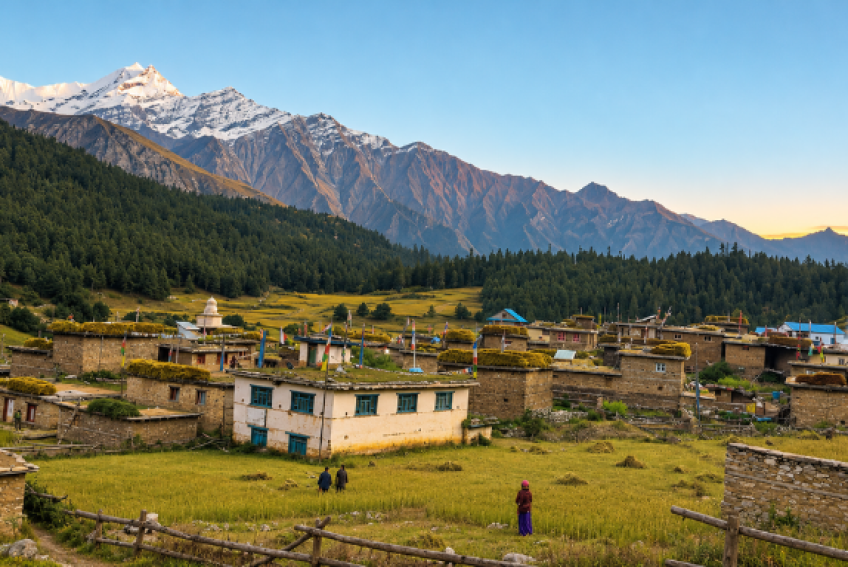
Hidden among the rugged mountains of Lower Dolpo, Pugmo Village, also known as Pungmo, is a traditional Himalayan settlement in Shey Phoksundo Rural Municipality, Karnali Province. Situated within Shey Phoksundo National Park, the village is known for its ancient Bon religious heritage, traditional farming practices, and close relationship with the surrounding environment. Unlike Nepal's popular trekking destinations, Pugmo's greatest attraction is its living cultural heritage.
Local oral history, documented in a 2004 ICIMOD study, traces Pugmo's settlement back approximately ten generations, or around 300 years. Its origins are associated with Tretton Sikyal Sambo, a religious figure believed to have arrived in the region seeking a place for spiritual retreat.
The settlement includes Pungmo, Punikha, and Gumba, surrounded by agricultural terraces, forests, grazing lands, and snow-covered mountains.
Pugmo is among the culturally significant communities of Lower Dolpo practising Bon, an indigenous Tibetan religious tradition with roots predating Buddhism's widespread establishment in Tibet.
Bon teachings have traditionally shaped the community's respect for mountains, forests, wildlife, and sacred landscapes. Religious ceremonies, monasteries, and customary beliefs remain central to its cultural identity.
One remarkable landmark is Pugmo Monastery, situated at approximately 3,245 metres. A 2025 architectural study published in Heritage documents its two-storey structure, 102-square-metre floor area, and traditional wooden-shingle roof, offering valuable evidence of Dolpo's distinctive religious architecture.
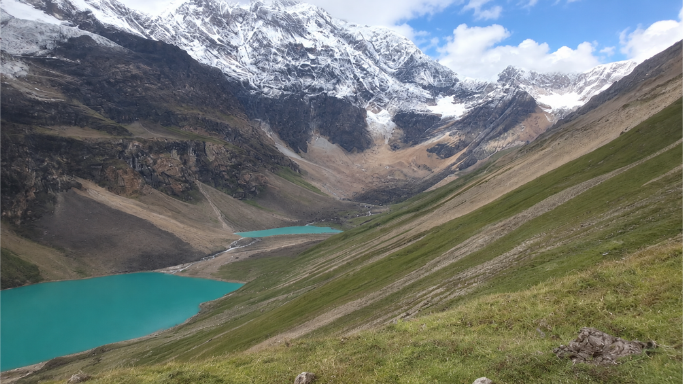
Pugmo's relationship with nature extends beyond spiritual beliefs. For generations, residents have followed Yulthim, a customary village governance system regulating grazing lands, forests, agriculture, and community responsibilities.
A 2014 ICCA Consortium report documents how these traditional rules supported rotational grazing, wildlife protection, and responsible resource management. The community's emphasis on non-violence also reflects its Bon religious values.
Agriculture and livestock farming have historically sustained Pugmo's residents. Barley, buckwheat, wheat, and potatoes are cultivated, while yaks, sheep, and other livestock support the pastoral economy.
Seasonal movement to higher grazing areas, including Kunasa and Pungphu, reflects generations of adaptation to the mountain environment. Traditional Amchi medicine, using knowledge of Himalayan medicinal plants, further connects local livelihoods with nature.
Travellers generally reach Lower Dolpo via Nepalgunj and Juphal Airport before continuing towards Dunai and arranging onward trekking. Spring and autumn are generally favourable for visiting, subject to local conditions.
More than a remote mountain destination, Pugmo Village is a living example of how ancient spirituality, indigenous knowledge, and community traditions have shaped life in Nepal's Himalayas.