While most itineraries in Nepal point travellers toward the Annapurnas or the temples of Kathmandu, the Tarai plains hold a gathering on a different scale entirely. Every five years, the Gadhimai Temple in Bariyarpur, Bara District, about 160 kilometres south of Kathmandu and 7 kilometres east of Kalaiya near the Indo-Nepal border, becomes the centre of a month-long festival that pulls in crowds from both sides of the border.
The tradition dates to around 1759, tied to a local story of a feudal lord, Bhagwan Chaudhary, who is said to have dreamed that offering blood to Gadhimai, a goddess of power, would free him from jail. That dream is still the reason millions travel here today.
For Nepali visitors especially, Gadhimai offers something increasingly rare: a living, centuries-old ritual gathering, not a staged cultural show. The flat Tarai terrain around Bariyarpur and Kalaiya makes the site easy to reach by road from both Kathmandu and northern India, and the festival itself is as much about the journey as the temple long convoys of pilgrims, roadside stalls, and villages that empty out to join the crowd heading toward Bara district.
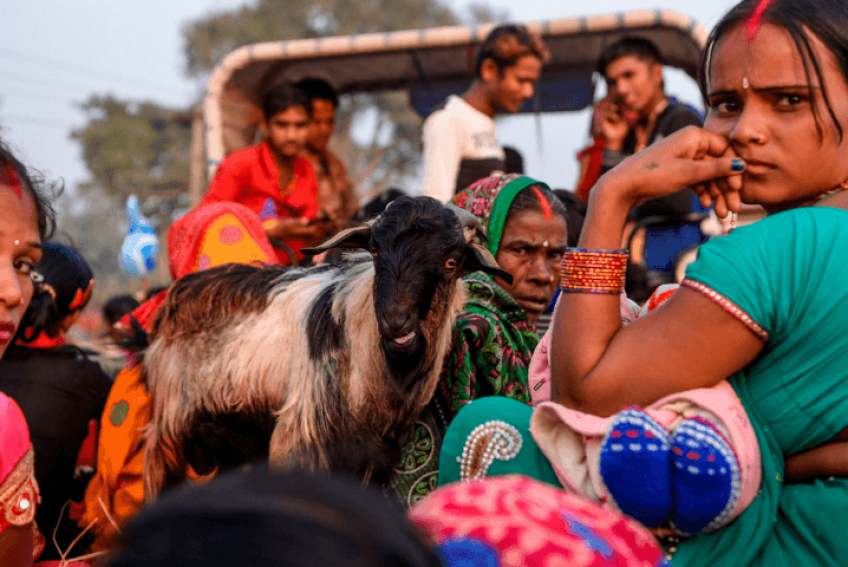
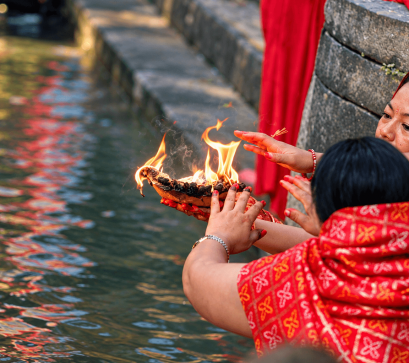
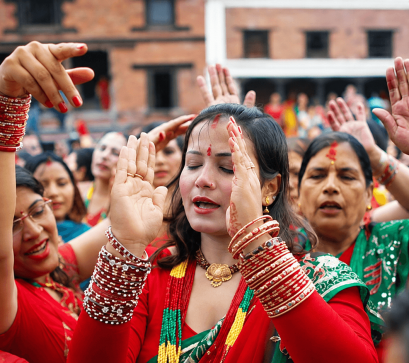
The heart of the festival is devotion. Pilgrims, many from farming families in the Nepal–India border belt, come to seek prosperity, safety, and good fortune from Gadhimai, and for some families it's a generational trip passed down for over 200 years.
The temple has also begun offering an alternative for those who prefer it: a cash donation in place of an animal offering, an option that's been gaining ground, particularly among women pilgrims worth knowing if you're deciding how you want to take part.
Gadhimai is also, unavoidably, the site of a mass animal sacrifice water buffalo, goats, pigs, chickens, pigeons, and rats are killed by groups of butchers near the temple, with historical tolls ranging from roughly 30,000 to 500,000 animals depending on the year, as court rulings and activist campaigns have gradually reduced the numbers.
This is the part of the festival that draws international attention and protest, and it's genuinely graphic and not hidden from attendees, so it's worth knowing before you go rather than being caught off guard.
If you're planning to visit, build your trip around the irregular five-year calendar and aim to arrive in the run-up to early December, when the main rituals take place. Expect very large crowds, heavy police presence for crowd control, and basic roadside facilities rather than tourist infrastructure pack accordingly, stay with a local guide or group if it's your first visit, and go in with a clear sense of what you'll actually witness, since Gadhimai is a genuine pilgrimage experience rather than a curated spectacle.

 (1).png)