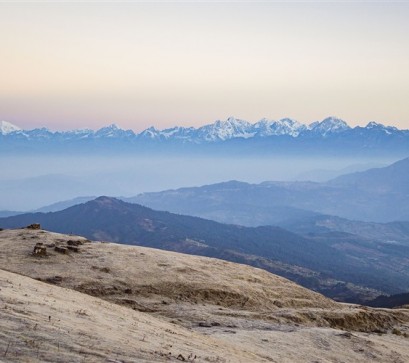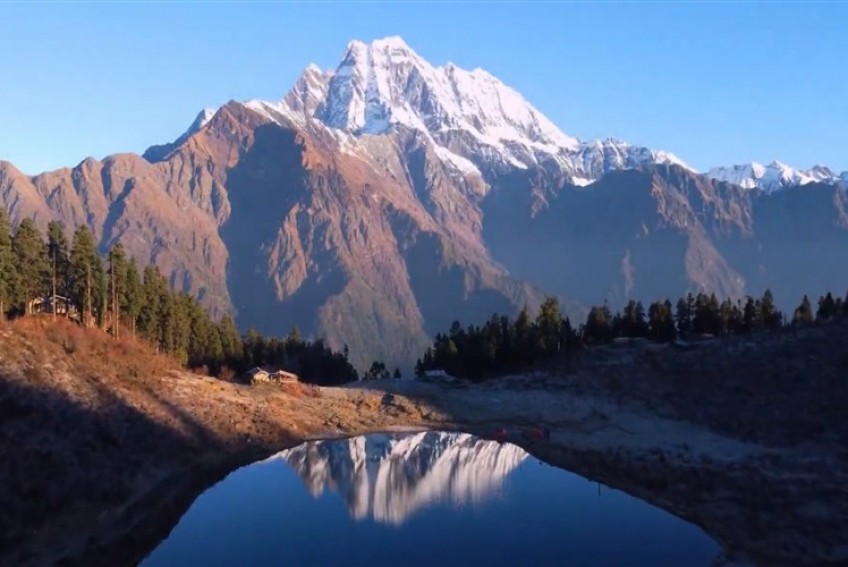
Sisne Himal, also known locally as Hiunchuli Patan or Murkatta Himal, rises to somewhere between 5,849 and 5,911 metres (sources differ slightly) in Rukum district, in Nepal's remote far-western hills. It's the westernmost high peak of the Dhaulagiri massif, but geographically it stands apart, pushed south of the main Himalayan chain, which is part of why it went so long without a serious attempt: it's simply harder to justify the journey when there's no 7,000-or-8,000-metre neighbour to headline the trip. That changed in May 2013, when a Nepalese expedition led by climber Man Bahadur Khatri reached the summit: a genuinely local first ascent, in a mountaineering scene usually dominated by foreign-led expeditions.

Beyond the summit itself, the Sisne region packs in a surprising amount for how few travellers make it out here. Kamal Daha (also called Rukmini Tal) is a lake known for its lotus blooms; Gupta Daha reportedly offers a mirror-like reflection of Sisne's summit on calm days; and the surrounding hills are seasonal ground for wild honey hunting and yarsagumba (caterpillar fungus) harvesting, both of which shape the local economy as much as tourism does.
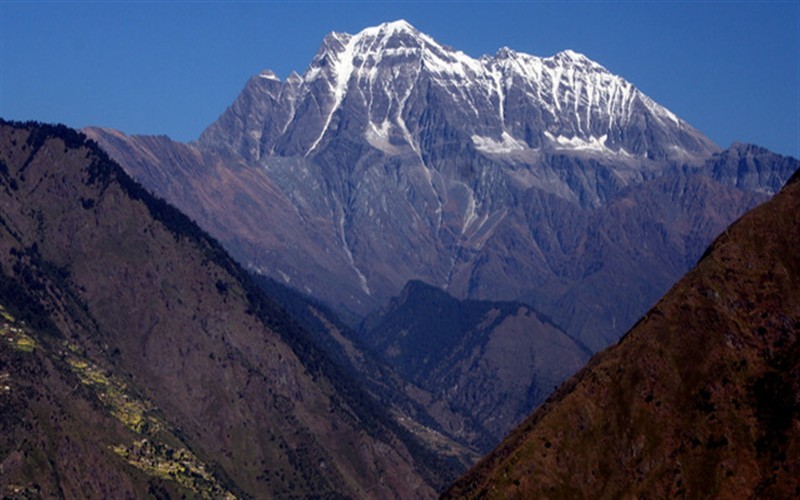
This is not a casual add-on to a Kathmandu itinerary. Access typically runs through Pokhara and Burtibang toward Rukumkot, with trekking stretches that can run well over three weeks depending on the route and how far into the range you go. Spring (March–May) and autumn (September–November) are the recommended windows, both for weather and for trail conditions in a region where infrastructure is still developing; a new road is reportedly under construction that should eventually ease access.
For travellers who've already done the Everest and Annapurna circuits and want somewhere that asks more of them — physically and historically — Sisne is about as far off the map as Nepal gets.