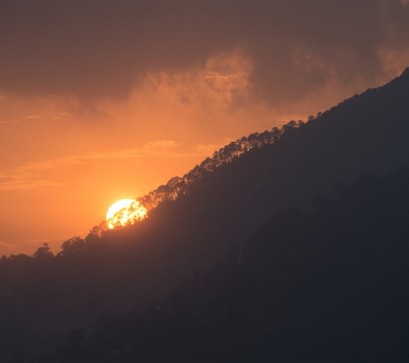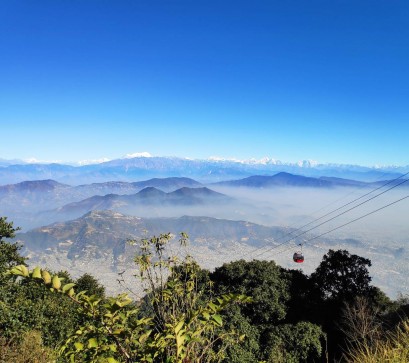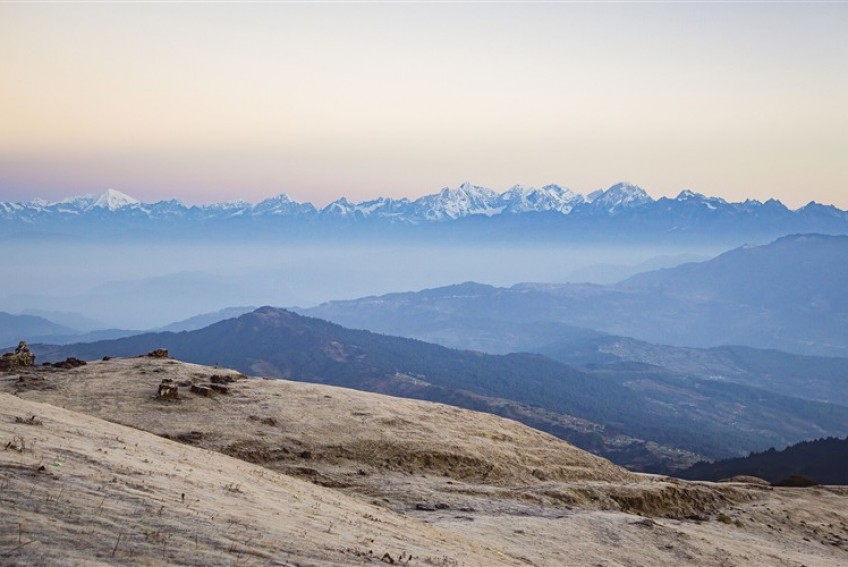
Sitting on the border of Dolakha and Ramechhap districts at roughly 3,146 metres, Sailung is a grassy, wind-combed summit that locals say takes its name from the Tamang words for "hundred" (sai) and "hill" (lung): a nod to the hundred-odd hillocks rippling out below it. Climb to the top of Thulo Sailung on a clear morning and you don't just see mountains, you're surrounded by them: Gaurishankar and Dorje Lakpa rise to the north, Langtang and Ganesh Himal sit to the northwest, and on the sharpest days, Everest itself is visible in the distance. Some visitors report glimpsing peaks as far west as Annapurna and Dhaulagiri, though at that range, it depends entirely on how clean the air is that day.
What sets Sailung apart isn't altitude; plenty of Nepali viewpoints sit higher. It's the geometry. Because the ridge isn't boxed in by taller neighbouring peaks, the horizon stays open in every direction, which is rare for a spot this close to Kathmandu. Add the fact that Sailung has long doubled as a pilgrimage site: local tradition connects it to Guru Padmasambhava, and Buddhist and Hindu shrines share the ridgeline at Devithan and Mahadevthan — and you get a summit that rewards you spiritually as much as visually.
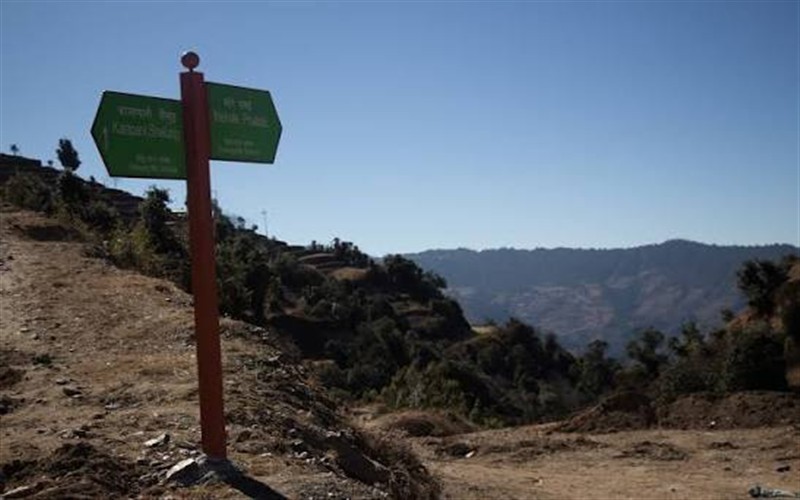
Sailung sits roughly 130 to 170 kilometres east of Kathmandu, depending on which route you take, and the drive typically runs five to seven hours. Most visitors head out via the Araniko Highway toward Dolakha, then either drive the final stretch or hike up from a village like Kalapani or Dhunge for a couple of hours through rhododendron forest and open pasture.
Timing matters more here than almost anywhere else in the mid-hills, because the whole appeal rests on visibility. Late autumn (October–November) and pre-monsoon spring (March–April) give you the clearest air and the best odds of a true 360-degree payoff. Spring also means rhododendrons in bloom along the trail, while winter brings occasional snow dusting the ridge — beautiful, but pack for cold, since exposed grassland at 3,146 metres holds no heat. Monsoon months are the one stretch to avoid: the same open horizon that makes Sailung special also means there's nothing to block the clouds.
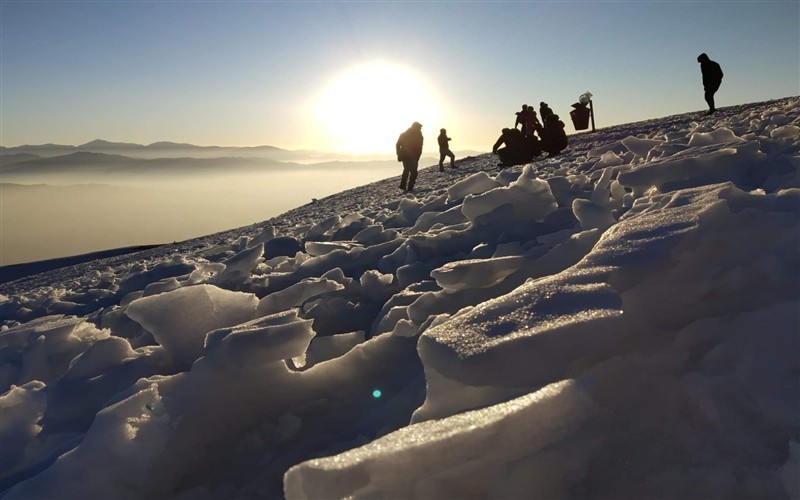
Sailung isn't a technical trek. The final push from the nearest road-head is a manageable few hours, which makes it accessible to reasonably fit travellers without mountaineering experience — a rarity for a viewpoint this expansive. Homestays in villages like Kalapani give the trip a cultural layer too: the route passes through Tamang, Thami, Sherpa, Newar and Sunuwar settlements, so the walk up is as much a window into Nepal's mid-hill communities as it is a warm-up for the summit.
Pack layers regardless of season, start early to beat any afternoon cloud buildup, and give yourself a full morning at the top rather than a rushed photo stop — the view changes as the light shifts, and Sailung rewards patience more than speed.