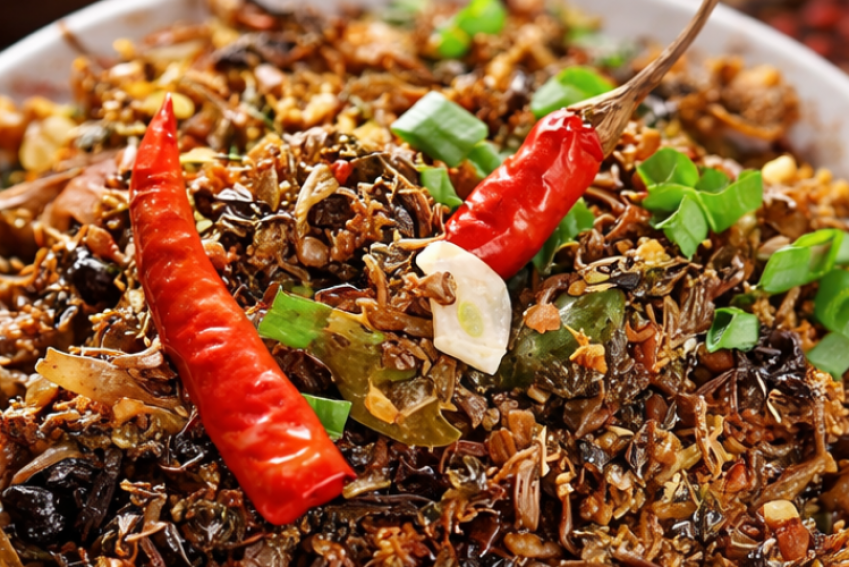
Long before refrigeration became commonplace, communities across Nepal's hills had already mastered a remarkable method of food preservation. The result was Gundruk, a tangy fermented leafy green that remains one of Nepal's most cherished culinary traditions today.
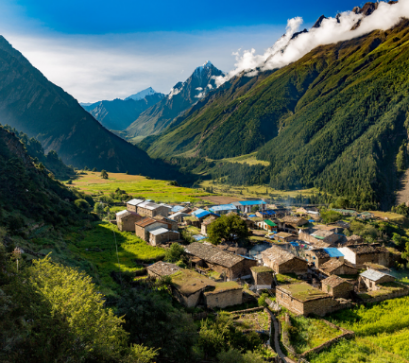
Believed to have originated in the hill regions of Nepal centuries ago, Gundruk was born out of necessity. Farmers faced the challenge of preserving surplus vegetables after harvest and ensuring a reliable food source during harsh winters when fresh produce was scarce. Through a process of natural fermentation and sun-drying, they transformed simple leafy greens into a nutritious staple that could be stored for months.
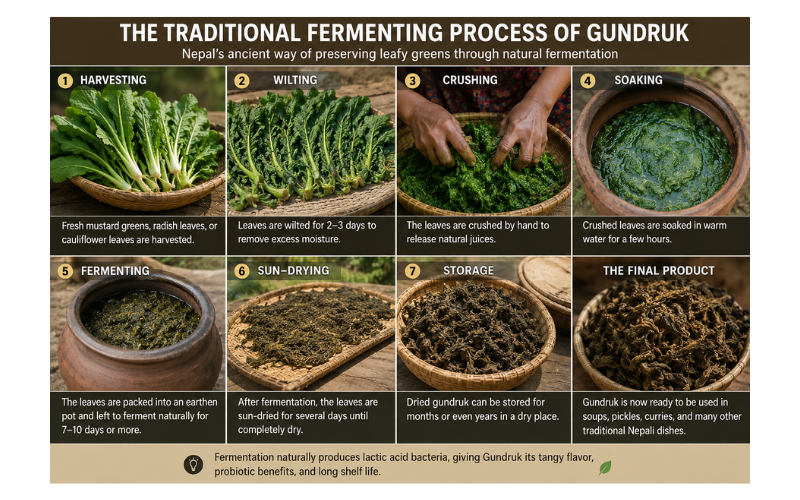
Traditionally, Gundruk is made from mustard greens, radish leaves, or cauliflower leaves. The leaves are first wilted for several days before being crushed and packed into containers—historically earthen pots—where they ferment naturally for around one to two weeks. Once fermentation is complete, the leaves are sun-dried, creating the distinctive product that is used in soups, curries, and pickles across Nepal.
What makes Gundruk particularly fascinating is the science behind this age-old practice. During fermentation, naturally occurring lactic acid bacteria break down sugars in the leaves, producing the characteristic sour flavour while helping preserve the vegetables. Modern research has shown that this process can improve digestibility and contribute beneficial probiotics, making Gundruk not only flavourful but also nutritionally valuable.
For generations, the preparation of Gundruk has been a household tradition passed down through families. More than just a method of preservation, it reflects the ingenuity and resourcefulness of Nepali communities that learned to work with seasonal abundance and challenging mountain environments.
Today, Gundruk continues to hold a special place in Nepali cuisine. Whether served as Gundruk ko Jhol, mixed into achar, or enjoyed alongside rice and lentils, it evokes a sense of home and heritage for many Nepalis. Its popularity has also spread beyond Nepal, finding a place in neighbouring Himalayan regions, including Sikkim.
As global interest in fermented foods grows, Gundruk is increasingly recognised for both its cultural significance and its probiotic benefits. Yet its true value lies in the story it tells—a story of resilience, sustainability, and centuries of culinary wisdom preserved through a handful of humble leaves.
Gundruk is widely regarded as one of Nepal's oldest and most enduring fermented food traditions, a testament to the ingenuity of communities that developed sophisticated food preservation techniques long before modern technology existed.
Also Read