

 Source::RSS
RSS
KATHMANDU
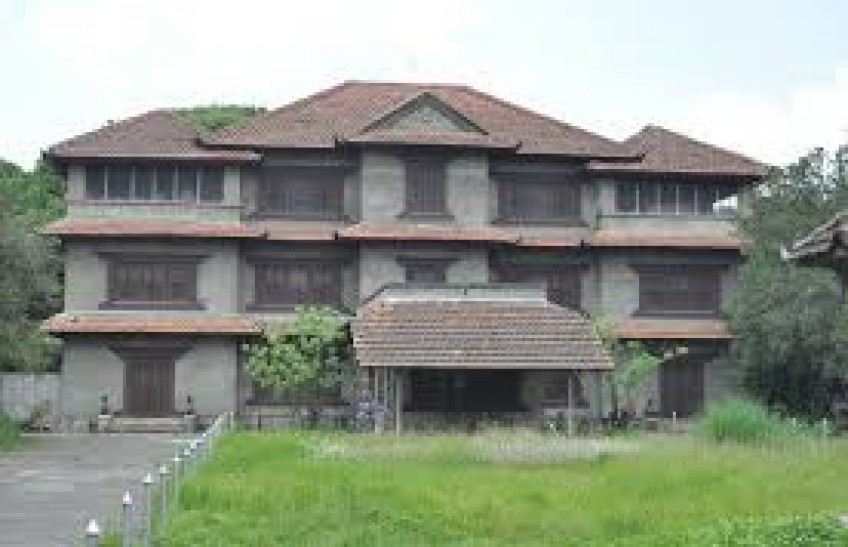
The private residence of the then King Birendra Shah, Shreesadan, has been opened to the public from today. The Shreesadan at the Narayanhiti Durbar Museum has been opened for observation. Birendra, Aishwarya and Nirajan had been living in Sreesanth before the Durbar massacre. The house was closed after the annihilation of King Birendra's family. The massacre of King Birendra on June 3, 2058 BS was the most famous and astonishing event in the history of modern Nepali.
The Narayanhiti Durbar Museum and the Republic Monument Management and Operations Development Committee have opened an exhibition hall at Sreesanth for public viewing. Inaugurating the Sreesanth Exhibition Hall today, Minister for Culture, Tourism and Civil Aviation Yogesh Kumar Bhattarai said the Narayanhiti Museum would be established as a major destination for understanding the history of monarchy and especially modern Nepal. "History is not an enemy of anyone, it is an event. In fact, if it can be preserved for life, the next generation will also have knowledge, ”he said.
Stating that the progressive role of the monarchy in the unification of modern Nepal was unforgettable, Minister Bhattarai mentioned that the history from Prithvinarayan to Gyanendra Shah would remain within the Narayanhiti region. He said, “The Shah dynasty of Nepal played a progressive role in the construction of modern Nepal. Prithvinarayan Shah's role in leading the great work of stopping British imperialism and colonization and uniting the small states of Nepal is considered to be very progressive and his contribution is still remembered today. While opening the Sreesanth today, I would like to highly appreciate and respect the contribution of Prithvinarayan Shah, which was a glorious historical event for the country. ”
Shreesadan will be relevant to give a glimpse of different history and society and information about the development of mankind. The Minister stressed on the need to bring various items associated with the palace, events and objects from different parts of the country for protection. He expressed confidence that the Narayanhiti Museum would provide a living history of how the Shah dynasty began and ended in the museum, which is the real history of the 240-year-old Shah dynasty of Nepal.
Minister Bhattarai said that it helped in understanding the lifestyle of the then King Birendra and his family and also provided important materials for researching not only Nepali but also foreign universities. He informed that the construction work of the National Cultural Museum at Champadevi in Kirtipur has been expedited and materials reflecting the different identities and diversity of 125 castes of Nepal will be kept there.
He also said that a museum would be set up at Jaharsinghpauwa in Kathmandu in honor of distinguished personalities who have contributed to the construction of Nepal in the fields of politics, literature and art.
What is in Sreesanth?
On the ground floor of the Sreesanth, there is a dining room and a workroom next to the living room. On the second floor there is a bedroom for Birendra, Aishwarya, Nirajan and Shruti while on the west side of the third floor there is a room for Nirajan to do physical exercises. The shrine of Aishwarya is adorned with a statue of a deity, and a painting by former Crown Princess Shruti is placed in the passage along the third floor terrace. The bathrooms and decoration rooms of late King Virendra, Aishwarya, Shruti and Nirajan are decorated with all the materials that everyone can use separately. Aishwarya also has a separate literary room. Shruti and Nirajan have separate playrooms.
ALSO READ
