

 Source::Rss
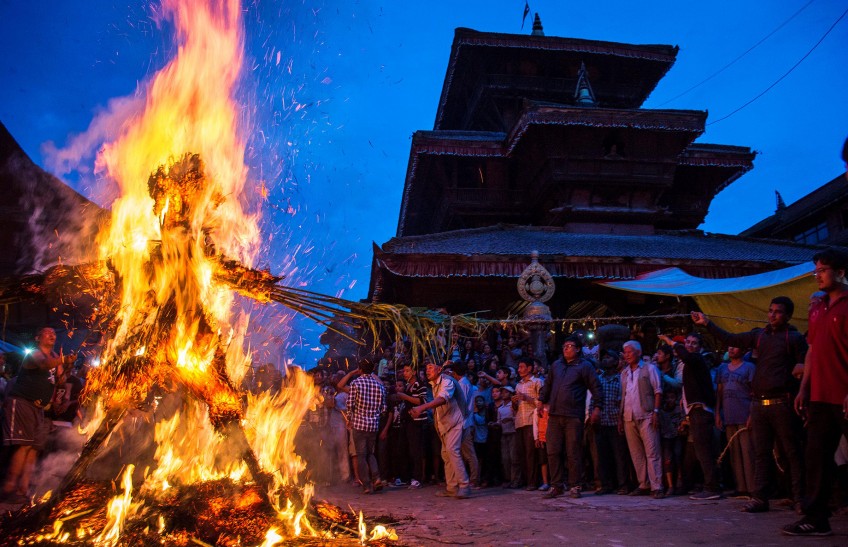
The festival of burning straw is well-liked primarily in Tarakhola rural municipality-2, Argal. The rural municipality gives public holidays during the festival. The villagers consider the festival a big festival.
In the past, it was customary to start farming in the neighboring villages only after burning the stubble in Argal. There is a custom of burning chaff with the original pot of Shankhughar (village main house). On that day, there is a special worship at Shankhubari. There is a rule that the barley crop grown there should be used by the Shungkhughar and that house should bear the expenses of the worship. The house of the senior person of the village is called Shankhughar.
On the next day of the festival, on the 25th day of the year, there is a tradition of performing Barkhi (sorrow) in the family of those who died within the year. If you die on the 24th, you will have to mourn for the whole year. At home, the death rites are completed by giving gifts to daughters-in-law, nieces, and nephews. The villagers also call the end of the death rites 'Holadas'. It is customary for the elder of the sisters to bring 18 manas of rice and the same amount of sukuti and dried skin to the house of the deceased.
From the family of the deceased, they send them to Mavali and Maitighar accordingly. It is a custom to share the koseli sent in this way by brothers and give cash Dakshina for it.
The main day of the festival is the 26th day of digging. It is customary to worship the big stone in the middle of the conch grove as the deity of the age. There is a popular belief that if you pray there, you will enter the age and take care of farming. As a symbol of 'Shankhu', the deity of nature, the original house, and garden are also known as Shankhu. On that day, before sowing the crops in the conifer fields, unmarried young people gather and dig the fields. After the ritual of worship, the young man runs to the conch field with a spade and attacks the young woman. Young women also come to the conch fields with spades. The mature and the married first sow the seeds, and the unmarried youths together start digging in the conch fields.
After the fair is over, the young people fight each other with spades and fight. At the end, they lift the spade together and exchange happiness and give the message that they have cultivated. Locals say that this is called 'chape khanne'. It is believed that married young people should not dig the seals. The next day, from the 27th, in the house where the first son was born this year, the birth of a son begins.
There is an old custom of performing the Gopichan dance and performing the story of the birth of a son. Family members and relatives celebrate the birth of a son as a festival. Around the fifteenth century, the Magars who migrated from Argali in Palpa and came to Argal established the tradition of the festival. Argal Sports Development Forum has also been organizing various sports and entertainment programs on the occasion of Bhus Polne festival. Lok Bahadur Chhetri, president of the forum, said that this year too, competitions such as men's and women's volleyball, group folk dance, archery, and tug-of-war were held.
“The festival starts from 24th Kartik every year. On that day, chaff is burnt in Shankhubari (root field). After the corn crop is brought in, the act of gathering the stalks, leaves, and stalks in the field and setting them on fire is called chaff burning.” said Birbalal Gharti Magar, Secretary of Magar Language and Culture Promotion Committee.
"This year, the first son is born in the house of the judge, there is a tradition of telling a story based on the life story of Gopichan Raja and showing a tableau. After the birth of a son, all pre-marriage rites are considered to be completed," said Ghartimar, a culture worker._Rss
(photo credit: Twitter)
Also Read
