

 Source::AP
DUBAI, United Arab Emirates
Dubai’s airport, the world’s busiest for international travel, can already feel surreal, with its cavernous duty-free stores, artificial palm trees, gleaming terminals, water cascades and near-Arctic levels of air conditioning.
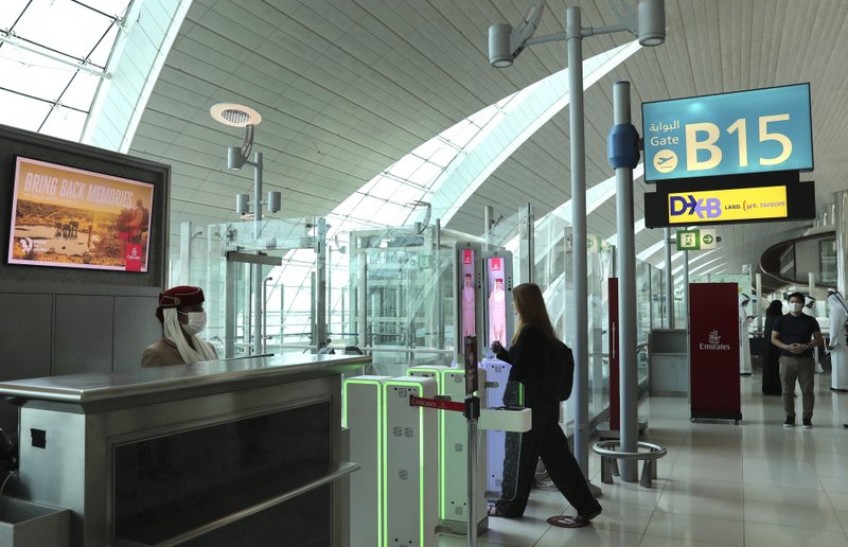
Now, the key east-west transit hub is rolling out another addition from the realm of science fiction — an iris-scanner that verifies one’s identity and eliminates the need for any human interaction when entering or leaving the country.
It’s the latest artificial intelligence program the United Arab Emirates has launched amid the surging coronavirus pandemic, contact-less technology the government promotes as helping to stem the spread of the virus. But the efforts also have renewed questions about mass surveillance in the federation of seven sheikhdoms, which experts believe has among the highest per-capita concentrations of surveillance cameras in the world.
Dubai’s airport started offering the program to all passengers last month. On Sunday, travelers stepped up to an iris scanner after checking in, gave it a good look and breezed through passport control within seconds. Gone were the days of paper tickets or unwieldy phone apps.
In recent years, airports across the world have accelerated their use of time-saving facial recognition technology to move passengers to their flights. But Dubai’s iris scan improves on the more commonplace automated gates seen elsewhere, authorities said, connecting the iris data to the country’s facial recognition databases so the passenger needs no identifying documents or boarding pass. The unusual partnership between long-haul carrier Emirates, owned by a Dubai sovereign wealth fund, and the Dubai immigration office integrates the data and carries travelers from check-in to boarding in one fell swoop, they added.
“The future is coming,” said Major Gen. Obaid Mehayer Bin Suroor, deputy director of the General Directorate of Residency and Foreign Affairs. “Now, all the procedures have become ‘smart,’ around five to six seconds.” But like all facial recognition technology, the program adds to fears of vanishing privacy in the country, which has faced international criticism for targeting journalists and human rights activists.
According to Emirates’ biometric privacy statement, the airline links passengers’ faces with other personally identifying data, including passport and flight information, retaining it for “as long as it is reasonably necessary for the purposes for which it was collected.” The agreement offered few details about how the data will be used and stored, beyond saying that while the company didn’t make copies of passengers’ faces, other personal data “can be processed in other Emirates’ systems.”
ALSO READ