Pokhara is famous for its shimmering lakes and Annapurna views, but it also holds one of Nepal's richest culinary treasures: Thakali cuisine. Born in the high Himalayas and perfected over centuries of trade, these mountain flavors have found a second home in the valley.
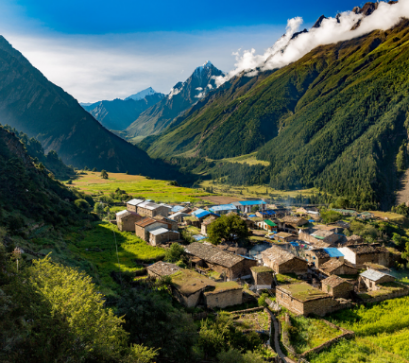
The Thakali people come from the Thak Khola region of Mustang, in the Kali Gandaki Valley between the Dhaulagiri and Annapurna ranges. As merchants on the ancient salt trade route between Nepal and Tibet, they carried salt and wool south and brought rice and lentils north.
Along the way, Thakali families ran bhattis, roadside inns known for clean kitchens and generous meals. When many of these families settled in Pokhara, the city became the main valley hub for authentic mountain gastronomy.
What sets Thakali food apart from ordinary dal bhat is its distinctive pantry. Jimbu, a wild Himalayan herb, is sizzled in ghee to give lentils a smoky aroma. Timur, a native peppercorn, adds a citrusy tingle to chutneys, while silam (roasted perilla seeds) brings nutty richness. Buckwheat from Mustang becomes dhido, a dense porridge, and age-old preservation techniques produce gundruk (fermented greens) and sukuti (dried, spiced meat).
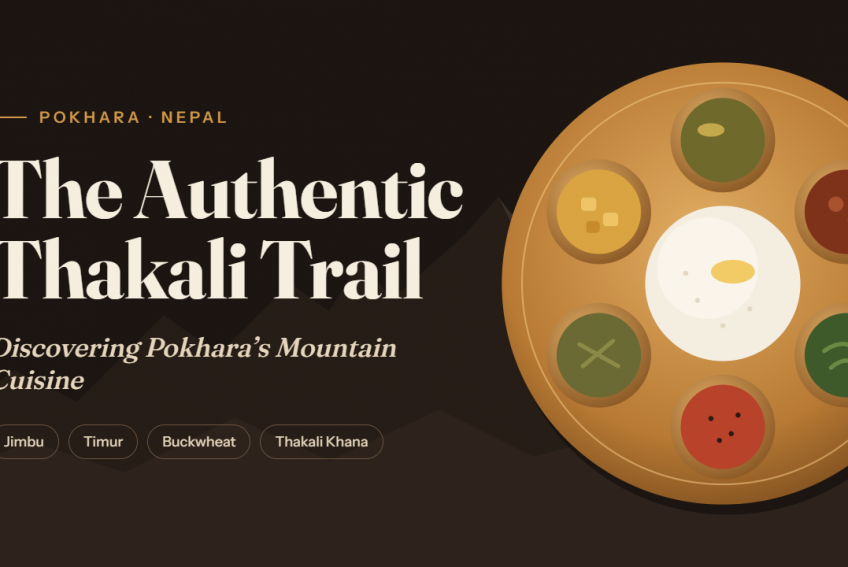
The heart of the trail is the Thakali thali, served on gleaming bronze plates and bowls. A mound of rice or buckwheat dhido, topped with ghee, sits at the center. Around it come kalo dal, slow-cooked in cast iron for its signature greenish hue; tender local chicken or mutton curry; sautéed greens such as wild fiddlehead ferns; and a lineup of achar, including timur-spiked tomato chutney and tangy gundruk pickle. Every element is balanced to nourish travelers crossing high mountain passes.
The cuisine goes far deeper than one plate. Kanchemba, crispy buckwheat fries, pairs perfectly with spicy chutney. Aalangkhu, a buckwheat dumpling soup, warms cold evenings, while phapar ko roti (buckwheat pancake) and ghinti (traditional blood sausage) reveal the highland kitchen's heritage. Mustang potatoes, buttery and dense, are sautéed with garlic and timur. To drink, there's salty butter tea and the famous apple brandy and cider from Marpha's orchards.
Eating Thakali food is as much about hospitality as flavor. Rice, dal, and curry are refilled until you're satisfied, a custom inherited from the old bhattis. Eat with your right hand, mixing dal into rice bite by bite, and when you've had enough, simply cover your plate. For a deeper connection, cooking classes in Pokhara teach traditional techniques, from hand-grinding spices to preparing achar.
Following the Thakali trail through Pokhara is a way to taste Himalayan history, one bronze bowl at a time. Every spoonful of jimbu-scented dal carries the story of traders, mountains, and the enduring warmth of Thakali hospitality.
Top 5 Pilgrimage Sites In Nepal
Top 3 Unique Attractions In Kathmandu
6 Instagrammable Places In Kathmandu