.jpg)
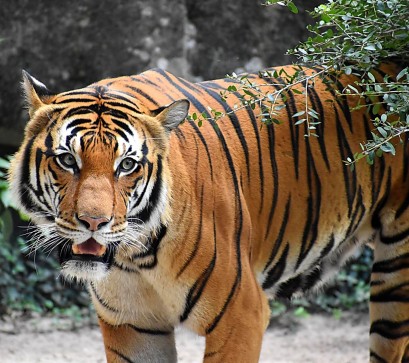
Bardiya National Park and its surrounding landscape are now home to more than 112 adult Royal Bengal Tigers, a population that has grown steadily thanks to strict anti-poaching enforcement, habitat restoration, and protected wildlife corridors. Spotting one isn't guaranteed trackers read pugmarks, bent grass, and the alarm calls of spotted deer rather than relying on engines or technology but that uncertainty is part of what makes an encounter so electric.
Unlike jeep safaris elsewhere, Bardiya's walking safaris put you directly in tiger territory, guided by naturalists who've spent lifetimes reading this jungle. It's slow, sweaty, leech-prone work that can mean 12-hour days with nothing to show for it and then, for a heartbeat, everything.
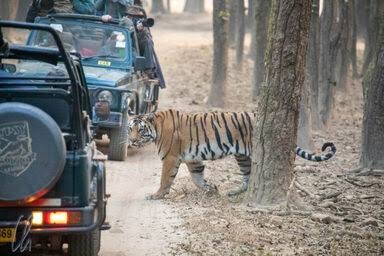
Tigers share this ecosystem with an extraordinary cast of endangered species. The park shelters greater one-horned rhinoceros, Asian elephants, swamp deer, and leopards moving through the same forest corridors. Its rivers hold Gangetic freshwater dolphins and both gharial and marsh mugger crocodiles, while the skies host over 400 bird species, including the endangered Bengal florican and the giant hornbill.
Floating the Karnali and Babai Rivers by inflatable raft is a quiet, low-impact way to spot river dolphins and basking crocodiles without the noise of a motorboat.
Bardiya's conservation success is inseparable from the walking-safari model itself. Tracking zones stay free of vehicle noise, guides keep a respectful distance near waterholes so animals are never cornered, and the tracking knowledge is generational passed down through local Tharu guides who read the forest rather than dominate it.
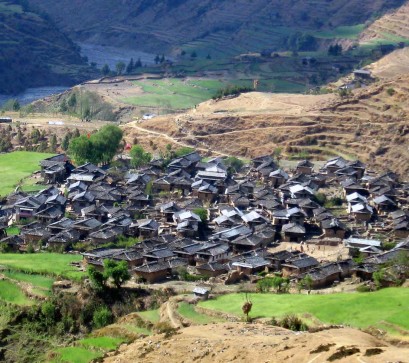
The indigenous Tharu community, living in the park's buffer zones, is central to this success. A share of park entry fees funds anti-poaching youth patrols and habitat restoration, turning conservation into a shared local enterprise rather than an imposed one.
The dry season, from March to May, offers the best odds of a sighting, with April standing out as the prime month sparse grass and shrinking water sources concentrate wildlife around the remaining waterholes. October through February brings cooler, clearer weather that's better suited to birding and long walks, with still-solid chances of a tiger encounter. Experts recommend staying at least four to five nights to meaningfully improve your odds.
Fly 50 minutes from Kathmandu to Nepalgunj Airport (KEP), then drive 2–3 hours to Thakurdwara, the gateway village to the park.
Bardiya proves that tiger conservation and travel can reinforce each other every quiet footstep through the grass is a vote for a wilder, more intact Terai.